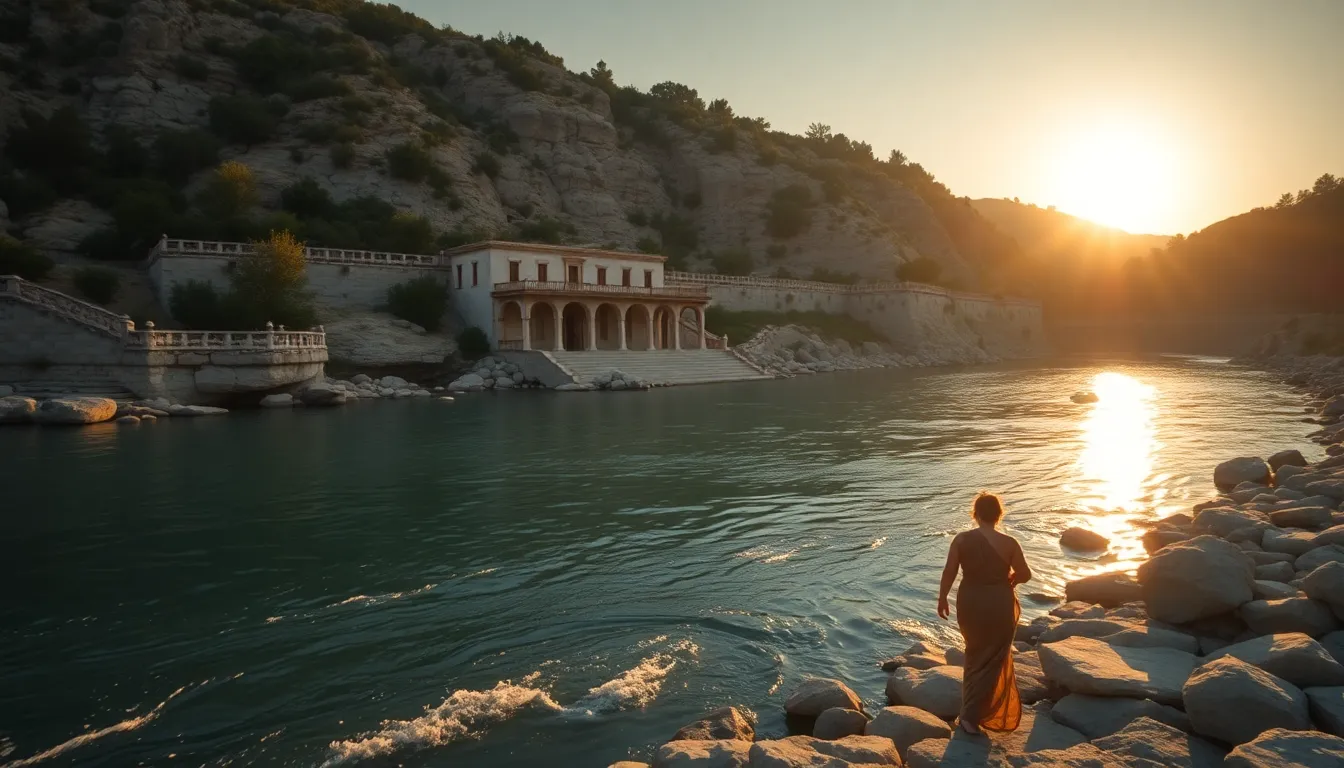
Of all the places I take groups in Greece, the river outside Philippi is the one that surprises people most. They expect Athens to move them, and it does. They are ready for the grandeur of Corinth. But the riverside where Lydia was baptized is small, green, and ordinary, and it undoes people anyway. I have watched grown men and women stand at this water with tears running down their faces, holding a Bible open to Acts 16. There is no monument competing for attention here. Just a quiet river and a story that opened a continent.
This is the spot where the first European convert came to faith. For a faith group, it is often the emotional heart of the entire trip. Let me tell you the story, describe what you will actually find, and explain how congregations use this place.
The Story in Acts 16
Paul had crossed into Europe after the vision of the man of Macedonia. He came to Philippi, a Roman colony, and waited for the Sabbath. Philippi apparently had no synagogue, which usually required a quorum of ten Jewish men, so Paul did what travelers did in such cases. Acts 16 says, “On the Sabbath day we went outside the gate to the riverside, where we supposed there was a place of prayer, and we sat down and spoke to the women who had gathered there.”
Among them was Lydia, “a seller of purple goods, who was from the city of Thyatira, a worshiper of God.” Purple dye was a luxury trade, which tells us she was a businesswoman of some means, likely the head of her own household. As she listened, “the Lord opened her heart to pay attention to what was said by Paul.” She and her household were baptized, and she pressed Paul to stay in her home: “If you have judged me to be faithful to the Lord, come to my house and stay.” Her home became the meeting place of the new church at Philippi.
It is a small scene. A few women at a riverside, one merchant whose heart was opened, a baptism in moving water. And it is the first recorded conversion in Europe. Everything that came after, in a sense, began with Lydia listening at this river.
What You Will Find at the Site Today
The traditional site sits on the river Gangites (also called the Zygakti), a short distance outside the walls of ancient Philippi near modern Lydia village. It is a green, peaceful spot shaded by trees, with the water running clear and shallow.
There are two things to see. The first is the riverbank itself, the open-air baptistery, where steps lead down into the water and groups gather at the edge. This is where renewal services and baptisms take place. The second, nearby, is a modern octagonal church dedicated to Saint Lydia, built to honor the first European Christian. It is one of the few churches anywhere named for a woman of the New Testament, and its quiet interior, with mosaics and natural light, is a fitting place for reflection and prayer before or after a service at the water.
The whole site is calm and uncrowded. Unlike the major archaeological parks, this is a place of devotion more than sightseeing, and it has the feel of one.
How Groups Use the Riverside
For many congregations, the high point of a Greece trip is a service held right here at the water. There are a few ways groups do it.
Some hold a full baptism, immersing new believers in the same river where Lydia was baptized. Others hold a baptism renewal or reaffirmation, where members remember their own baptism and renew their vows, often with the leader touching water to each person’s forehead. And some hold a simple service of readings, hymns, and prayer at the riverbank without entering the water at all. Any of these fits the place.
I always encourage leaders to plan this ahead rather than improvise it. Decide in advance what form the service will take, who will read Acts 16, what hymn the group will sing, and whether anyone will be immersed. If a baptism is planned, towels, a change of clothes, and a quiet space to change are worth arranging. The river is shallow and gentle, but the moment deserves preparation.
A word about why this lands so hard. At most heritage sites, your group reads about something that happened nearby, long ago. Here, the act is the same act. When a person steps into this water, they are doing exactly what Lydia did, in the place she did it. That continuity collapses two thousand years. It is the closest most travelers ever come to standing inside the text.
Lydia as a Model for the Group
Beyond the service, Lydia herself is worth talking about with your group. She was a working woman, a trader in a luxury good, a head of household, and a “worshiper of God,” which suggests she was a Gentile drawn to the God of Israel before she heard the gospel. She listened, she believed, she was baptized, and immediately she opened her home. The church at Philippi met under her roof.
That pattern, hearing, believing, and immediately offering hospitality, is a quiet model for a congregation. I sometimes ask groups to consider it at the riverside: faith that becomes a home with an open door. Lydia did not just convert. She made space for the church to exist.
Where Lydia’s River Fits in a Greece Journey
The baptism site sits just outside ancient Philippi, so groups almost always visit the two together, with the river usually saved for last as the climax of the Philippi day. Since Philippi is the first major stop on a north-to-south Pauline route, Lydia’s river often becomes the first deeply emotional moment of the whole trip, and it sets the tone for everything after.
To understand the wider site, read our guide to Philippi, the first church in Europe. From here the journey continues to Thessaloniki and the cities of the south. For the full route, see our hub on Greece spiritual sites.
FAQ: The Baptism of Lydia
Where exactly was Lydia baptized?
At the riverside outside the walls of ancient Philippi, on the river Gangites near the modern village of Lydia in northern Greece. Acts 16 describes Paul going “outside the gate to the riverside” on the Sabbath, where he met Lydia and her household and baptized them. The traditional site today has an open-air baptistery and a church dedicated to Saint Lydia.
Can our group hold a baptism in the river where Lydia was baptized?
Yes. The site has steps leading into the shallow river, and groups regularly hold baptisms, baptism renewals, or simple riverside services there. It is one of the most meaningful things a congregation can do in Greece. We help arrange the timing, access, and practical details like changing space.
Who was Lydia in the Bible?
Lydia was a dealer in purple cloth from Thyatira, a “worshiper of God,” and the first recorded convert to Christianity in Europe. She listened to Paul at the riverside, the Lord opened her heart, and she and her household were baptized. She then hosted Paul and the new church in her home, becoming a foundation of the Philippian congregation.
Is the Lydia baptism site the same as the Philippi ruins?
They are very close but separate. The Philippi archaeological site holds the Roman forum, the prison, and the basilicas. The baptism site is a short distance away at the river, with the open-air baptistery and the Saint Lydia church. Groups typically visit both on the same day, ending at the river.
How should a group leader prepare for a riverside service?
Decide in advance on the form of the service, baptism, renewal, or readings and prayer. Assign who reads Acts 16 and choose a hymn. If anyone will enter the water, arrange towels, a change of clothes, and a place to change. Planning it ahead lets the group be fully present in the moment rather than sorting out logistics at the water.
If you want your congregation to stand at Lydia’s river and renew their faith where Europe’s first believer was baptized, I would be glad to help you shape it. With Heritage Tours, the group leader travels free when you bring fifteen or more participants, which makes the planning math easier for a lot of pastors. You can see how we structure these trips on our Greece heritage page or learn how the group experience works on our group heritage tours page.
Contact us whenever you are ready to start planning.