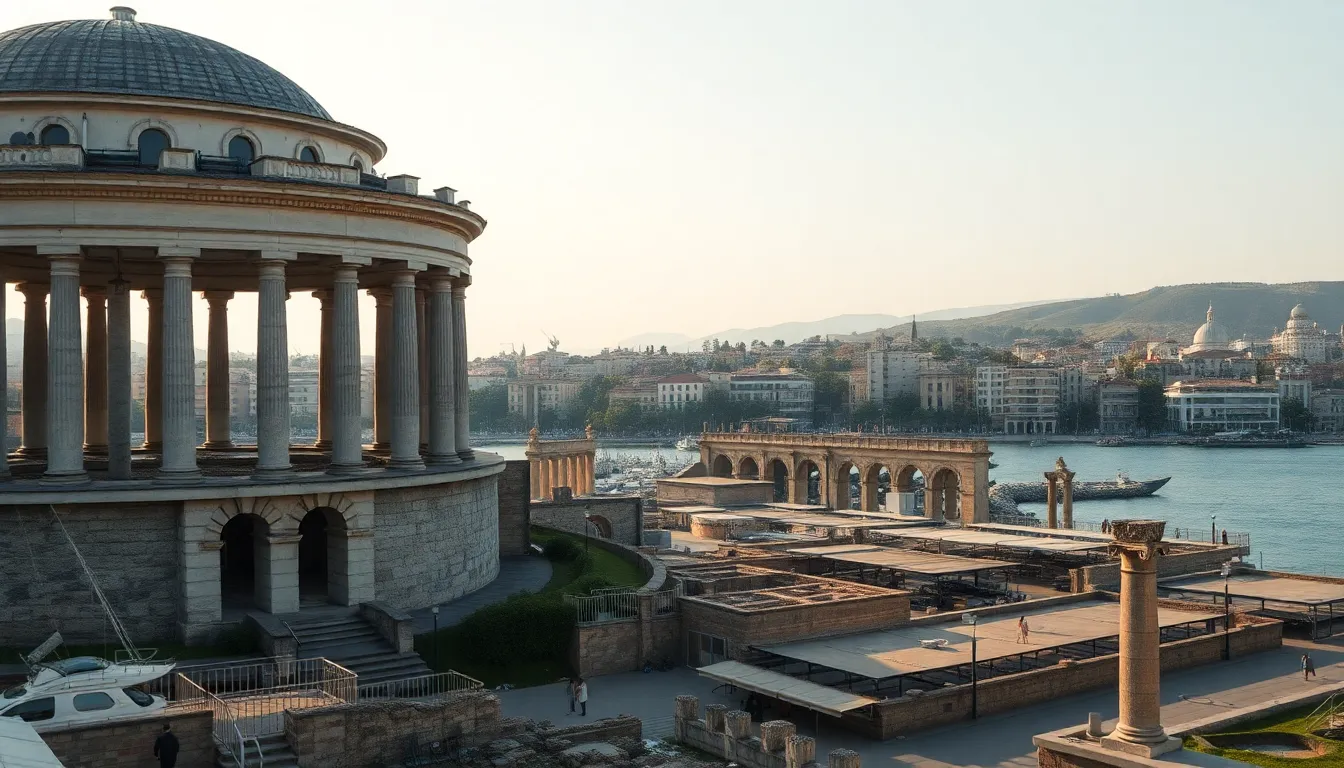
Thessaloniki throws groups off at first, and I have learned to warn them. After the quiet ruins of Philippi, where you stand alone in a field, you arrive in a loud, modern Greek city of a million people, with traffic and cafés and a waterfront full of life. People wonder for a moment where the Bible went. Then I point out that this is exactly the point. Paul did not preach in museums. He preached in busy, opinionated, working cities full of people with strong views, and Thessalonica was one of the most important of them. The story did not happen in a ruin. It happened in a place a lot like the one your group is standing in.
Paul spent only a few weeks here, but the visit left a deep mark, and two of his letters were written to the church that survived his departure. Let me walk you through what happened in Thessalonica and what your group can still see in the living city that grew over it.
Paul’s Brief, Stormy Ministry in Thessalonica
The account is in Acts 17. After leaving Philippi, Paul and Silas traveled along the Via Egnatia to Thessalonica, the capital of the Roman province of Macedonia and a major port. As was his custom, Paul went first to the synagogue, and “on three Sabbath days he reasoned with them from the Scriptures, explaining and proving that it was necessary for the Christ to suffer and to rise from the dead.” Some Jews believed, along with “a great many of the devout Greeks and not a few of the leading women.”
But the success provoked opposition. A mob formed, attacked the house of Jason where Paul had been staying, and dragged Jason before the city authorities, shouting one of the most striking lines in Acts: “These men who have turned the world upside down have come here also.” The believers sent Paul and Silas away by night to Berea for their safety.
So Paul’s time in Thessalonica was short and turbulent. Yet the church that formed held. When your group reads this account, the speed and intensity of it is part of the lesson. The gospel moved fast, drew real converts and real enemies, and left behind a community strong enough to receive two letters from Paul soon after.
The Two Thessalonian Letters
First and Second Thessalonians are among the earliest documents in the New Testament, written by Paul shortly after he left the city, probably from Corinth around AD 50 to 51. That makes them some of the oldest Christian writings we have, composed within roughly twenty years of the crucifixion.
The letters tell you what was on the young church’s mind. They had questions about the return of Christ and about believers who had died, and Paul wrote to comfort and steady them. The famous passage about the Lord descending with a cry of command, and the dead in Christ rising first, comes from First Thessalonians 4. The instruction to “rejoice always, pray without ceasing, give thanks in all circumstances” comes from chapter 5. Second Thessalonians addresses confusion that had crept in about the timing of that return.
I find it powerful to read parts of these letters in the city itself. You are reading mail sent back to this exact community, written by a man who had just barely escaped a mob here, full of affection and concern for people he had known only a few weeks. The warmth in the letters, given how the visit ended, says a great deal about the bond that formed.
What You Can See in the City Today
Because Thessalonica has never stopped being a major city, you do not visit a single archaeological park. Instead you read the city in layers, and that is its own kind of pleasure. I usually walk groups through a few key sites.
The Roman Forum and the Via Egnatia
In the heart of the modern city are the excavated Roman forum (the agora) and a preserved stretch of the Via Egnatia, the imperial road Paul traveled to reach the city. Standing on that road, you can picture the apostle arriving on foot from Philippi.
The Rotunda and the Galerius Arch
The Rotunda is a massive round Roman building from around AD 300, later converted into a church and decorated with some of the finest early Christian mosaics in the world. Nearby stands the Arch of Galerius, carved with imperial scenes. Together they show the world the early church grew up inside, an empire of emperors and monuments that Christianity would eventually transform.
Byzantine Churches
Thessaloniki holds a remarkable collection of Byzantine churches, recognized by UNESCO. The most important is the Church of Hagios Demetrios, dedicated to the city’s patron saint, a soldier-martyr. These churches let your group trace what grew from the small, persecuted community of Acts 17 into a great center of Christian worship.
A Layered Jewish Story
Thessaloniki was also one of the most important Jewish cities in the world, once called the Jerusalem of the Balkans for its large and influential Sephardic community. For groups interested in both the Christian and Jewish stories, the city is unusually rich, and a thoughtful itinerary can honor both. You can read more in our broader guide to the city’s role on our Greece spiritual sites hub.
Why Thessaloniki Belongs on a Pauline Itinerary
Thessaloniki is the natural base for the northern portion of a Greece heritage trip. Its airport, hotels, and central location make it the hub from which groups visit Philippi and Berea before heading south. On a north-to-south Pauline route, it falls right where it falls in Acts, between the founding at Philippi and the flight to Berea.
For your group, the value of Thessaloniki is the reminder it gives. The gospel was not preached into empty countryside. It was preached into real cities full of real people, with synagogues and markets and mobs, and it took root anyway. Standing in a busy modern city built over Paul’s footsteps makes that truth physical.
A practical note for leaders: because Thessaloniki is a walking city, exploring it involves city pavements, some hills, and traffic rather than archaeological terrain. It is comfortable for most groups, though the pace and distances are worth planning around members who tire easily.
FAQ: Paul in Thessalonica
How long did Paul stay in Thessalonica?
Acts 17 records that Paul reasoned in the synagogue on three Sabbath days, so his recorded ministry there lasted only a few weeks before a mob forced him to leave for Berea by night. Despite the short and stormy visit, a lasting church formed, and Paul wrote it two letters soon afterward.
Why did Paul have to flee Thessalonica?
His preaching drew converts, including prominent Greeks and leading women, which provoked opposition. A mob attacked the house of Jason where Paul was staying and dragged Jason before the authorities, accusing the missionaries of turning the world upside down and defying Caesar. For their safety, the believers sent Paul and Silas away by night.
What can you see related to Paul in Thessaloniki today?
Because the city has been continuously inhabited, you see the story in layers: the excavated Roman forum, a preserved stretch of the Via Egnatia, the Rotunda with its early Christian mosaics, the Arch of Galerius, and the Byzantine churches including Hagios Demetrios. There is no single Pauline ruin, but the living city itself tells the story.
When were the Thessalonian letters written?
First and Second Thessalonians were written by Paul shortly after he left the city, probably from Corinth around AD 50 to 51. They are among the earliest documents in the New Testament, composed within roughly twenty years of the crucifixion, which makes them especially meaningful to read in the city itself.
Is Thessaloniki a good base for a Greece heritage trip?
Yes. It is the practical hub for the northern leg of a Pauline journey, with good access to Philippi, the Lydia baptism site, and Berea. Many groups base here for two or three nights, make day trips to the surrounding sites, and then head south toward Athens and Corinth.
If you want your congregation to walk Paul’s footsteps through a living city, I would love to help you plan the journey. With Heritage Tours, the group leader travels free when you bring fifteen or more participants, which makes a real difference for a pastor building a trip for the congregation. You can see how we structure these journeys on our Greece heritage page or learn how the group experience works on our group heritage tours page.
Contact us whenever you are ready to start planning.