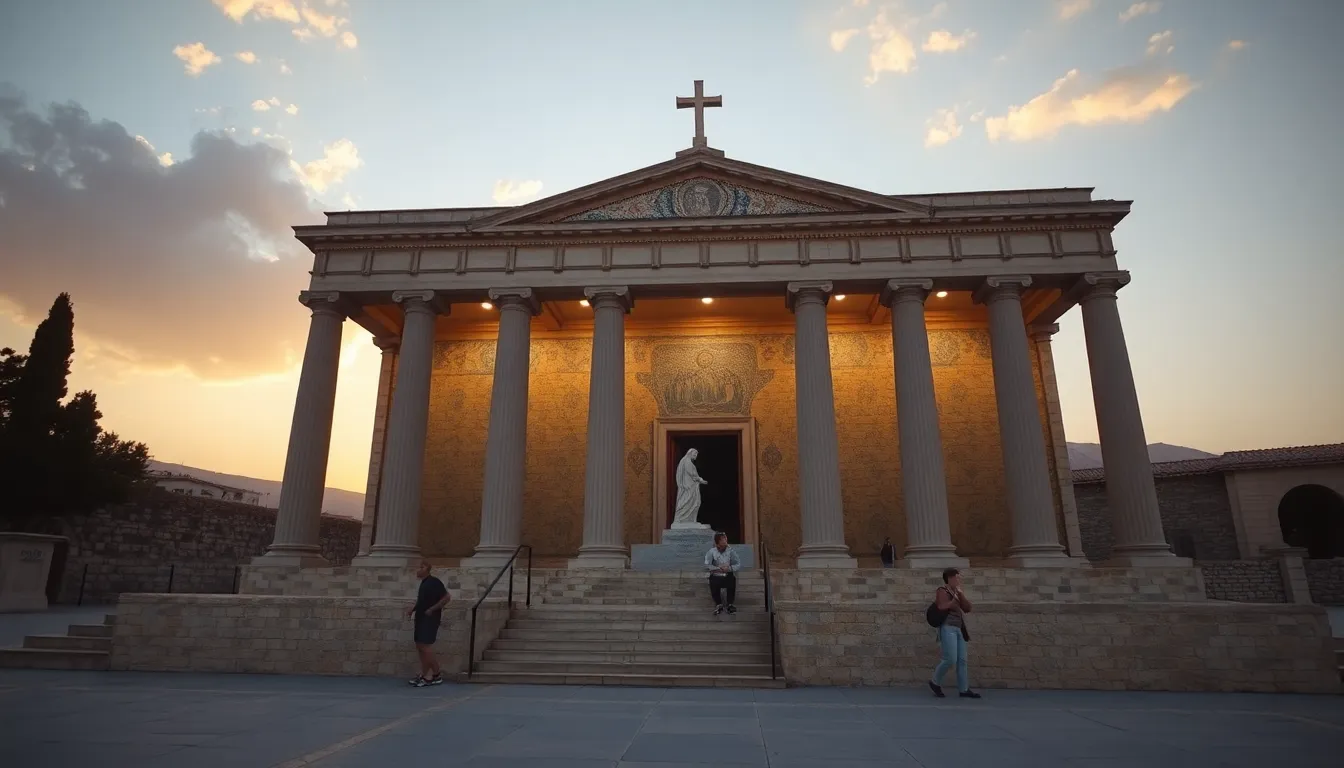
Berea is the stop most rushed itineraries cut, and every time I see a group skip it I think they have missed something quiet and important. Modern Veria is not a marquee name. There is no Parthenon here, no famous skyline. What there is, is a town that scripture singles out for praise, and a single verse that most thoughtful congregations want to carry home. I have stood at the monument here and watched a group reread Acts 17:11 slowly, and then go quiet, because they recognize themselves in it, or wish they did.
This is the city of the noble-minded, the people who would not take Paul’s word for it but checked the Scriptures for themselves. For any group that values study and honest inquiry, Berea is meaningful ground. Let me tell you why, and what you will find.
The Bereans in Acts 17
The account is short. After the mob in Thessalonica forced Paul and Silas out, the believers sent them on to Berea by night. There Paul did what he always did, went to the synagogue and reasoned from the Scriptures. And the response is described in a single famous line: “Now these Jews were more noble than those in Thessalonica; they received the word with all eagerness, examining the Scriptures daily to see if these things were so.”
That is the whole portrait, and it is remarkable. The Bereans were not credulous. They did not believe because Paul was persuasive or because the message was exciting. They received the word eagerly and then went home and checked it against the Scriptures, day after day, to see whether what they were hearing was true. And because of that careful searching, “many of them therefore believed, with not a few Greek women of high standing as well as men.”
The verse has given the English language a word. To this day, careful, Scripture-testing Christians are called Bereans. When your group stands here, you can talk about what it means to hold faith and inquiry together, to receive teaching with eagerness and still test it honestly. That is a lesson most congregations are glad to be reminded of, and Berea is the place to deliver it.
The episode also ends with a familiar pattern. Trouble followed Paul. When the Thessalonian agitators heard he was preaching in Berea, they came down and stirred up the crowds, and once again the believers sent Paul on, this time south toward Athens, while Silas and Timothy stayed behind.
The Bema of the Apostle Paul
The main site for a group in Veria is the monument known as the Bema of the Apostle Paul, sometimes called the Altar of Saint Paul. It marks the traditional spot where Paul preached in the city. The monument was built and later enhanced with large mosaics depicting scenes from Paul’s ministry and his journeys, set into a stepped structure with steps leading up to a platform.
It is not an ancient ruin in the way the Corinth bema is. It is a memorial, a place built specifically to honor Paul and to give pilgrims a focus for prayer and reflection. And for that purpose it works well. The mosaics are vivid and tell the story visually, which helps a group take in the sweep of Paul’s mission at a glance. It is a fitting place to read Acts 17:11 aloud and to talk with your people about Berean faith.
I often linger here longer than the schedule suggests. The monument itself takes only a short while to see, but the conversation it invites, about testing what you hear, about studying for yourself, about the difference between eager belief and lazy belief, is one worth giving room to. Many leaders use this stop for a short teaching or devotional, and it lands well.
Veria, the Living Town
Beyond the monument, Veria is a pleasant northern Greek town worth a little time. It has a charming old quarter, Byzantine churches, and a long Jewish history with a preserved old synagogue and a former Jewish quarter, a reminder that, as in Thessalonica, the Christian and Jewish stories of this region are intertwined. The town sits below Mount Vermio, in a green and fertile area, and it offers a calmer, more local experience than the big cities. For groups, it makes a gentle, human-scaled stop between the intensity of Thessalonica and the long drive south.
Where Berea Fits a Greece Itinerary
Berea sits a short drive west of Thessalonica, which makes it an easy half-day trip from the northern base before a group turns south. On a north-to-south Pauline route, it falls exactly where Acts places it, right after Thessalonica and just before the journey to Athens. Geographically and biblically, it is the hinge between the northern cities and the southern ones.
Most groups visit Berea the same day they leave the north, often pairing it with the morning’s departure from Thessalonica before the drive toward Athens and Corinth. It does not need a full day. What it needs is for you not to skip it.
To set Berea in context, read our guides to Thessaloniki and the apostle Paul, the city Paul fled to reach Berea, and to Philippi, the first church in Europe, where the northern journey began. For the full route, see our hub on Greece spiritual sites.
A practical note for leaders: the Bema monument involves a few steps but is otherwise easy, and the town is walkable. It is one of the most accessible stops on a Greece itinerary, which makes it a good fit for mixed-age groups.
FAQ: Berea and the Bereans
Why were the Bereans called noble-minded?
Acts 17:11 describes them as “more noble” than the Thessalonians because they received Paul’s message eagerly and then examined the Scriptures daily to see whether what he said was true. They combined open hearts with careful checking, and the result was that many believed. The verse has made “Berean” a byword for thoughtful, Scripture-testing faith.
What is the Bema of the Apostle Paul in Veria?
It is a monument marking the traditional spot where Paul preached in Berea, modern Veria. It features large mosaics depicting scenes from his ministry, set into a stepped structure with a platform. It is a memorial built for prayer and reflection rather than an ancient ruin, and it is the main site groups visit in the city.
Is Berea worth visiting, or can groups skip it?
It is worth visiting. Rushed itineraries often cut Berea, but the lesson of Acts 17:11, receiving the word eagerly and testing it against Scripture, is one most congregations want to carry home. The monument is accessible, the town is pleasant, and the stop adds depth and balance to a Pauline journey. I encourage leaders to keep it in.
Where is Berea, and how do groups get there?
Berea is the modern town of Veria in northern Greece, a short drive west of Thessalonica. Most groups visit it as a half-day trip, often on the day they leave the northern base, before continuing south toward Athens and Corinth. It falls naturally between Thessalonica and Athens, just as it does in Acts.
What else is there to see in Veria besides the Bema?
Veria has a charming old quarter, Byzantine churches, and a long Jewish history including a preserved old synagogue and former Jewish quarter. The town sits below Mount Vermio in a green, fertile region, and it offers a calmer, more local experience than the big cities. It makes a gentle, human-scaled stop on the route south.
If you want your congregation to stand where the Bereans searched the Scriptures and to carry that lesson home, I would be glad to help you build the journey. With Heritage Tours, the group leader travels free when you bring fifteen or more participants, which eases the planning math for a lot of pastors. You can see how we structure these trips on our Greece heritage page or learn how the group experience works on our group heritage tours page.
Contact us whenever you are ready to start planning.