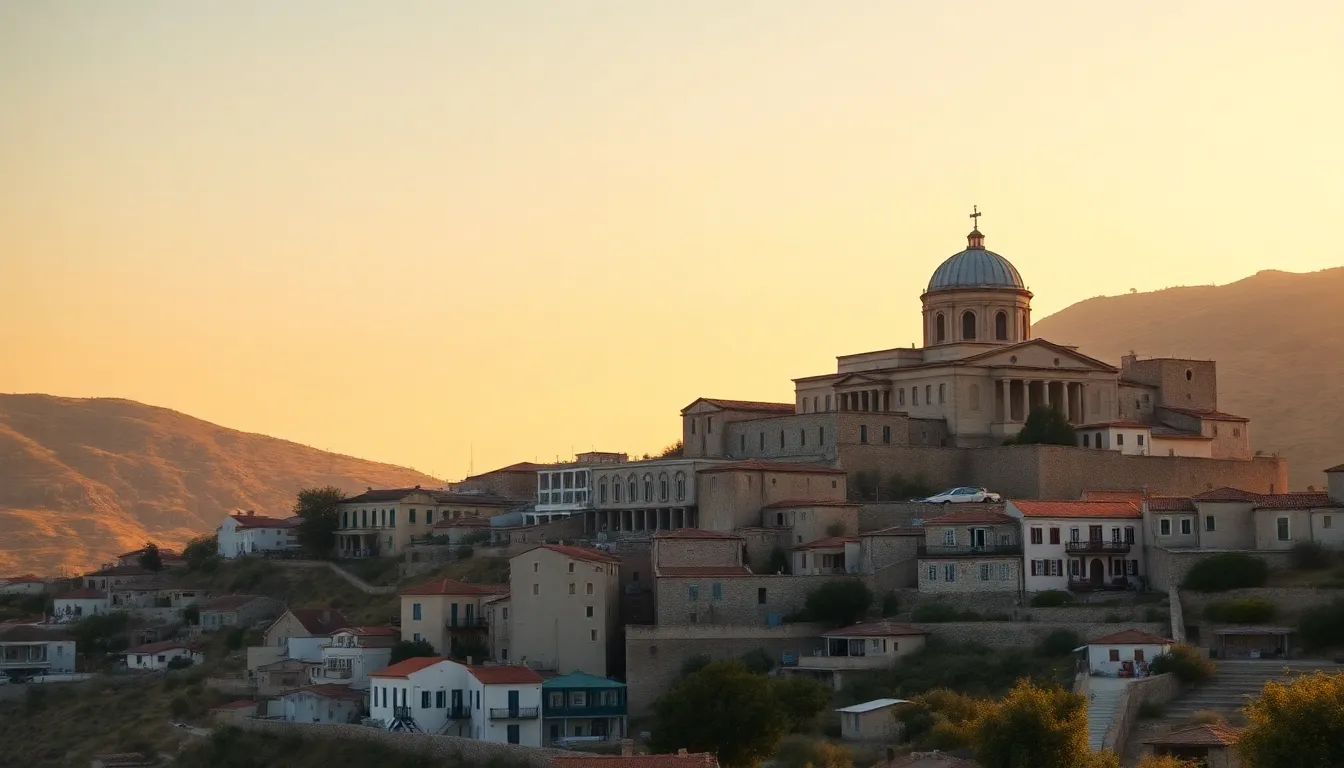
The first time I stood at the mouth of the Cave of the Apocalypse on Patmos, with the group hushed behind me, I read the opening of Revelation out loud: “I, John, your brother and companion in tribulation, was on the island called Patmos.” There is a particular quiet that settles over a group in that cave. This is the actual place, by tradition, where the last book of the Bible was received. People who have read Revelation their whole lives go still when they realize they are standing in the room.
Patmos is small, remote, and unlike anywhere else on a Greece itinerary. It is an island of pilgrimage, crowned by a fortress monastery, and it asks to be experienced slowly. Most groups have one day here, often off a ship, and a day is enough if you spend it well. Let me orient you to the island and show you how to make that day count.
Why Patmos Is Different
Most Greece heritage sites are ruins you walk through. Patmos is a living holy place. The monastery at the top of the island has been in continuous operation since the eleventh century, and the whole island has the feel of a sanctuary. The Greek state has even formally recognized Patmos as a “Holy Island.”
It also sits apart geographically. Patmos is in the Dodecanese, off the coast of Turkey, far from the mainland sites. Reaching it usually means a ferry or, for many groups, an Aegean cruise that calls at the port of Skala. That distance is part of its character. John was exiled here precisely because it was a remote, isolated place. Your group feels that isolation, and it deepens the encounter. For how Patmos fits a wider Greece route, see our Greece heritage travel guide.
The Three Places That Matter
Patmos heritage comes down to three sites, stacked up the hillside between the port and the summit.
Skala: The Port and Arrival Point
Skala is the harbor town where you arrive, a whitewashed port at sea level. There is not a great deal to see here in heritage terms, but it is where the day begins and ends, and where you board the transport up the hill. From Skala the road climbs to the Cave of the Apocalypse partway up, and then on to the monastery and the old town of Chora at the summit.
The Cave of the Apocalypse
About halfway up the hill, set into the slope, is the Cave of the Apocalypse, the Sacred Grotto. By tradition this is where John, in exile, received the vision recorded in the Book of Revelation. A monastery chapel has been built around and into the cave, and inside you can see the rock where tradition says John laid his head and the cleft in the stone said to mark where the voice came through.
It is a small, dim, intensely atmospheric space. This is the heart of a Patmos visit for most Christian groups. I keep the group quiet here, read from Revelation, and give people room to sit with it. Because it is an active sacred site, modest dress is required, shoulders and knees covered, and photography is usually restricted inside. I brief every group on this before we go up, so no one is caught out at the door.
The Monastery of Saint John the Theologian
At the very top, crowning the island, is the Monastery of Saint John the Theologian, a fortified monastery founded in 1088 that looks more like a castle than a church. With the cave and the surrounding town of Chora, it forms a UNESCO World Heritage site.
Inside the thick walls is a warren of chapels, courtyards, and a treasury that holds one of the most important monastic collections in the Orthodox world, including ancient manuscripts and icons. The views from the monastery walls over the Aegean are extraordinary. For an Orthodox-oriented group, this monastery is a major destination in its own right; for any faith traveler, it is a powerful place to understand how the memory of Revelation has been guarded on this island for nearly a thousand years.
The whitewashed town of Chora wraps around the monastery, a maze of lanes and old captains’ houses worth a short wander if time allows.
How a Group Spends a Day on Patmos
Here is the shape of a Patmos day that works, whether you come by ferry or as a cruise call:
- Morning: arrive at Skala and transfer up the hill by coach or local transport. The climb is steep and walking it is not practical for most groups.
- Mid-morning: the Cave of the Apocalypse. Give it real time. Read from Revelation, sit, reflect. This is the emotional center of the day.
- Late morning to midday: the Monastery of Saint John and the treasury, then a wander through Chora and the views from the walls.
- Afternoon: return to Skala for lunch and free time in the port before departure.
A single full day covers the three essential sites without rushing. If your group has the rare luxury of an overnight, the island after the day-trippers leave is one of the most peaceful places in the Aegean, and an early or evening visit to the cave without crowds is unforgettable.
Patmos pairs naturally with the rest of Paul’s journey, since the apostle himself sailed these waters; the story of his Greek mission runs through the Macedonia heritage trail guide and concludes at the Corinth heritage guide.
Practical Orientation for Group Leaders
What I tell leaders before a Patmos day:
- Dress code is firm. Shoulders and knees covered for the cave and the monastery. Bring a light scarf or wrap. I brief groups before we land so no one is turned away.
- Arrange transport up the hill. The climb is too steep for most groups to walk. A coach or local transfer is essential.
- Watch cruise timing. If you come on a ship, the call is often short. Build the day tightly around the cave and the monastery and do not over-schedule.
- Keep it reverent. This is a working holy island, not a ruin. Quiet, modest, unhurried. The pace is part of the experience.
- Photography is limited inside the cave and parts of the monastery. Tell your group ahead so they put cameras away and stay present.
One thing worth knowing as you plan: with Heritage Tours, the group leader travels free when you bring fifteen or more participants. For a pastor building a congregational trip, that changes the budget conversation, and it is worth factoring in early.
FAQ: Patmos for Faith Groups
What is the Cave of the Apocalypse?
It is the grotto, set into the hillside between the port and the summit, where tradition holds that John received the vision recorded in the Book of Revelation while exiled on Patmos. A chapel has been built into the cave, and inside you can see the rock said to mark where he rested and where the voice came through. For most Christian groups it is the heart of the Patmos visit.
Can a group see Patmos in one day?
Yes. A single full day covers the three essential sites: the Cave of the Apocalypse, the Monastery of Saint John, and the old town of Chora. Arrive at Skala, transfer up the hill, give the cave unhurried time, visit the monastery and treasury, then return to the port. An overnight is a bonus that lets you experience the island after the day crowds leave, but it is not required.
What is the dress code on Patmos?
Modest dress is required at both the cave and the monastery: shoulders and knees covered for everyone. Bring a light wrap or scarf. We brief every group before going up so no one is turned away at the door, since these are active sacred sites, not museums.
How do groups usually reach Patmos?
Most groups reach Patmos either by ferry from other Greek islands or the mainland, or as a stop on an Aegean cruise that calls at the port of Skala. The island sits in the Dodecanese off the Turkish coast, so it is remote, which is part of its meaning, since John was exiled here for exactly that reason.
Is Patmos suitable for older group members?
Yes, with the right arrangements. The climb from the port is steep, so we transport groups up by coach rather than on foot. The cave and monastery involve some steps and uneven stone, but at a gentle pace they are manageable for most. The reverent, unhurried rhythm of the island suits a mixed-age group well.
If the island of Revelation is calling to your congregation, I would be glad to help you build the day or fold it into a fuller Greece journey. Patmos rewards a group that comes quietly and gives it time. You can see how we structure these journeys on our Greece heritage page or learn how the group experience works on our group heritage tours page.
Contact us whenever you are ready to start planning.