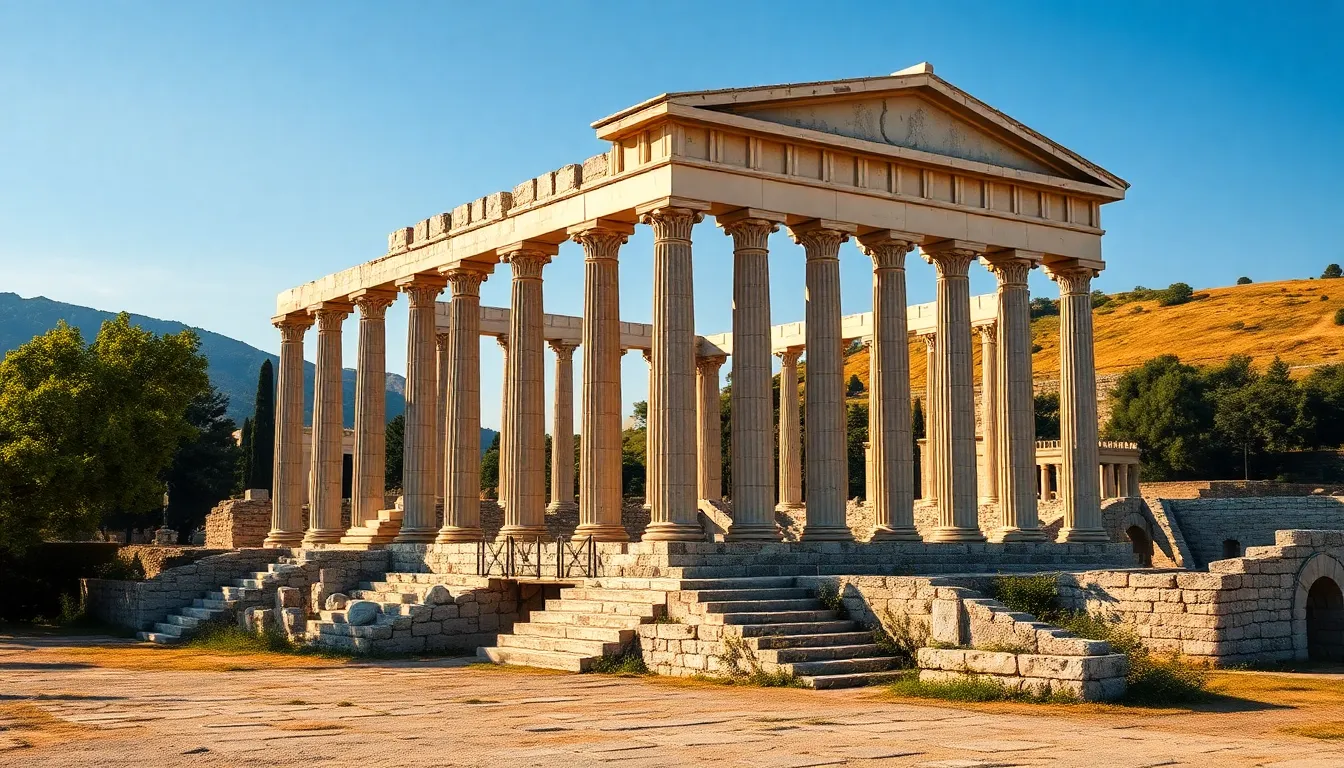
Most people think of Greece heritage travel as Athens and the islands. But the gospel reached Europe in the north, in Macedonia, and the first time I walked a group through the full northern trail, from the riverside at Philippi up through Thessaloniki to the Bema at Berea, I understood why this region deserves to be treated as one connected journey rather than a string of separate stops. The story moves through it in order. You can follow it almost like a road.
This guide orients you to northern Greece as a trail, not a list. It is where Paul first set foot in Europe, where he planted his first European church, and where he wrote some of his earliest letters. It is also layered with Jewish and Byzantine heritage that gives the region depth beyond the Pauline route. Let me walk you through it the way I would on the ground.
The Shape of the Trail
The Macedonia trail runs roughly west and inland from the Aegean coast. Paul landed at the port of Neapolis, modern Kavala, after his vision at Troas, when “a man of Macedonia” begged him to come and help. From the port he walked inland to Philippi. From Philippi the route runs west to Thessaloniki, the regional capital, and then southwest to Berea, modern Veria, before the journey continued south toward Athens.
So the trail has a natural direction: Kavala, Philippi, Thessaloniki, Berea. Three or four days covers it well. Treating it as a connected route, rather than disconnected day trips, lets your group experience the mission the way Paul lived it, moving from town to town with the story building. For how this northern leg fits a full country route, see our Greece heritage travel guide.
Kavala and Neapolis: The Landing Point
Kavala, the ancient Neapolis, is where Europe’s Christian story begins, the port where Paul stepped off the boat. It is a working harbor town with a handsome old quarter, the Panagia, climbing up to a Byzantine castle, and an aqueduct striding across the modern city.
It is a short stop, but a meaningful one to mark. I like to stand at the harbor and read the verse where Paul sails “with a straight course to Samothrace, and the next day to Neapolis.” Your group is standing at the doorway through which the gospel entered the continent. Then you drive the short distance inland to Philippi, just as Paul walked it.
Philippi: The First Church in Europe
Philippi is the anchor of the whole trail, and it is one of the most evocative archaeological sites in Greece.
This is where the gospel was first preached on European soil and where the first European church was planted. The ruins are extensive and walkable: the forum, the great basilicas, and the traditional site of the prison where Paul and Silas sang at midnight before the earthquake described in Acts 16. A short way off runs the river Gangites, where Lydia, a seller of purple cloth, was baptized as the first recorded European convert. A modern baptistery stands at the riverside today, and many groups hold a short service or a baptism renewal there.
I have watched people weep at that river. It is quiet, shaded, and the weight of what happened there is easy to feel. Philippi also received one of Paul’s warmest letters, the epistle to the Philippians, written from prison years later. Reading it on site connects the joyful tone of the letter to the place that first welcomed him.
For a group leader, Philippi sets the tone for the whole trail. It tells your people this is their story and it has a starting line.
Thessaloniki: The Capital on the Route
From Philippi the trail runs to Thessaloniki, the great city of the region then and now. Paul preached here in the synagogue for three Sabbaths before opposition drove him out by night, and he later wrote First and Second Thessalonians to the church he left behind.
Thessaloniki is the richest single stop on the trail because all three heritage layers converge here: the Pauline letters, the centuries when this was the Jerusalem of the Balkans and the leading Sephardic Jewish city in the world, and a treasury of Byzantine churches that hold UNESCO World Heritage status. It deserves more time than the smaller sites, and I give it its own full treatment in the Thessaloniki heritage guide. On the trail, think of it as the deep middle, the place where your group slows down and the region’s full story opens up.
Berea: The City of the Noble-Minded
Berea, modern Veria, is the last stop on the northern trail, and it gets skipped on rushed itineraries. I think that is a mistake.
The Bereans hold a special place in scripture. After Paul was driven from Thessaloniki, he came here and found a community that “received the word with all readiness of mind, and searched the scriptures daily” to test what he taught. For any congregation that values study and honest inquiry, Berea is meaningful ground.
The Bema of the Apostle Paul stands in the town, a monument with mosaics depicting his ministry, marking the traditional spot where he preached. It is a fitting place to talk with your group about testing what you hear against scripture. I often linger here longer than the guidebooks suggest, because the lesson of Berea is one most congregations want to carry home. Veria also holds a restored Jewish quarter, the Barbouta, with an old synagogue, a quiet reminder that the Jewish story runs the length of this trail too.
From Berea, Paul went on south toward Athens and Corinth. For where the route leads next, the Corinth heritage guide picks up the southern leg.
Practical Orientation for Group Leaders
What I tell leaders planning the northern trail:
- Base in Thessaloniki. It sits in the middle of the trail and makes a comfortable hub. Philippi and Kavala are a day trip east; Berea is a shorter trip southwest.
- Give the trail three to four days. Two rushes it. Three to four lets Thessaloniki breathe and gives Philippi the unhurried morning it deserves.
- Plan the Philippi service. The riverside baptistery is the emotional center of the trail. Decide in advance whether you want a service or renewal there, and we arrange it.
- Do not cut Berea. It is the quietest stop and one of the most loved. Build it in rather than treating it as optional.
- Pair it with the south. Most groups run the northern trail and then head to Athens and Corinth, following Paul’s own direction.
One thing worth factoring in early: with Heritage Tours, the group leader travels free when you bring fifteen or more participants. For a pastor assembling a congregational trip, that shifts the budget math, and it helps to know it from the start.
FAQ: The Macedonia Heritage Trail
What is the right order to follow the Macedonia trail?
Follow Paul’s own direction: Kavala (ancient Neapolis) where he landed, then inland to Philippi, west to Thessaloniki, and southwest to Berea. Moving in this sequence lets your group experience the mission as it actually unfolded in Acts 16 and 17, with the story building from the landing point to each church in turn.
How many days does the northern Greece trail take?
Three to four days covers it well. That allows a full morning at Philippi, two days for the depth of Thessaloniki, and time for Kavala and Berea without rushing. Two days is possible but forces the richest stop, Thessaloniki, into a hurry. Most groups then continue south to Athens and Corinth.
Why is Philippi so important for a Christian group?
Philippi is where the gospel was first preached in Europe and where the first European church was planted, with Lydia baptized at the riverside as the first recorded convert. The site is extensive and walkable, and the riverside baptistery makes a moving place for a group service or baptism renewal. Philippi also received Paul’s joyful letter to the Philippians.
Does the trail include Jewish and Byzantine heritage?
Yes. Thessaloniki carries one of the great Jewish heritage stories in the world, the Jerusalem of the Balkans, alongside a treasury of UNESCO-listed Byzantine churches. Berea has a restored Jewish quarter with an old synagogue. So the trail honors the Pauline, Jewish, and Byzantine layers of northern Greece together.
Can older group members manage the northern trail?
Yes, with sensible pacing. Philippi and the other sites involve walking on uneven ground but little hard climbing, and Thessaloniki’s center is flat. We set the pace to the group, arrange transport for the steeper spots like Thessaloniki’s upper town, and make sure no one misses the meaningful moments.
If a northern Greece trail is taking shape for your congregation, I would be glad to help you build it. The region tells a connected story, and following it in order is what makes it stay with people. You can see how we structure these journeys on our Greece heritage page or learn how the group experience works on our group heritage tours page.
Contact us whenever you are ready to start planning.