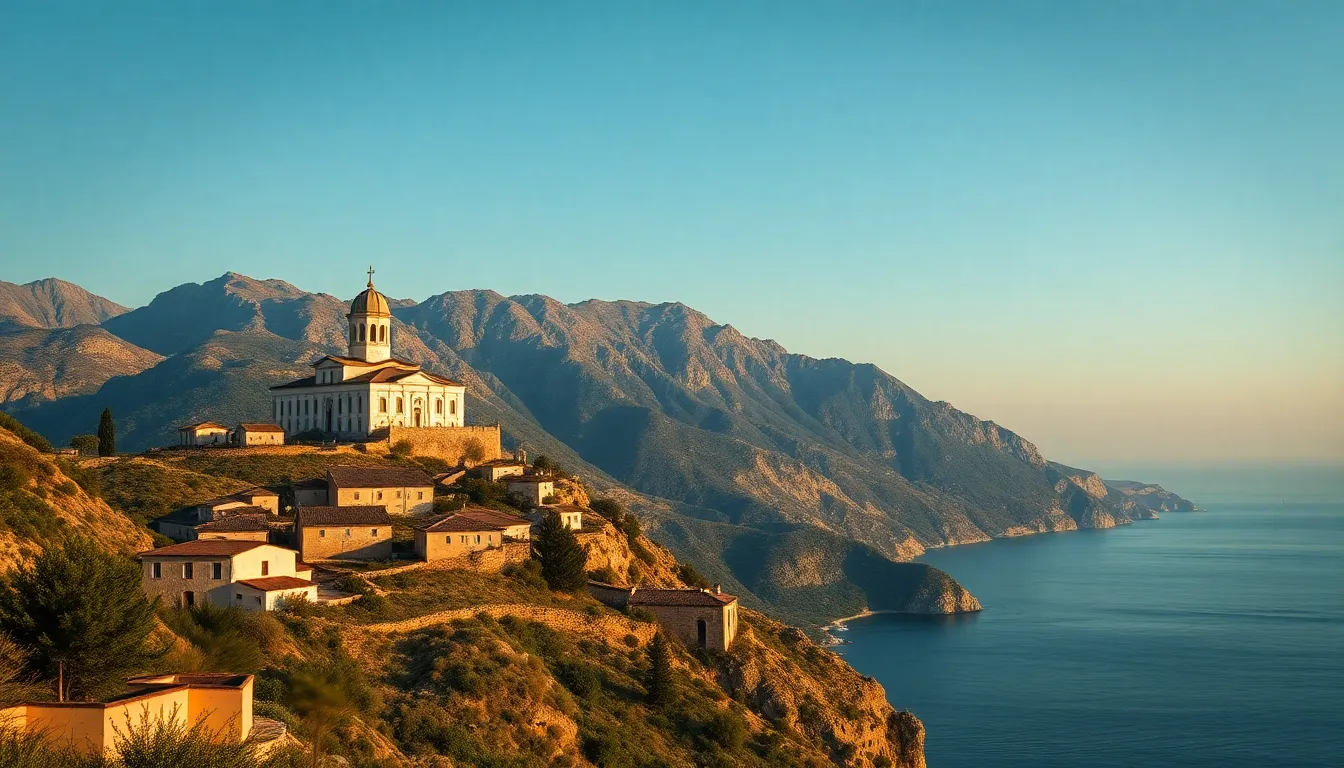
Of every site I help groups reach in Greece, Mount Athos is the one I am most careful to explain in full before anyone gets excited. It is unlike any other stop. You cannot simply add it to an itinerary the way you add Delphi or Meteora. It is a self-governing monastic republic with its own rules, its own permit, a strict daily quota, and a centuries-old restriction that excludes half of any congregation from entering. I have learned to walk leaders through all of it early, because a group that understands Athos before they plan around it has a moving pilgrimage, and a group that does not understand it ends up with disappointment and a logistical knot.
So let me lay it out honestly. After more than forty years arranging access to sites like this, here is what a pilgrimage group leader actually needs to know about securing a visit to the Holy Mountain.
What Mount Athos Actually Is
Mount Athos is not a tourist site. It is a monastic peninsula in northern Greece, home to twenty Eastern Orthodox monasteries and a continuous monastic tradition stretching back over a thousand years. It is autonomous, governed by the monastic community itself under the spiritual jurisdiction of the Ecumenical Patriarchate, with its own administrative authority that controls who enters.
That last point is the one to absorb. Entry is controlled, deliberately and tightly. Athos is a place of prayer first and a destination a distant second. Pilgrims are welcomed, but on the mountain’s terms, never the visitor’s. Understanding that frame changes how you plan and how you prepare your group.
The Male-Only Rule: Address It First
There is no gentle way around this, so I address it directly with every group from the start. Mount Athos does not permit women to enter. The restriction, called the avaton, has been in force for over a thousand years and applies to all female visitors without exception. It is not negotiable, and it is not something an operator can arrange around.
For a pilgrimage group, this is the single most important planning fact, because most groups are mixed. You cannot bring your whole congregation onto the Holy Mountain. So the first conversation a leader needs to have is what to do with the rest of the group.
How Leaders Usually Handle the Mixed Group
The common solution is to split the itinerary for a day or two. The men who wish to enter Athos arrange their permits and visit the monasteries. Meanwhile the women, and any men who prefer not to go, take an alternative program. There are excellent options nearby, including boat cruises that sail along the Athos coastline, close enough to see the monasteries rising from the sea, which is the only way women can experience the mountain at all. The Halkidiki region around the peninsula also offers Byzantine sites and the broader Thessaloniki area is rich with both Christian and Jewish heritage.
I am candid with leaders that this split needs care. It works well when everyone understands it in advance and the alternative program is genuinely meaningful rather than a holding pattern. It goes badly when the women’s portion of the group feels like an afterthought. Plan both halves with equal attention.
The Diamonitirion: The Permit You Cannot Skip
Every male visitor to Mount Athos needs a permit called a diamonitirion. There is no walking in without one. Here is how it works.
The diamonitirion is issued by the Pilgrims’ Bureau, the office in Thessaloniki that manages entry to the mountain. It grants a stay of a set number of days, typically allowing overnight stays at the monasteries. The application requires each pilgrim’s passport details and is submitted in advance.
There is a daily quota, and this is the constraint that shapes the calendar. Only a limited number of Orthodox pilgrims and an even smaller number of non-Orthodox pilgrims are admitted each day. Because the non-Orthodox allocation is small, demand outstrips supply, especially in the warmer months and around major Orthodox feasts. This is why Athos cannot be a last-minute addition. Permits must be requested well ahead, and the dates often have to flex around availability rather than the other way round.
What This Means for Your Planning Timeline
Practically, securing a group’s diamonitirion is the part of a Greece itinerary that needs the longest lead time. For most sites, six to nine months ahead is comfortable. For an Athos visit, request the permits as early as you can, because the limited non-Orthodox quota means the date may be decided by when slots are available rather than by your preferred schedule. Build the rest of the trip around the Athos dates you can actually get, not the reverse.
Once You Are on the Mountain
A few realities of the visit itself that leaders should prepare their men for.
Athos runs on Byzantine time and a monastic rhythm, with very early services and a slower, prayer-centered pace. This is not a place you tour. It is a place you enter and live within for a day or two.
The monasteries offer simple hospitality, a bed and shared meals, as they have for pilgrims across the centuries. Dress is modest and behavior is reverent throughout. Photography is restricted in many places and forbidden in others, and that is to be respected fully.
The terrain is demanding. Reaching and moving between monasteries involves walking, sometimes on rough mountain paths, and the conditions are basic by design. Prepare older or less mobile members honestly about what the visit asks of them physically.
How a Group Leader Actually Secures It
Given the quota, the permit process, and the male-only rule, this is not a visit a leader arranges alone from abroad. The realistic path is to work through an operator with the relationships and the local knowledge to handle the Pilgrims’ Bureau, submit the diamonitirion applications correctly, and time the request against the quota.
This is exactly the kind of access that separates a serious heritage operator from a generic Greece package. Anyone can book Athens. Arranging Mount Athos permits for a group, while building a genuinely meaningful parallel program for the women and the men who stay behind, takes experience and relationships on the ground. Our pastors and rabbis guide speaks to what to look for in an operator, and the Pauline footsteps guide shows how a site like Athos can sit within a wider northern Greece itinerary based around Thessaloniki.
If you are weighing the trip overall, the free group-leader benefit still applies. With fifteen or more participants, the group leader travels free, which you can read about in our group-leader economics guide.
FAQ: Visiting Mount Athos as a Pilgrimage Group
Do you need a permit to visit Mount Athos?
Yes. Every male visitor needs a diamonitirion, issued by the Pilgrims’ Bureau in Thessaloniki, and there is no entry without one. The application uses each pilgrim’s passport details and must be submitted in advance, because a strict daily quota limits how many visitors, especially non-Orthodox visitors, are admitted each day.
Can women visit Mount Athos?
No. Mount Athos does not permit women to enter, under a thousand-year-old rule called the avaton that applies to all female visitors without exception. The closest a woman can come is a boat cruise along the Athos coastline, which sails near enough to see the monasteries from the sea. This is why mixed groups split the itinerary for the Athos portion.
How far in advance do I need to arrange a Mount Athos visit?
As early as you can. The non-Orthodox daily quota is small and demand is high, so permits should be requested well ahead, and the visit date often has to flex around availability. Athos needs the longest lead time of any site in a Greece itinerary, so build the rest of the trip around the dates you can secure.
What do the women and other members do during the Athos visit?
They follow a parallel program, ideally one planned with equal care. A coastal boat cruise lets them see the monasteries from the water, the only way women can experience the mountain, and the surrounding Halkidiki and Thessaloniki areas offer Byzantine sites and rich Christian and Jewish heritage. The split works best when everyone understands it in advance.
Can my whole group leader’s trip include Athos, or is it always a side visit?
Athos is always a specialized component within a wider trip rather than the whole journey, because of the permit, the quota, and the male-only rule. It sits most naturally within a northern Greece itinerary based around Thessaloniki, where the Pilgrims’ Bureau is located and where the parallel program for the rest of the group is easy to build.
Mount Athos rewards the groups that approach it with patience and respect, and it asks for real planning. If your group is drawn to the Holy Mountain, I would be glad to walk you through what it would take. You can see how we build these trips on our Greece heritage page and how the group experience works on our group heritage tours page.
Contact us and we will tell you honestly what is possible for your group and your dates.