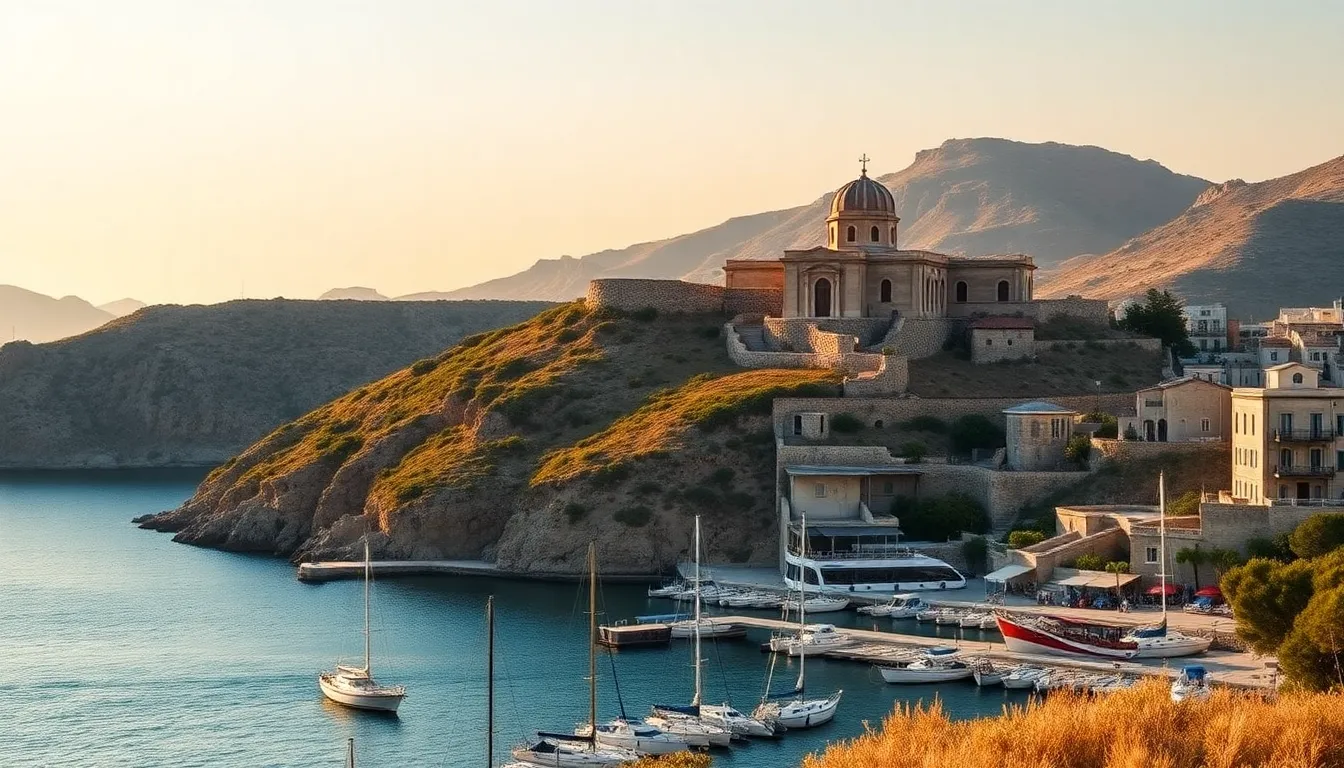
There is a tug-of-war inside almost every Greece itinerary I help build, and it runs along the coastline. The mainland holds the spine of the Pauline story, the cities of Acts you can drive between in a sensible order. The islands hold the Revelation and one of the great chapters of Jewish history. Both pull at a group, and a trip has only so many days. So when a leader asks whether to focus on the mainland or the islands, what they are really asking is which story their group most needs to stand inside. Let me weigh both, because the answer is rarely all of one.
What the Mainland Holds
The mainland is the apostle Paul. His second missionary journey runs across it in a line you can follow north to south: Philippi, the first church in Europe, where Lydia was baptized at the river. Thessaloniki, the living city he wrote two letters to. Berea, where they searched the scriptures daily. Athens and the Areopagus. Corinth, where he stayed eighteen months. I walk the whole route in our guide to the footsteps of Paul in Greece.
The strength of the mainland is coherence. The sites line up in the order Acts unfolds, and you reach them all by road, no ferries, no flights, no weather gambles. Your group lives the arc of the mission in sequence, and by Corinth they have traveled the whole story. For a Christian group whose center is Paul and the early church, the mainland is the trip.
Where the Mainland Wins
Logistics and narrative. One bus, one continuous route, full control over pacing, and a story that builds from beginning to end. It is the easiest Greece trip to run smoothly and the clearest one to follow, which is why most first-time Pauline journeys are mainland-based. No transfer eats your day, and no rough sea threatens your schedule.
What the Islands Hold
The islands hold two stories the mainland cannot tell.
The first is Revelation. Patmos is where John was exiled and received the Apocalypse. The Cave of the Apocalypse and the Monastery of Saint John sit above a harbor your group arrives into by sea. For a group that wants the close of the New Testament, the visionary end of the story, Patmos is essential and it is an island.
The second is Jewish heritage. Rhodes holds a historic Juderia, the old Jewish quarter, with its synagogue and a deportation memorial that carries the weight of a community largely destroyed in the Holocaust. The islands, with Rhodes at the center, open a Sephardic story that complements the mainland’s Thessaloniki, which I cover in our guide to Jewish heritage in Greece. For Jewish groups and interfaith journeys, the islands are not optional. They are half the point.
Where the Islands Win
Emotional arrival and untold stories. There is something the islands do that the mainland cannot. Sailing into Patmos the way the ancient world arrived, walking the quiet lanes of the Rhodes Juderia, standing where John saw his vision. These are moments that land in the body. The islands give a trip its most cinematic and often its most moving hours.
The Honest Trade-off
Here is the tension, plainly. The islands cost you time and control. Reaching Patmos or Rhodes means a ferry or a flight, sometimes both, and the transfer eats hours and introduces weather risk. Getting a group of twenty-five onto a ferry is a real piece of choreography. The more islands you add, the more your trip becomes about moving between them rather than sitting in them, and the looser your control over the schedule gets.
The mainland gives up the Revelation and the island Jewish heritage in exchange for a tight, reliable, coherent route. The islands give up some control and add logistics in exchange for stories and arrivals nothing else can match. That is the trade, and it is a real one.
How Most Groups Resolve It
The honest answer for most groups is not either-or. It is a mainland base with one island extension.
Build your trip on the mainland Pauline route, where the story has its spine and the logistics are clean. Then add the one island that matters most to your group. For a Christian group, that is almost always Patmos and the Revelation. For a Jewish or interfaith group, it is Rhodes and the Sephardic story. One island, chosen deliberately, gives your group the emotional high of an island arrival without turning the whole trip into a ferry schedule.
If your group is genuinely island-centered, several Aegean stops where the sailing between them is part of the experience, that is the case for a cruise, which I weigh in our comparison of land tours versus an Aegean cruise. But for most heritage groups, the mainland carries the trip and one island completes it.
A note on group size. Larger groups feel the island transfer more, so a group of thirty doing one well-planned Patmos extension is wiser than the same group trying to chain three islands. Smaller private groups have more island flexibility.
Matching the Choice to Your Group’s Story
The cleanest way to decide is to ask what story your group came to stand inside, because the geography sorts itself once you know that.
If your congregation’s heart is Paul and the early church, the mainland is your answer and an island is the grace note. Your group needs Philippi, Athens, and Corinth in sequence, and Patmos rounds the story with the Revelation if you have the days. The mainland is not a compromise here. It is the main event, and it runs cleanly.
If your group is Jewish or interfaith, the calculus flips. Thessaloniki on the mainland and Rhodes on the islands together tell the Sephardic story, and you cannot tell it well without both. Here the islands stop being an extension and become structural. The trip is built to hold the mainland and at least one island as equal partners.
And if your group is drawn most to the close of the New Testament, the visionary end of the story, then Patmos is the gravitational center and the mainland supports it. That is the rarer case, but it exists, and for those groups the island leads.
Name the story first. The map follows.
FAQ: Mainland or Islands for Greece
Should a heritage group focus on the mainland or the islands?
For most groups, build the trip on the mainland Pauline route, Philippi through Corinth, where the story is coherent and the logistics are clean, then add the one island that matters most. Patmos for the Revelation, Rhodes for Jewish heritage. A mainland base with a single deliberate island extension serves most groups better than splitting focus.
Is Patmos worth adding to a mainland trip?
For a group that wants the close of the New Testament, very much so. Patmos is where John received the Revelation, and arriving by sea to the Cave of the Apocalypse and the Monastery of Saint John is one of the most moving experiences in Greece. The trade-off is the ferry or flight time, which is why it works best as a focused extension rather than a casual add-on.
Why do the islands matter for a Jewish heritage trip?
Rhodes holds a historic Juderia with its synagogue and a Holocaust deportation memorial, telling a Sephardic story that complements Thessaloniki on the mainland. For Jewish and interfaith groups, the islands are not an extra. They are an essential part of the journey, and we build itineraries that honor both the mainland and island sites.
How hard is it to get a large group to the islands?
It takes planning. Ferries and flights add hours and some weather risk, and the larger your group, the more the transfer needs choreography. We do it regularly for groups of twenty or more, but the wisdom is usually one well-planned island rather than several. Smaller private groups have more island flexibility.
Does the free group leader benefit cover island portions?
Yes. When your group reaches fifteen paying participants, the group leader travels free across the whole itinerary, mainland and islands alike, including ferry or flight transfers, hotels, meals, and ground transportation. The benefit applies to the full trip.
If you are deciding how to balance the mainland and the islands for your group, I am glad to help you shape it around the stories that matter most to your community. You can see how we build these journeys on our Greece heritage page or how the group format works on our group heritage tours page.
Contact us whenever you are ready to start planning.