I tell rabbis and educators that if they want to understand how old Jewish life in Greece really is, they have to go to Ioannina. Not Thessaloniki, not Rhodes, as profound as those are. Ioannina. Because the Jewish community here is not a branch of the Sephardic world that arrived after 1492. It is Romaniote, Greek-speaking, with roots stretching back more than two thousand years, and it represents a tradition that existed almost nowhere else on earth. When I bring a group into the old fortress quarter and we stand in front of the synagogue, I watch people realize they are touching something far older than they imagined.
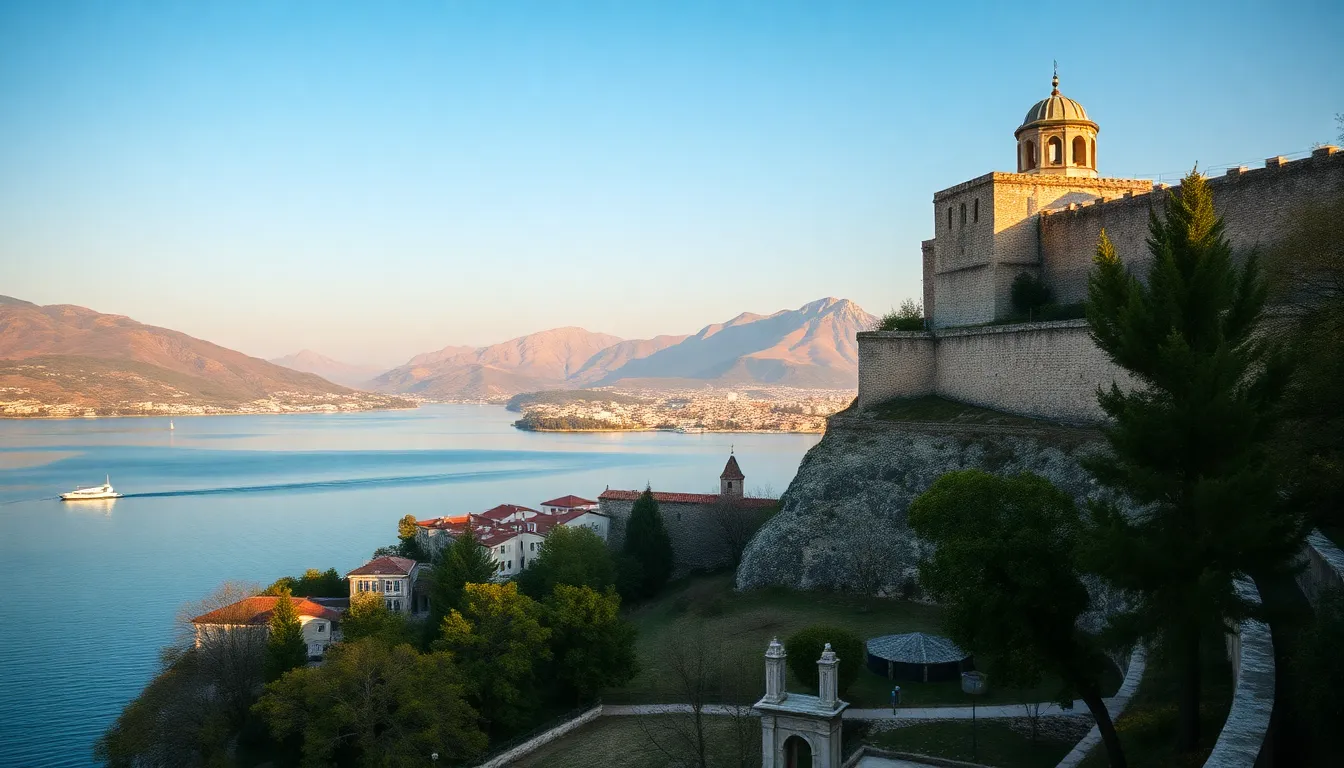
Ioannina sits in the mountains of northwestern Greece, on the shore of a lake, in the region of Epirus. The journey there, through the Pindus range, is part of the experience. The city itself is layered with Ottoman, Greek, and Jewish history, and at its heart is the most ancient living Jewish tradition in the country. Let me orient you to it.
Why Ioannina Matters: The Romaniote Tradition
The Romaniote Jews are the key to this whole city, and the thing most groups have never heard of. They are Greek-speaking Jews whose ancestors lived in the eastern Mediterranean long before the expulsion from Spain. Their liturgy, their music, their customs developed along a path entirely independent of the Sephardic world. By the time Sephardic Jews arrived in Greece after 1492, the Romaniote communities had already been established for well over a thousand years.
This distinction is not a footnote. It changes the way you understand Jewish life in the Diaspora. The Romaniote tradition shows that Jewish presence in Greece was not a single story imported from Spain. It was indigenous, ancient, and rooted in this particular landscape. The Romaniotes had their own pronunciation of Hebrew, their own piyyutim, their own way of naming and remembering their dead on decorated parchment scrolls called pinkasim. Ioannina was their great center, and it remains the best place in the world to encounter the tradition.
For the full picture of how the Romaniote, Sephardic, and Thessaloniki worlds fit together, our Jewish heritage in Greece guide sets all three side by side.
The Synagogue: Kehila Kedosha Yashan
Inside the old walled quarter of Ioannina, the Kehila Kedosha Yashan synagogue still stands. The name means “the Old Holy Community,” and it is one of the largest and oldest surviving synagogues in Greece. The building sits within the fortress walls, where the Jewish community lived for centuries alongside its Greek and Ottoman neighbors.
The interior follows the Romaniote layout, with the bimah and the ark arranged in the distinctive way of this tradition, and the walls inscribed with names and dedications. Walking in with a group, knowing how few of these spaces survived, gives the room a weight that is hard to describe. This is not a reconstruction of a tradition. It is the tradition’s own house, still standing in the city where it flourished.
The synagogue is opened for visitors and for the small number of services still held, and a local caretaker or guide can open it and tell the story. Confirming access in advance is essential, since there is no large permanent staff.
What Survived, and What Was Lost
The Jewish community of Ioannina numbered roughly two thousand before the war. In March 1944, nearly the entire community was deported to Auschwitz. Fewer than one hundred returned.
For a group, this is the hardest and most important part of the visit. The deportation of Ioannina’s Jews ended a tradition that had lived in this city for many centuries, perhaps far longer. What survived is precious precisely because it is so rare: the synagogue itself, the memory carried by descendants, the oral histories collected over the years, and the small museum materials that tell the community’s story. For a congregation seeking to understand the full breadth of Jewish experience in the Diaspora, Ioannina is not optional. It is essential.
I usually give the group time here, by the synagogue or along the fortress walls, to sit with what happened. Reading the names, or simply standing in silence, is the right response to a place like this.
The Lakeside City and the Island
Ioannina is more than its Jewish heritage, and the wider city gives a group context and beauty. The city wraps around Lake Pamvotis, and the setting is one of the loveliest in mainland Greece. At the heart of the old town is the Kastro, the fortress, with its Ottoman walls, mosques, and the citadel of Its Kale, from which the notorious Ali Pasha ruled Epirus in the early nineteenth century. The Jewish quarter sat within these same walls, which is why the histories are so physically intertwined.
A short boat ride takes you to the small island in the lake, a peaceful place with Byzantine monasteries tucked among the trees. It makes a gentle, beautiful counterpoint to the heavier history in the city, and groups appreciate the breathing room. The island’s monasteries hold frescoes worth seeing and offer a quiet hour for reflection.
Practical Orientation for a Group Visit
A few things I always tell leaders planning Ioannina:
- Arrange synagogue access in advance. Kehila Kedosha Yashan does not have a large staff, and visits are usually arranged through the local community or a guide. Do not arrive expecting an open door without confirming first.
- The drive is part of it. Ioannina is reached through the mountains of Epirus, a few hours from Meteora and longer from Thessaloniki. The scenery is beautiful, but build the driving time into your plan honestly.
- Pair it with Meteora. The two are close enough to combine, and they balance each other: the dramatic monasteries of Meteora and the ancient Jewish heart of Ioannina. See our Meteora region heritage guide for that side of the journey.
- A full day suits the city. One unhurried day covers the synagogue, the fortress quarter, and the lake island, with time for reflection. Two nights lets the group settle without rushing the drive.
Ioannina is most often reached overland on a route that includes Meteora, or by a short domestic flight from Athens. It is a central stop on any serious Jewish heritage itinerary through Greece, alongside Thessaloniki and Rhodes. Our Rhodes heritage guide covers the Sephardic island community for comparison.
One thing worth knowing as you plan: with Heritage Tours, the group leader travels free when you bring fifteen or more participants. For many congregations, that makes a dedicated journey to a place like Ioannina possible, and it is worth factoring in early.
FAQ: Visiting Ioannina
What makes the Jewish community of Ioannina different from Thessaloniki or Rhodes?
Ioannina is Romaniote, not Sephardic. The Romaniote Jews are Greek-speaking, with roots in Greece stretching back more than two thousand years, long predating the Sephardic communities that arrived after the Spanish expulsion of 1492. Their liturgy, music, and customs developed independently, which makes Ioannina the heart of the oldest Jewish tradition in the country.
Can groups visit the synagogue in Ioannina?
Yes, but you should arrange access in advance. Kehila Kedosha Yashan, the Old Holy Community synagogue, is opened for visitors and for the small number of services still held, usually through the local community or a guide. There is no large permanent staff, so confirming ahead is essential to a smooth visit.
What happened to the Jews of Ioannina in the Holocaust?
The community numbered roughly two thousand before the war. In March 1944, nearly the entire community was deported to Auschwitz, and fewer than one hundred returned. The synagogue, the memory carried by descendants, and the collected oral histories are among the last living evidence of the Romaniote tradition in its great center.
How do groups fit Ioannina into a Greece itinerary?
Most pair it with Meteora, since the two are close and balance each other well. Ioannina is reached through the mountains of Epirus, a few hours from Meteora, or by a short flight from Athens. One full day covers the synagogue, the fortress quarter, and the lake island, and it belongs on any serious Jewish heritage route alongside Thessaloniki and Rhodes.
Is there more to see in Ioannina than the Jewish sites?
Yes. The city sits on a beautiful lake, with an Ottoman fortress, mosques, and the citadel of Ali Pasha, all within the same walls where the Jewish quarter stood. A short boat ride reaches the lake island, with Byzantine monasteries among the trees. The wider city gives a group both context and a place for quiet reflection.
If Ioannina is calling to you for your community, I would be glad to help you shape the visit so the depth of the Romaniote story reaches your people. This is the oldest Jewish tradition in Greece, and standing in its house is something few travelers ever do. You can see how we build these trips on our Greece heritage page or learn how the group experience works on our group heritage tours page.
Contact us whenever you are ready to start planning.