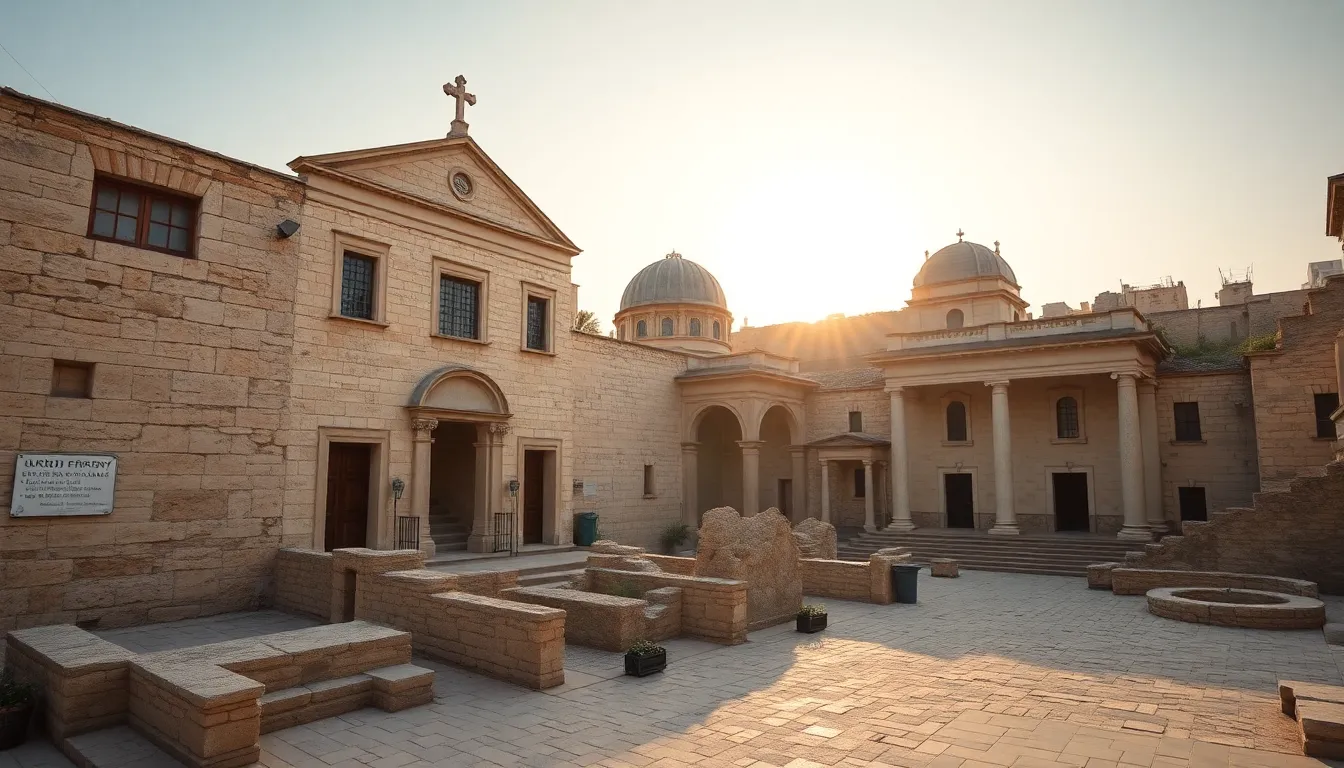
I have learned to give groups the history of Greek Jewry before we visit a single site, because without it the synagogues blur together. Someone stands in Ioannina and someone stands in Thessaloniki and they assume they are seeing the same thing in two cities. They are not. They are seeing two Jewish civilizations separated by more than a thousand years, and the gap between them is the whole story. So I sit my groups down on the first evening and walk them through it from the beginning. That is what I want to do for you here.
This is the history a heritage traveler actually needs. Not a scholarly survey, but the shape of the thing: where Greek Jewry came from, how it split into distinct traditions, how it rose to extraordinary heights, and how it was very nearly destroyed. Once you carry this frame, every site you visit falls into place.
Let me take it from the start.
The Ancient Roots: Romaniote Jewry
Jewish life in Greece is old. Not old by the standards of the Diaspora. Old by any standard at all.
A Presence Reaching Back Over Two Thousand Years
Jews lived in the Greek-speaking world in the Hellenistic and Roman periods, centuries before the destruction of the Second Temple. The Apostle Paul, traveling through Greece in the first century, preached in established synagogues in Thessaloniki, Berea, and Corinth, which tells you the communities were already there and organized. These Greek-speaking Jews, who came to be called Romaniotes after the Eastern Roman Empire, are the original stratum of Greek Jewry.
The Romaniotes developed everything on their own. Their liturgy, their Hebrew pronunciation, their melodies, their customs around the synagogue and the home all formed along a path independent of any other Jewish community. By the time the Sephardim arrived, the Romaniotes had already been in Greece for well over a thousand years. Ioannina, in the northwestern mountains, remained the heartland of this tradition into the modern era, and it is where a group can still encounter it. Our map of the Jewish communities of Greece shows where the Romaniote presence held strongest.
What Made the Romaniotes Distinct
This matters for travelers because it overturns a common assumption. People think Jewish life in Greece began with the expulsion from Spain. It did not. The Sephardim were latecomers to a land where Jews had already prayed for a millennium. The Romaniote tradition is the proof, and Ioannina is where you stand inside it.
The Sephardic Transformation: 1492 and Salonica
Then came 1492, and everything changed.
The Expulsion From Spain and the Ottoman Welcome
When Ferdinand and Isabella expelled the Jews of Spain in 1492, the Ottoman Empire, which controlled most of Greece, opened its doors. Sultan Bayezid II is said to have welcomed the exiles, and they came in large numbers. Many settled in Thessaloniki, and over the following centuries they transformed it.
The Sephardim brought Ladino, the Judeo-Spanish language they carried from Iberia, along with their Iberian customs, their commercial networks, and their rabbinical traditions. In some Greek towns they merged with the existing Romaniote communities, and over time the Sephardic culture often became dominant. In others, the two traditions kept their distance. This layering, ancient Romaniote beneath later Sephardic, is the key to understanding most Greek Jewish communities.
Thessaloniki, the Jerusalem of the Balkans
Thessaloniki became something the Jewish world had never seen. By the early twentieth century the city was roughly half Jewish. The port closed on Shabbat. Ladino was the common language of the streets and the docks. There were dozens of synagogues, each tied to a community of origin, Castile, Aragon, Portugal, Italy, and printing presses turning out Ladino texts. Thessaloniki was not a city with a large Jewish population. It was a Jewish city with other populations alongside it. Nothing in the entire Sephardic Diaspora matched its scale. The full account is in our guide to Jewish heritage in Greece.
Other communities developed their own character within this Sephardic world. Rhodes built an island culture inside its medieval walled city. Corfu, never Ottoman but Venetian, absorbed Italian influence and kept an Italian-speaking congregation, a story we tell in full in our guide to Jewish Corfu.
The Modern Era and the Catastrophe
For four and a half centuries the Sephardic civilization of Greece flourished. Then, in the span of about a year, it was destroyed.
Greece Between the Wars
After the Ottoman Empire withdrew and Thessaloniki became Greek in 1912, the community navigated a changing world: a great fire in 1917 that devastated the Jewish quarter, waves of emigration, and the pressures of a new nation-state. Still, on the eve of the Second World War, Greece held a Jewish population of around 75,000, with Thessaloniki at its heart.
The Holocaust in Greece
The deportations began in Thessaloniki in March 1943. Within months, nearly 50,000 Jews, the vast majority of the community, were deported to Auschwitz and murdered. The great Sephardic world that had grown for four and a half centuries was emptied in a single spring. Across the rest of the country the pattern repeated through 1943 and 1944: Ioannina, Corfu, Rhodes, community after community deported. By the end, roughly 85 to 90 percent of Greek Jewry had been murdered, one of the highest proportions in all of occupied Europe.
There were exceptions that deserve to be named. In Volos and Athens, with the help of Greek Orthodox clergy and the resistance, larger numbers escaped into the mountains and survived. These rescues do not undo the catastrophe, but they are part of the honest history, and I always tell groups about them. Dignity in how we tell this story is not optional. These were whole worlds of people, and they deserve to be remembered as such.
The Modern Remnant
A few thousand Jews live in Greece today, most of them in Athens and Thessaloniki, with smaller active communities in Larissa, Volos, Corfu, and elsewhere. The synagogues that survived still function. Museums in Athens, Thessaloniki, Ioannina, and Rhodes preserve what was saved.
For a heritage traveler, this remnant matters enormously. It means a trip to Greece is not only a visit to ruins and memorials. It is a chance to meet a living community, to sit in a functioning synagogue, to understand that Greek Jewry was not entirely erased. The thread, thinned almost to nothing, was never fully cut.
Why This History Shapes a Heritage Trip
Once a group carries this frame, the itinerary makes sense. Ioannina is the ancient Romaniote root. Thessaloniki is the Sephardic summit and the deepest loss. Rhodes and Corfu are the island variations, one Ottoman, one Venetian. Athens is the modern center and the place of survival. Each site stops being a stop and becomes a chapter.
A dedicated Jewish heritage tour of Greece usually runs eight to ten days, enough to follow the arc from the ancient roots to the modern remnant without rushing. With Heritage Tours, the group leader travels free when you bring fifteen or more participants, which for many congregations makes the journey realistic. We build each itinerary around the parts of this history your community most wants to walk through.
FAQ: The History of the Jews in Greece
How long have Jews lived in Greece?
For more than two thousand years. Greek-speaking Jews, the Romaniotes, lived in the region during the Hellenistic and Roman periods, centuries before the destruction of the Second Temple. The Apostle Paul preached in established Greek synagogues in the first century. This makes Greek Jewry one of the oldest Jewish presences anywhere in the Diaspora.
What is the difference between Romaniote and Sephardic Jews in Greece?
Romaniote Jews are the ancient Greek-speaking community, present for well over a thousand years before the Sephardim, with a liturgy and customs that developed independently. Sephardic Jews arrived after the 1492 expulsion from Spain, bringing the Ladino language and Iberian traditions. In many towns the Sephardic culture became dominant, but Ioannina remained a Romaniote stronghold.
Why was Thessaloniki so important in Jewish history?
After 1492, Sephardic exiles settled in Thessaloniki and built a community of extraordinary scale. By the early twentieth century the city was roughly half Jewish, with dozens of synagogues, a Ladino-speaking culture, and a rabbinical tradition that influenced the whole Sephardic world. It was known as the Jerusalem of the Balkans, and no other Diaspora city had a comparable Jewish presence.
How many Greek Jews were killed in the Holocaust?
Roughly 85 to 90 percent of Greek Jewry was murdered, one of the highest proportions in occupied Europe. Of about 75,000 Jews in Greece before the war, the great majority were deported to Auschwitz, beginning with nearly 50,000 from Thessaloniki in 1943. Communities in Volos and Athens had higher survival rates thanks to rescue efforts.
Are there still Jewish communities in Greece today?
Yes. A few thousand Jews live in Greece today, mainly in Athens and Thessaloniki, with smaller active communities in Larissa, Volos, Corfu, and elsewhere. Surviving synagogues still function, and museums preserve the heritage. A heritage trip can include meeting this living community, not only visiting historic sites.
If you want your community to walk this history rather than just read it, I would be glad to help you shape the journey. The arc from the ancient Romaniotes to the modern remnant is one of the great untold stories of the Jewish Diaspora. You can see how we structure these trips on our Greece heritage page or learn how the group experience works on our group heritage tours page.
Contact us whenever you are ready to start planning.