When a pastor or rabbi calls me about Greece, the safety question is often the one they raise carefully, almost apologetically, as if it might be a silly thing to ask. It is not. You are responsible for a group of people, some of them older, some of them traveling abroad for the first time, all of them trusting you. Asking whether Greece is safe is exactly the right instinct. The good news is that I can answer it honestly and reassuringly, which is not something I can say about every destination.
Let me give you a real briefing, not a brochure line. I will tell you where Greece is genuinely easy, where it takes a little care, and what actually deserves your attention as a group leader.
The Honest Headline
Greece is one of the safer countries you can take a faith group to. Violent crime against tourists is rare. The country has a long, deep tourism culture and is used to welcoming visitors, including religious groups, from all over the world. For most of your itinerary, the safety question is not “will something bad happen” but “is the ground even and is everyone hydrated.”
That said, “safe” does not mean “nothing to manage.” The real risks on a Greece heritage trip are not dramatic. They are practical: pickpockets in crowded tourist zones, uneven ancient terrain, heat, and the ordinary logistics of moving a group of people. Those are all manageable, and the rest of this article is how.
Crime: What Is Actually Likely
I will be plain. The crime your group is most likely to encounter in Greece is petty theft, specifically pickpocketing, in a handful of crowded places: the Athens metro, busy tourist sites like the area around the Acropolis, and the central markets. This is opportunistic, not violent, and it targets distracted tourists with phones and wallets in easy reach.
The fix is simple and worth briefing your group on before you go:
- Keep wallets and phones in front pockets or a zipped bag worn across the body, not in a back pocket or an open tote.
- Be especially aware in the Athens metro and in dense crowds at major sites.
- Leave passports and most cash in the hotel safe and carry only what the day needs.
Do these few things and the most common problem largely disappears. Violent crime against tourists is uncommon, and the cities you will spend the most time in, Thessaloniki and Athens, are well-policed in their tourist and central areas.
Terrain: The Risk Leaders Underestimate
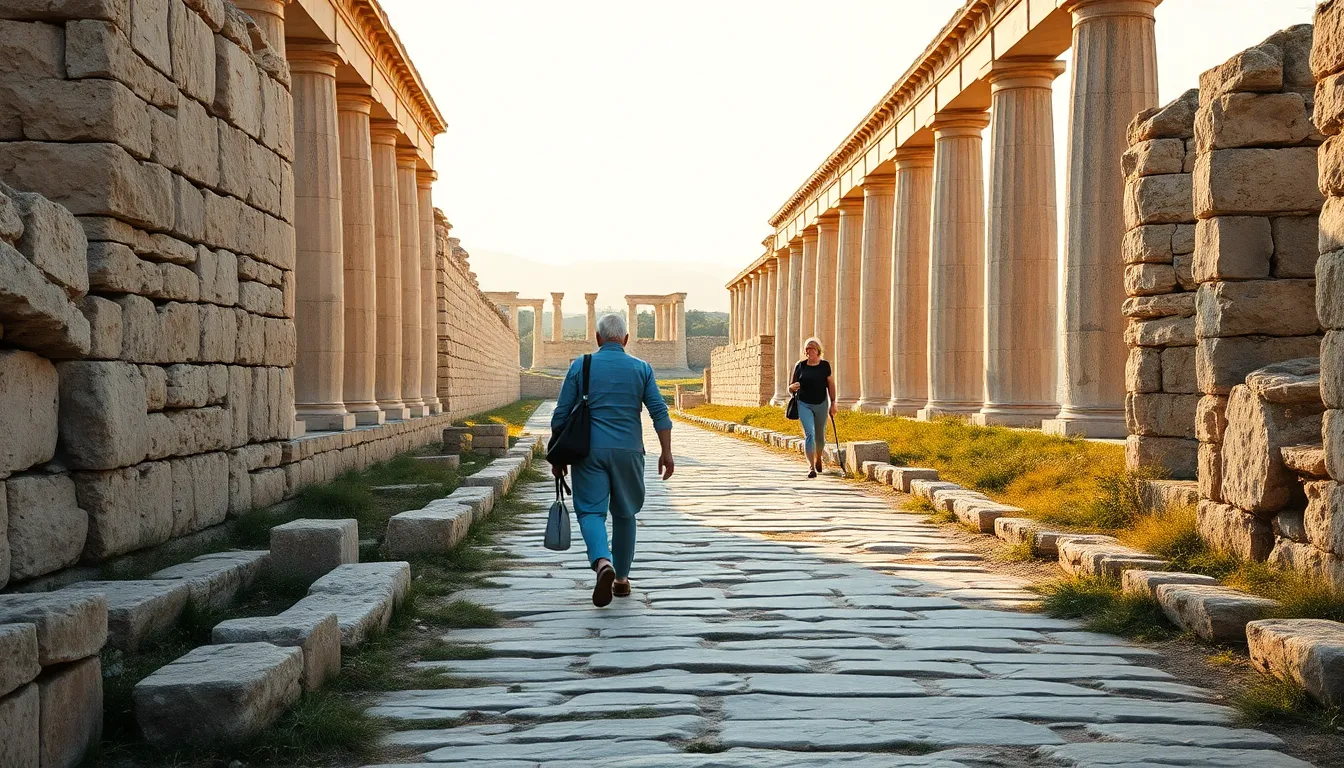
Here is the safety issue I actually worry about most, and it is not crime. It is footing. Greek heritage sites are ancient, and ancient means uneven. Marble worn smooth over two thousand years gets slippery. Paths at Corinth, the Acropolis, Philippi, and especially the rock of the Areopagus in Athens are not flat, modern walkways.
For a group with older members, this is the real thing to plan around. A turned ankle or a fall is far more likely than any crime, and it can end someone’s trip. So:
- Tell every participant to bring sturdy shoes with grip. Not sandals, not smooth-soled dress shoes.
- At the Areopagus and the Acropolis, take the stairs and the handrails where they exist, and never rush.
- Build a realistic pace. A good itinerary gives slower walkers time and dignity instead of leaving them to scramble.
The monasteries of Meteora, if your trip includes them, involve stairs cut into rock. They are doable for most groups with care, but they deserve honest mention so no one is surprised. Our packing guide for a Greece heritage tour covers exactly what footwear to bring for this terrain.
Heat and Health
Greece in the warm months is genuinely hot, and the sites are open and exposed. For older travelers, heat is a real health risk, more so than most people plan for. The countermeasures are not complicated but they have to be deliberate:
- Carry water and drink it before anyone feels thirsty.
- Wear hats and use sun protection at open sites.
- Schedule the most demanding walking for the cooler morning hours.
- Choose a comfortable season. Late spring and early fall keep the heat manageable, which our best time to visit Greece guide breaks down month by month.
Greece has good medical care, especially in Athens and Thessaloniki, and pharmacies are widespread and helpful. I strongly recommend that every participant carry travel insurance that covers medical care and evacuation, and that you collect a simple medical and emergency-contact sheet from everyone before you depart. It is the kind of quiet preparation that you hope you never need and are deeply grateful for if you do.
Transport and Daily Logistics
Moving a group is its own safety category, and it is one of the strongest arguments for a properly organized tour over a do-it-yourself trip. A private, air-conditioned coach with a professional, licensed driver keeps your group together, removes the stress of navigating foreign roads, and is simply safer than splitting people across taxis or public transport in an unfamiliar country.
Greek roads in the cities can be busy and the driving assertive, which is another reason to leave the wheel to a local professional rather than renting and driving yourself with a group depending on you. Keeping everyone on one coach also means you can do an easy headcount at every stop, which sounds basic but prevents the single most common group mishap: someone left behind.
Group-Specific Considerations for Faith Travelers
A faith group has a few concerns a general tourist does not, and they are worth naming directly.
Greece is a deeply Orthodox Christian country, and Christian heritage groups are welcomed warmly. Visiting churches and monasteries is part of the culture, and modest dress is expected at religious sites, which is simply a matter of respect rather than a safety issue.
For Jewish groups, Greece holds profound heritage, especially Thessaloniki, once known as the Jerusalem of the Balkans. Jewish travelers are safe and welcome. As anywhere in the world, it is sensible to stay aware around any organized event and to coordinate visits to active synagogues in advance, which a good local guide handles as a matter of course. Our guide to Jewish heritage in Greece covers that side of the country in depth.
For interfaith or mixed groups, Greece is comfortable ground. The country is used to religious visitors of every kind, and a thoughtful itinerary honors everyone without friction.
Why a Guided Group Trip Is the Safer Choice
I am not neutral on this, and I will tell you why plainly. A well-run group tour removes most of the situations where things go wrong. A licensed local guide knows which paths are safe and which to avoid, reads the terrain and the crowd, and handles any problem in the local language. A professional driver removes the road risk. A planned pace protects your older travelers. And someone other than you is watching the logistics so you can shepherd your people spiritually instead of anxiously counting heads.
That is the real safety value of going as an organized group. It is not that Greece is dangerous. It is that leadership and local knowledge turn a country that is already safe into one where your group can relax and be present. With Heritage Tours, the group leader travels free when you bring fifteen or more participants, so the person carrying that responsibility is supported, not stretched.
You can see how we structure these journeys on our Greece heritage page and our group heritage tours page, and our Greece heritage travel tips hub gathers the rest of the planning guidance.
FAQ: Is Greece Safe for Heritage Groups?
Is Greece safe for tourists right now?
Yes. Greece is one of the safer countries for tourists, with rare violent crime against visitors and a deep, welcoming tourism culture. The most common issue is petty pickpocketing in a few crowded spots like the Athens metro and busy sites. Simple precautions, like keeping valuables zipped and in front pockets, handle nearly all of it.
What is the biggest safety risk for an older faith group in Greece?
Footing, not crime. Ancient sites have uneven, often slippery marble and stone, and a fall is far more likely than a theft. Sturdy shoes with grip, a realistic pace, and using handrails at places like the Areopagus and the Acropolis are the real safety priorities for groups with older members.
Do we need to worry about heat at the sites?
In the warm months, yes, and it deserves real planning. Many heritage sites are open and exposed. Carry and drink water, wear hats and sun protection, do demanding walking in the cooler morning, and choose a comfortable season like late spring or early fall. Heat affects older travelers more than they expect.
Is Greece safe for Jewish heritage groups specifically?
Yes. Jewish travelers are safe and warmly welcomed in Greece, which holds extraordinary Jewish heritage, especially in Thessaloniki. As anywhere, it is sensible to coordinate synagogue visits in advance and stay generally aware, which a good local guide manages naturally as part of the itinerary.
Is it safer to go with an organized group than on our own?
For a faith group, clearly yes. A licensed guide and professional driver remove the two biggest risks, unfamiliar terrain and foreign roads, and a planned pace protects your older members. Keeping everyone on one coach also makes headcounts simple and prevents the most common group mishap of leaving someone behind.
If safety is the question holding you back, I would be glad to walk you through exactly how we manage it for groups like yours, from terrain and pacing to medical preparation and daily headcounts. Once leaders understand how much of the risk is simply handled for them, the conversation usually shifts from “is this safe” to “when can we go.”
Contact us whenever you want to talk it through.