A youth pastor called me once apologizing before he even asked. He had four days, a tight budget, and a group of twenty that could not be away from work and school any longer than that. He felt like he was failing the trip before it started. I stopped him. A short, well-built Athens and Corinth journey is not a consolation prize. For the right group, it is exactly the right trip. The mistake is not going short. The mistake is going short and trying to cram a full-country itinerary into it.
So let me give you the honest comparison between an Athens-focused trip and a full-country Greece journey, and the cases where each one is the right call.
What an Athens-Focused Trip Covers
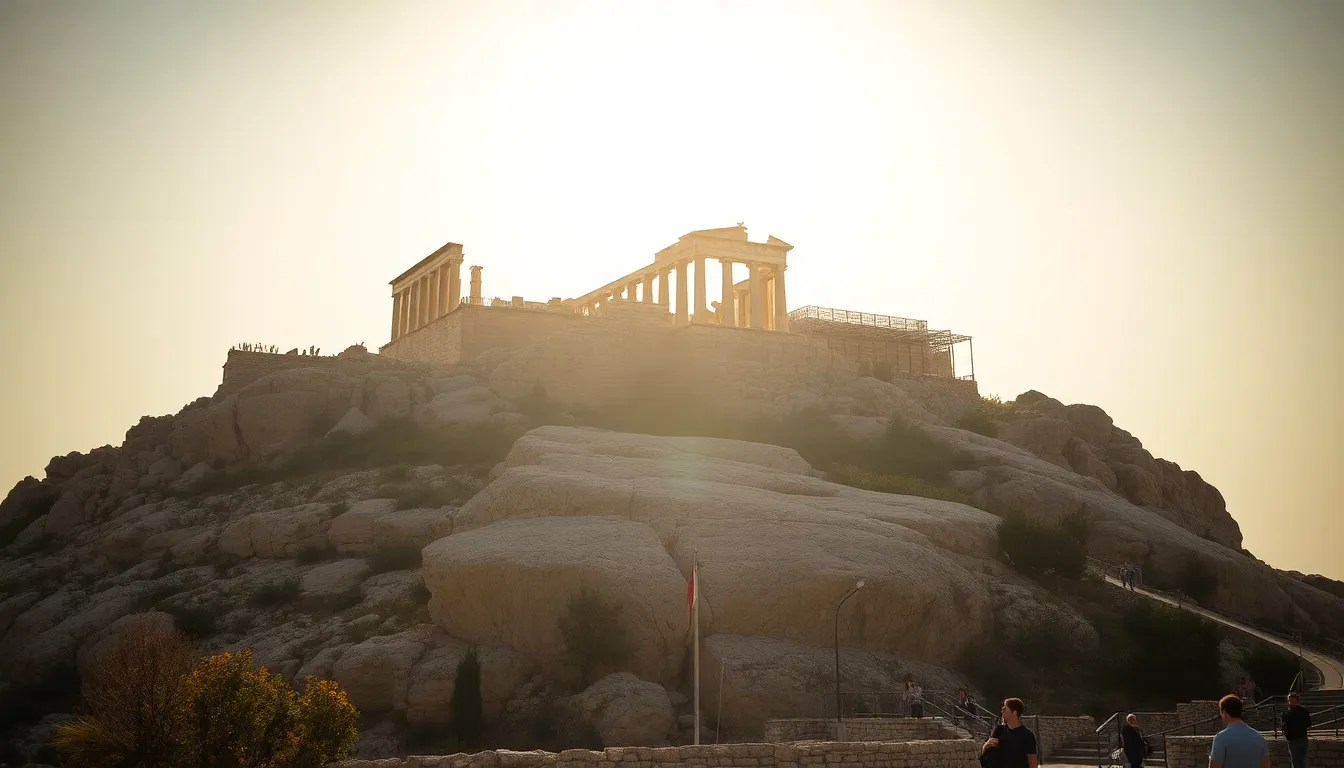
Here is what surprises people: Athens and its surroundings hold a remarkable amount of the Pauline story on their own. You have the Areopagus, Mars Hill, where Paul addressed the philosophers, with the Acropolis and the Parthenon framing it exactly as he saw them. I give that site its own full treatment in our guide to the Areopagus in Athens.
A short drive away is ancient Corinth, where Paul stayed eighteen months and wrote letters your congregation already knows. The bema where he stood before Gallio, the temple of Apollo, the Acrocorinth rising above. Athens and Corinth together give you two of the most important stops on Paul’s journey, both reachable from a single base.
So a focused trip is not a thin trip. It is two deep sites and the city around them, done at a real pace.
Where the Short Trip Shines
Time, cost, and accessibility. A four-to-five-day Athens-centered journey is far easier to fill, because more of your congregation can spare a long weekend than a ten-day absence. It costs less per person, which widens who can come. And it is gentler on a group with mobility concerns or first-time international travelers, because you are not changing hotels and covering long driving days. For a youth group, a young-family congregation, or a first toe in the water, the short trip is often the wise choice.
What a Full-Country Trip Covers
The full journey gives you the whole arc. Starting in the north, Philippi, the first church in Europe, and the river where Lydia was baptized. Thessaloniki, a living city Paul wrote two letters to. Berea, the city of the noble-minded who searched the scriptures daily. Then south through Athens to Corinth.
North to south, in the order Acts unfolds. I walk that complete route in our guide to the footsteps of Paul in Greece. What the full trip gives that the short one cannot is the sense of completion. Your group does not just visit two sites. They live the whole mission from its European beginning to its mature end.
Where the Full Trip Shines
Depth and arc. For a congregation that wants the complete Pauline story, that has the time and budget, and that sees this trip as a community milestone, the full country is the journey. Eight to ten days lets the route breathe. You add Meteora’s clifftop monasteries or a Patmos extension if you want, options I weigh in our look at mainland versus islands. The full trip is the one people talk about for years.
How I Help Groups Decide
The honest question is not which trip is better. It is which trip your group can actually take well.
I would rather send a group on a focused four-day Athens and Corinth journey that is unhurried and full than on a ten-day itinerary they had to rush to afford or to fit. A short trip done with room to breathe beats a long trip done at a sprint every time. The worst outcome I see is a group that stretches for the full country, blows the budget or the calendar, and then races through Philippi at nine in the morning with no time to sit by Lydia’s river.
So I ask three things. How many days can your people genuinely give. What can the group afford without losing half the participants. And is this a first trip or a milestone trip. First trips and budget-limited groups often do best with the focused journey. Milestone trips with time and means are made for the full country.
A Word on Growing Into It
One pattern worth naming. Many congregations start with the short Athens and Corinth trip, discover they love traveling together, and come back for the full country a year or two later. The short trip is not a lesser version of the long one. It is often the doorway to it. I have watched a four-day youth trip turn into a full-country pilgrimage three years later, with half the original group bringing their families along. The first taste did its work. So if budget or calendar is pushing you toward the focused journey, do not read that as settling. You may simply be starting where many of my most committed groups started.
A Sample Shape for Each
It helps to see what each trip actually looks like across the days, so here is the shape I tend to build.
For a focused Athens trip of four to five days, I keep one base in or near Athens the whole time. Day one is arrival and settling. Day two is the city, the Areopagus, the Acropolis and agora, and the heart of the Athenian story. Day three is a full day at ancient Corinth, with time to read the Corinthian letters on site rather than racing the clock. Day four holds a slower morning, perhaps the National Archaeological Museum or a return to a site that moved your group, and a closing gathering before you fly home. No hotel changes, no long drives, and real time at the two sites that matter.
For the full country across eight to ten days, the trip moves north to south. You base in the north for the first stretch, covering Thessaloniki, Philippi and Lydia’s river, and Berea. Then you travel south, with Athens and Corinth anchoring the back half. The longer frame is what lets you add Meteora or a Patmos extension without amputating one of the core sites. The whole route breathes, and your group arrives at Corinth having lived the entire mission.
Seeing the two side by side usually makes the decision concrete. If the short version already looks full to you, it probably is the right trip.
FAQ: How Long Should a Greece Heritage Trip Be
Is a short Athens-only trip enough for a Pauline journey?
For many groups, yes. Athens gives you the Areopagus where Paul preached, and ancient Corinth, where he stayed eighteen months, is a short drive away. Two of the most important Pauline sites sit within reach of a single base, so a focused four-to-five-day trip can be deep and complete without covering the whole country.
How many days do you need for a full Greece heritage tour?
Eight to ten days covers the complete Pauline route at a comfortable pace, north to south from Philippi through Corinth. Add a couple of days if you want Meteora or a Patmos island extension. Rushing the full route is the most common mistake, and it costs your group the quiet moments that make the trip.
Which is better for a youth or young-family group?
Usually the shorter Athens-focused trip. It is easier to fit around work and school, costs less per person so more people can come, and avoids long driving days. It is a strong first international experience for a group that has not traveled together before.
Can a short trip include any islands?
It is tight. Adding an island to a four-or-five-day trip usually means losing one of the mainland sites to ferry or flight time. If islands matter to your group, it is generally better to plan the fuller trip where there is room for an extension. We help you weigh that against your days and budget.
Does the free group leader benefit apply to a short trip?
Yes. When your group reaches fifteen paying participants, the group leader travels free on a short Athens-focused trip just as on a full-country journey, covering flights, hotels, meals, and ground transportation. The benefit applies to every Greece itinerary regardless of length.
If you are not sure how many days your group can give and what fits, I am glad to help you shape it honestly. You can see how we build these journeys on our Greece heritage page or how the group format works on our group heritage tours page.
Contact us whenever you are ready to start planning.