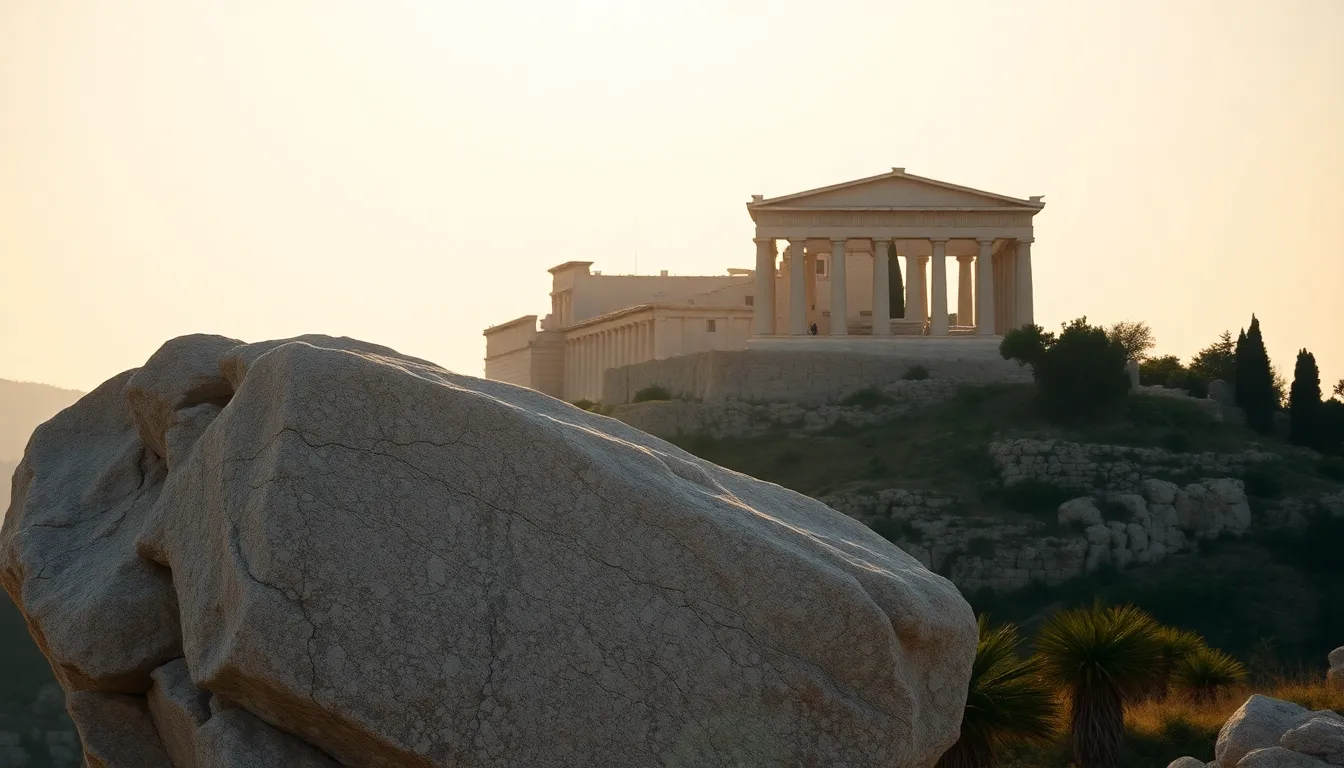
There is a bronze plaque bolted to the rock at the foot of the Areopagus in Athens. It carries the full text of Paul’s sermon from Acts 17, in Greek. I always gather the group around it before we climb, because once you are up on the rock with the Acropolis looming over you, the noise and the wind and the view make it hard to settle. Read the words first, down at the bottom, and then go up. That is the order that works.
Mars Hill is one of those rare heritage sites where the words and the place have never been separated. Paul stood here. He looked at these same temples. He addressed the philosophers of the most intellectually proud city in the ancient world, and he did it with respect and nerve in equal measure. For a Christian group, this is one of the high points of any Greece journey.
Let me tell you what to expect and how to make the most of it.
What the Areopagus Actually Is
The Areopagus is a bare outcrop of rock northwest of the Acropolis. The name means “hill of Ares,” the Greek god of war, which the Romans called Mars, so in English it became Mars Hill. For centuries it was the meeting place of the chief council of Athens, a body that handled matters of law, morality, and religion.
That context matters for understanding Paul’s visit. When Acts says he was brought to the Areopagus, this was not a casual street-corner conversation. He was presenting a new teaching before the body that weighed exactly these questions. The setting tells you how seriously his message was being taken.
Today the rock is open and free to climb. There are stone steps cut into one side and a set of metal stairs for easier access. From the top, the view over the ancient agora on one side and up to the Parthenon on the other is extraordinary, and it puts the whole encounter in front of you at once.
The Sermon That Met a City on Its Own Terms
What Paul did here is worth pausing on with your group, because it is a model of how to speak to a culture that does not share your starting points.
He had walked through Athens and seen the altars, including one inscribed “to an unknown god.” Rather than condemning the city, he began there. “What you worship as unknown, this I proclaim to you.” He quoted their own poets. He built a bridge from where they stood to where he wanted to take them, and only then did he speak of the resurrection.
The response was mixed. Some mocked. Some wanted to hear more. A few believed, including Dionysius, a member of the council itself, and a woman named Damaris. That honest, partial result is part of what makes the passage so real. I find groups connect deeply with it, because it looks like their own experience of sharing faith.
Standing on the rock and reading the sermon where it was given, surrounded by the very temples Paul was responding to, your people understand the passage in a way no classroom can deliver.
What to Do With Your Group on Mars Hill
Here is how I structure the visit.
First, gather at the plaque below and read Acts 17:22 to 34 aloud. Let it sit.
Then climb, slowly, and find a spot near the top where the group can stand together. This is a natural place for a short devotional or a few words from your pastor or rabbi. The acoustics are poor and the wind can be strong, so keep it brief and keep everyone close.
Take time to simply look. Point out the Acropolis, the temples Paul saw, and the agora below where he had been reasoning daily before he was brought up here. The geography does the teaching for you.
Finally, leave room for quiet. Some of the most meaningful minutes I have witnessed on Mars Hill were silent ones, people taking in the place on their own before we moved on to the Acropolis.
Combining the Areopagus With the Rest of Athens
The Areopagus sits right between the Acropolis and the ancient agora, so it fits naturally into a single Athens day. Most groups climb the Acropolis first, come down to Mars Hill, and then explore the agora, where Paul disputed with the philosophers before his Areopagus address.
That sequence keeps the walking efficient and tells the story in order. The agora is where the conversation started, Mars Hill is where it culminated, and the Acropolis is the backdrop to all of it. For where this fits in a full journey, see our guide to following the Apostle Paul through Greece.
A Practical Word on Access
I want to be honest about the footing here, because it affects planning. The rock of the Areopagus is ancient marble, worn smooth by millions of feet, and it can be genuinely slippery, especially if there has been any rain. The cut stone steps have no rail.
For a mixed-age group, use the metal staircase rather than the old stone steps, wear shoes with grip, and do not rush. If a member of your group is unsteady on their feet, the view and the devotional moment can be had from the lower platform without climbing all the way up. No one needs to miss this. We plan the pace around the people you bring, and we make sure everyone shares in the moment that matters.
FAQ: Visiting the Areopagus
Where is the Areopagus and how do you get to the top?
It is a rock outcrop just below the Acropolis in central Athens. You can reach the top by ancient stone steps cut into the rock or by a modern metal staircase beside them. The metal stairs are the safer choice for most groups. Entry is free.
What did Paul say at the Areopagus?
Paul gave the sermon recorded in Acts 17, beginning from the Athenian altar “to an unknown god” and moving toward the God who made the world and the resurrection. He quoted Greek poets and met the philosophers on their own ground. The full text is mounted on a bronze plaque at the foot of the rock.
How long should a group spend at Mars Hill?
Plan for thirty to forty-five minutes. That allows time to read the passage below, climb, hold a short devotional, take in the view, and leave room for quiet reflection without feeling rushed.
Is the Areopagus safe for older travelers?
It requires care. The marble is smooth and can be slippery, and the old steps have no rail. Use the metal staircase, wear shoes with grip, and take it slowly. Anyone who prefers not to climb can still share the devotional from the lower platform.
Can we hold a service or devotional on the Areopagus?
Yes, and many groups do. Keep it short and gather close, because the wind and open acoustics make longer talks hard to hear. It is one of the most fitting places in Greece for a brief reflection on speaking faith into a skeptical culture.
Mars Hill is a short visit, but it is one your group will remember long after the bigger sites blur together. If you are planning a Greece heritage journey for your congregation, I would be glad to help you build Athens into it well. You can see how we structure these trips on our Greece heritage page or explore our group heritage tours.
Contact us whenever you are ready to start the conversation.