I get this request more than any other from pastors planning a first trip: “We only have one week. Can we still follow Paul?” The answer is yes, and I would argue a tight week can be better than a sprawling two. When the route is focused, your group is not exhausted, and the story stays in one clear line from start to finish. You land in the north where Paul first set foot in Europe, and you end in the south at Corinth, where he stayed longer than anywhere else. Seven days, one arc, no filler.
This itinerary is built for groups that want the Pauline core and nothing they have to apologize for cutting. It assumes you fly into Thessaloniki and out of Athens, which saves you a backtrack and gives you a full extra half-day on the ground. Everything below is shaped around that. If your flights only work into Athens, we flip the route and it still holds.
Let me walk you through the week the way I would on the coach.
Day 1: Arrive in Thessaloniki
Most groups land tired, and I do not fight that. Day one is for arriving, getting to the hotel, and a gentle first walk along the waterfront to the White Tower as the light drops. No heavy sites, no long talks. Just enough to orient your people and let them feel that they are actually here.
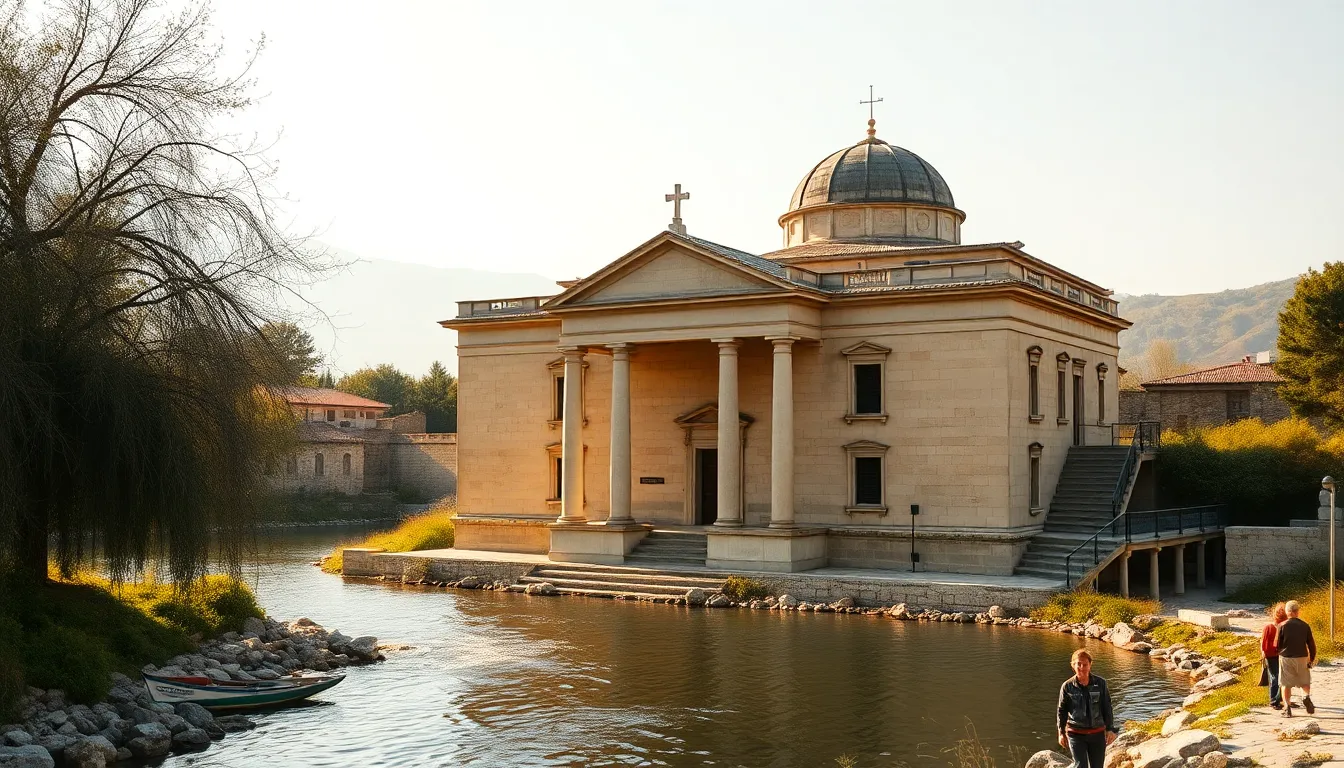
If your group lands early and has energy, the Rotunda is a ten-minute walk from most central hotels and makes a quiet, low-pressure first stop. It started as a Roman structure and became one of the earliest Christian churches in the world. But there is no shame in saving it for the morning. The week is long, and Thessaloniki is not going anywhere.
Day 2: Thessaloniki and Berea
This is your northern study day, and it carries two stops that belong together.
In the morning, stay in Thessaloniki. Paul preached in the synagogue here for three Sabbaths, and the visit ended in the uproar that pushed him on to Berea. First and Second Thessalonians are written to this community. I take groups to Hagios Demetrios and the Rotunda, both living churches, not museum pieces, and I read from the Thessalonian letters somewhere quiet before we move on. Thessaloniki is also one of the great Jewish heritage cities, once called the Jerusalem of the Balkans, which matters to interfaith groups. Our Jewish heritage in Greece guide covers that side of the city if your group wants it.
In the afternoon, drive to Berea, the modern Veria, about an hour southwest. The Bereans “received the word with all readiness of mind, and searched the scriptures daily,” and that single verse makes this a meaningful stop for any congregation that values study. The Bema of the Apostle Paul, with its mosaics of his ministry, is the place I pause longer than the guidebooks suggest. The lesson of Berea is one most groups want to carry home.
Day 3: Philippi and Kavala
For me this is the heart of the week, so I give it the most room.
Philippi is the first place in Europe where the gospel was preached and the first European church was planted. The ruins are extensive: the forum, the basilicas, and the traditional site of the prison where Paul and Silas sang hymns at midnight before the earthquake. A short distance off is the river where Lydia, a seller of purple cloth, became the first recorded European convert. Many groups hold a short service or a baptism renewal at the modern baptistery there. I have watched people weep at that riverside. It is the quietest place on the whole trip and the one most people remember.
In the afternoon, drive the short distance to Kavala, ancient Neapolis, the port where Paul actually stepped off the boat into Europe. Standing at the harbor and looking out at the same water he crossed gives your group the geography in their bodies. It is a short stop, but it closes the loop on how Paul arrived.
You overnight back in Thessaloniki or in Kavala, depending on how we time the southern transfer.
Day 4: Travel South to Athens
This is your transfer day, and I am honest with groups about it. The drive from the north to Athens is roughly five hours by coach, or you can fly in about an hour. For a group of fifteen or more, I usually recommend the coach in the morning so people see the countryside and arrive in Athens by mid-afternoon with time to rest. If your group prefers to protect their energy, we fly and use the saved hours for an early evening walk in the Plaka.
Either way, day four is not wasted. It is the hinge between Macedonia and Achaia, the same shift Paul made, and arriving in Athens with the north still fresh sets up the Areopagus perfectly.
Day 5: Athens and Mars Hill
Athens is a study in contrasts, and that is exactly why it works. In the morning, take the Acropolis and the ancient Agora while the light is soft and the crowds are thin. These are extraordinary in their own right, and they frame what comes next.
Then the Areopagus, Mars Hill, where Paul addressed the philosophers and pointed them from their altar “to an unknown god” toward the God who made the world. Your people stand where Paul stood, surrounded by the same temples he saw, and they understand what he was up against and what he was offering. I give this site its own full treatment in our guide to the Areopagus in Athens. One practical note: the rock is smooth and slippery. For older members, this is a place to slow down and use the stairs.
Day 6: Corinth
Corinth is the destination, and it is the right place to end. Paul spent eighteen months here, longer than anywhere else in Greece, working as a tentmaker and building a church that would receive two of his most important letters.
The drive from Athens runs about an hour and a half. On the way, the Corinth Canal makes a good short stop, a chance to breathe before the main site. At Ancient Corinth you can see the bema, the public platform where Paul was brought before the proconsul Gallio, a detail that helps date the whole New Testament timeline. You can see the temple of Apollo, the agora, and the Acrocorinth towering above. When you read First Corinthians here, the letter’s concerns about a divided, distracted, cosmopolitan church make complete sense, because you are standing in exactly that kind of city.
Ending at Corinth gives your group a sense of completion. They have followed the apostle from his first European convert at Philippi to the mature, complicated church at Corinth. That arc stays with people.
Day 7: Athens and Departure
Most groups fly home from Athens on day seven. If your flight is in the afternoon or evening, there is room for one last morning, and I usually keep it gentle. A return visit to a site that moved someone, a slow coffee in the Plaka, time to buy the gifts people forgot. If the flight is early, day six’s evening becomes your farewell, and that is fine. The week has already done its work.
For groups that want a little more, this same route extends cleanly. Add Meteora, the monasteries on their rock pillars, between the north and Athens, or an island day to Patmos for the Book of Revelation. Our 10-day heritage itinerary for Greece shows how those pieces fit.
FAQ: A 7-Day Footsteps of Paul Itinerary in Greece
Can you really follow Paul in Greece in only seven days?
Yes, if you fly into Thessaloniki and out of Athens and keep the route to the Pauline core. You cover Philippi, Thessaloniki, Berea, Athens, and Corinth without rushing. The trick is not adding side trips that pull the group off the line of the journey. Seven focused days beat ten scattered ones.
Why start in the north instead of Athens?
Because that is the order Paul traveled, and following Acts 16 through 18 in sequence makes the whole trip cohere. Starting at Philippi, where the gospel first reached Europe, and ending at Corinth, where Paul stayed longest, gives your group the full arc of the mission. Flying into Thessaloniki and out of Athens also saves a backtrack.
Is a 7-day pace too fast for older travelers?
Not if we plan it well. The longest day is the southern transfer, which is mostly sitting, and we structure the site visits around the group you bring. The two spots with uneven ground, the Areopagus rock and the Acrocorinth, are easy to take slowly or admire from a flatter vantage point. No one gets left out of the meaningful moments.
What does the group leader free offer mean for a 7-day trip?
With Heritage Tours, the group leader travels free when you bring fifteen or more participants. For a pastor pricing out a one-week trip for the congregation, that changes the budget math early, so it is worth factoring in from the first planning conversation.
When is the best time of year for this itinerary?
Late spring, May to June, and early fall, September to October, are ideal. The walking sites are comfortable and the summer crowds have thinned. Our guide to the best time to visit Greece breaks the seasons down in more detail.
If a focused week sounds like the right shape for your congregation, I would love to help you build it. The route is short, the story is clear, and it tells itself once your people are standing in it. See how we structure these trips on our Greece heritage page, or learn how the group experience works on our group heritage tours page.
Contact us whenever you are ready to start planning.