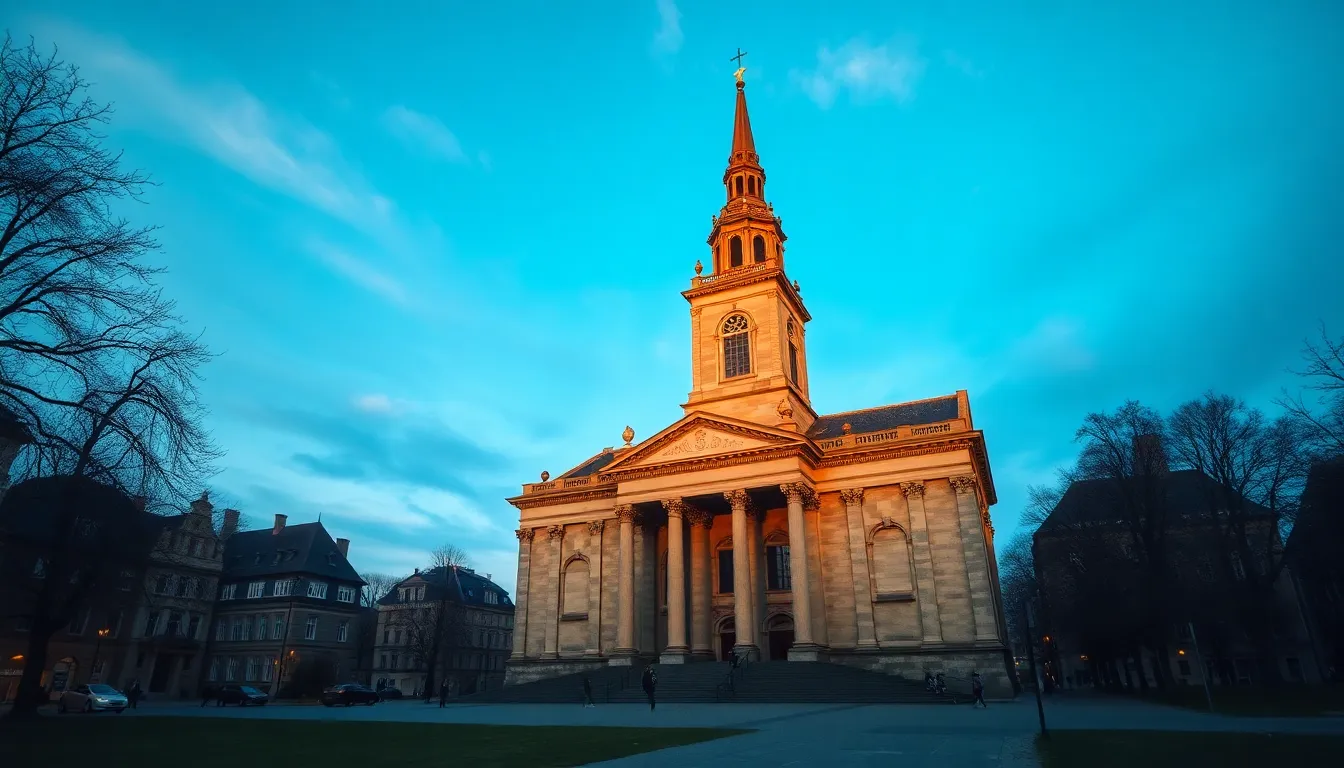
The first time I brought a Protestant group to Worms, a pastor in the group stood at the spot where Luther made his stand and could not speak. He had preached on those words for thirty years. “Here I stand, I can do no other.” And now he was standing on the ground where they were said. He just looked at the others and shook his head. That is what Worms does to people who know the story.
Most groups rush past Worms on the way to somewhere else. The big Reformation names are Wittenberg and Eisenach and the Wartburg. Worms gets a half hour, a photo at the monument, then back on the bus. I think that is a mistake. What happened here in April 1521 was the moment the Reformation stopped being an academic dispute and became a movement that no emperor could put down. If you are bringing a group that cares about church history, give Worms the afternoon it deserves.
What Actually Happened at the Diet of Worms
Let me set the stage, because the word “diet” confuses people. A diet was not a meal and not a council in the church sense. It was the imperial assembly, the formal gathering of the Holy Roman Empire’s princes, electors, and church officials, summoned by the emperor. The Diet of Worms opened in January 1521 and ran for months. Charles V, the young emperor, had many items of business. Luther was one of them.
By this point Luther was already in serious trouble. His 95 Theses had circulated since 1517. In 1520 Pope Leo X issued the bull Exsurge Domine, threatening excommunication unless Luther recanted. Luther burned it publicly in Wittenberg. In January 1521 the excommunication became final. The church wanted him silenced. The emperor wanted the empire stable. Luther was summoned to Worms under a promise of safe conduct to answer for his writings.
He arrived on April 16, 1521. The crowds that lined the streets told everyone watching that this was no ordinary heretic.
The Two Days That Changed the Church
On April 17, Luther was brought before the assembly. His books were stacked on a table. He was asked two questions: Are these your writings? And will you recant what they contain?
He admitted the books were his. But on the second question he asked for time to think. This surprised people. They expected defiance and got a request for a day. The emperor granted it.
On April 18, Luther returned and gave his answer. He could not recant everything, he said, because his books were not all the same. Some taught plain Christian faith that even his enemies accepted. Some attacked the abuses of the papacy. To recant those would be to strengthen tyranny. He asked to be shown from Scripture or clear reason where he was wrong. Then he said the line that the whole assembly remembered:
“Unless I am convinced by the testimony of the Scriptures or by clear reason, I am bound by the Scriptures I have quoted and my conscience is captive to the Word of God. I cannot and I will not recant anything, for to go against conscience is neither right nor safe. Here I stand, I can do no other. God help me. Amen.”
I should be honest with your group about one thing. The famous phrase “Here I stand, I can do no other” may have been added shortly after by printers, not spoken word for word. Scholars debate it. What is not in doubt is the substance: he refused to recant, he grounded that refusal in Scripture and conscience, and he did it knowing it could cost him his life. The drama is real even if the exact wording is uncertain.
The Edict and the Disappearance
Charles V was unmoved. He honored the safe conduct, which is why Luther left Worms alive, but soon after he issued the Edict of Worms. It declared Luther an outlaw. Anyone could kill him without legal consequence. His writings were banned.
On the road home, Luther was “kidnapped” by men working for his protector, Frederick the Wise of Saxony, and hidden in the Wartburg Castle. There, in hiding under the name Junker Jörg, he translated the New Testament into German in about eleven weeks. So the stand at Worms led directly to the German Bible that shaped the language itself. That is the thread I want groups to follow: the courage at Worms and the Bible at the Wartburg are one story.
The Luther Monument: Reading It With Your Group
The Luther Monument in Worms, unveiled in 1868, is the largest Reformation memorial in the world, and it rewards a few minutes of guided looking. Most groups glance at it and move on. Do not let them.
At the center stands Luther himself, Bible in hand, looking upward. Around the base sit four figures who came before him, the forerunners of the Reformation: Peter Waldo, John Wycliffe, Jan Hus, and Girolamo Savonarola. The message of the sculptor was clear. Luther did not appear from nowhere. He stood on the shoulders of reformers who paid for their convictions, some with their lives.
The Figures Worth Pointing Out
I always stop the group at Jan Hus. Hus was burned at the stake in 1415, a century before Luther, for teachings the church later saw echoed in Luther’s own. There is a tradition that Luther was warned at Worms that he might share Hus’s fate. To have Hus seated at the base of this monument, looking up at the man who finished what he started, is one of the most moving things at the site. For a group that has studied the long road of reform, this detail lands hard.
The seated female figures around the monument represent cities tied to the Reformation, and allegorical figures of Protesting Speyer and Mourning Magdeburg. You do not need to name them all. You do need to let your group understand that this monument is a sermon in bronze about a movement, not a statue of one man.
Making the Most of Worms as a Group Stop
Worms is small and walkable, which is a gift for groups. The Luther Monument, the cathedral, and the historic center sit close together. Worms Cathedral, a great Romanesque church, is where some of the Diet’s events took place and is worth a visit in its own right. If you also have Jewish travelers or interest in the wider story, Worms holds one of the oldest synagogue sites and Jewish cemeteries in Europe, which I cover in our Germany spiritual sites guide.
My practical advice: build Worms into a Luther route rather than treating it as a one-off photo stop. It connects naturally with Eisleben, where Luther was born and died, and with the broader Reformation pilgrimage route that ties the sites together. Seen alone, Worms is a monument. Seen as part of the journey, it is the hinge of the whole Reformation story.
Plan for two to three hours. Read the April 18 speech aloud at the monument. Walk the group through the four forerunners. Then let them stand there for a minute in silence. Group leaders who slow down here tell me afterward it was the emotional high point of the trip.
FAQ: Worms and the Diet
What was the Diet of Worms?
The Diet of Worms was the imperial assembly of the Holy Roman Empire that met in the city of Worms in 1521. “Diet” meant a formal assembly of princes and church officials, not a meal. Emperor Charles V summoned it for many reasons, but it is remembered today because Martin Luther was called before it to answer for his writings and refused to recant.
Did Luther really say “Here I stand, I can do no other”?
He refused to recant and grounded that refusal in Scripture and conscience, which is firmly historical. The exact phrase “Here I stand, I can do no other” may have been added by early printers rather than spoken word for word. Scholars are divided on the precise wording. The substance of his stand is not in doubt.
Why is the Luther Monument in Worms significant?
Unveiled in 1868, it is the largest Reformation memorial in the world. It places Luther at the center but surrounds him with earlier reformers, including Jan Hus and John Wycliffe, framing the Reformation as a long movement rather than one man’s act. For a group, it is a teaching tool in bronze.
How long should a group spend in Worms?
I recommend two to three hours. That gives you time for the Luther Monument with proper explanation, Worms Cathedral, and the historic center. Worms is small and walkable, so a focused afternoon covers it well without rushing.
How does Worms connect to the rest of the Luther sites?
Worms is where Luther made his public stand, and the road from Worms led directly to his hiding at the Wartburg, where he translated the New Testament into German. It connects naturally with Eisleben, Wittenberg, and the wider Reformation route, which is why I recommend building it into a Luther itinerary rather than visiting it alone.
If you are planning a Reformation journey for your church and want Worms to be more than a photo stop, I would be glad to help you build it in properly. Group leaders travel free with fifteen or more participants, and the planning conversation is one I enjoy. Start with our Germany destination page, look at how our group heritage tours work, and reach out when you are ready.