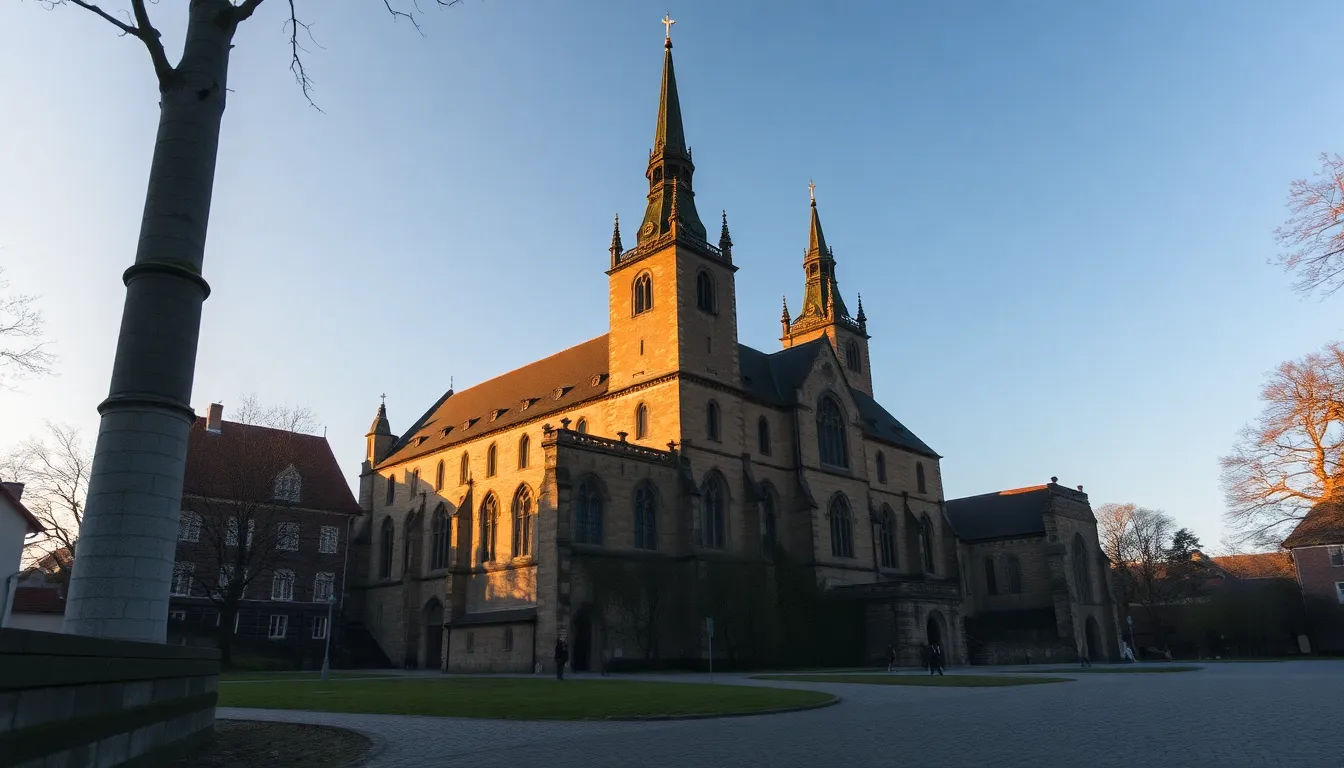
A pastor asked me once whether his group should “do Luther” by flying into a city and visiting one big site. I told him the truth, which is that Luther was not a single site. He was a journey. He was born in one town, converted in a monastery in another, taught in a third, made his stand in a fourth, and translated the Bible while hiding in a castle in a fifth. To understand him, you do not visit a place. You follow a route. And following that route, in order, turns a sightseeing trip into something closer to a pilgrimage.
That is what the Luther Trail is. Not a marked hiking path, though such paths do exist, but a way of stringing the Reformation sites together so your group walks the story in sequence. After twenty years of building these itineraries, I have a strong opinion about how to do it well, and a few warnings about how groups get it wrong.
Why Sequence Matters More Than You Think
Here is the mistake I see most. A group lands, sees Wittenberg first because it is the famous one, then circles back to the birthplace and the conversion sites afterward. They get all the pieces but in scrambled order, and the story never builds. The breakthrough loses its power because they have not felt the struggle that came before it.
When you run the sites in the order Luther lived them, something happens. The fear of the young man builds. The crisis sharpens. The breakthrough of grace lands like a release. The courage at Worms means more because you have already seen what he had to lose. A pilgrimage is not just a set of holy places. It is a story told with your feet. Order is the difference between a tour and a journey.
The Core Sites, in the Order of His Life
You do not need every site. A focused route of four or five, run in sequence, beats a rushed sweep of ten. Here is the spine I build around.
Eisleben: Birth and Death
Start where he started. Eisleben holds both his birth in 1483 and his death in 1546. Beginning here gives your group the ordinary mining-town world that produced Luther, and it sets up the frightened young man whose questions drove everything that followed. There is a quiet power in starting at the birthplace of the man whose journey you are about to walk.
Erfurt: The Monastery and the Crisis
Erfurt is where the young Luther became a monk. After the famous thunderstorm, when he cried out to Saint Anne and vowed to enter religious life, he joined the Augustinian monastery in Erfurt in 1505. He was ordained a priest here. And here he wrestled, with terror, against his own sense of sin and a God he could not please no matter how hard he tried. The Augustinian Monastery still stands and welcomes visitors. For a group, Erfurt is the crisis chapter. This is where the question got unbearable. Do not skip it. Without Erfurt, Wittenberg makes no emotional sense.
Wittenberg: The Breakthrough and the 95 Theses
Now you arrive at Wittenberg, and now it means something. This is where Luther taught, where his study of Scripture, especially Romans, led him to the conviction that the righteous live by faith, not by works. On October 31, 1517, he posted the 95 Theses on the door of the Castle Church, protesting the sale of indulgences. The Lutherhaus, the Castle Church, and the Town Church of St. Mary’s where he preached are all here. Wittenberg is the heart of the Reformation, and after Erfurt your group feels the breakthrough as the answer to a long agony, not as an abstract historical date.
Worms: The Stand
From Wittenberg the conflict escalates to Worms. In April 1521, summoned before the emperor at the Diet of Worms, Luther refused to recant. The Luther Monument here, the largest Reformation memorial in the world, is the place to read his answer aloud. Having walked the road that brought him here, your group understands the cost of those words. This is the courage chapter.
The Wartburg: The Bible in Hiding
Close at Eisenach and the Wartburg Castle. After Worms, declared an outlaw, Luther was hidden in the Wartburg by Frederick the Wise. There, under the name Junker Jörg, he translated the New Testament into German in about eleven weeks. The room is preserved. Ending here ties the whole journey together, because the stand at Worms led directly to the German Bible that put Scripture into the hands of ordinary people and shaped the German language itself. It is the right place to finish. Courage produced something that outlived the man.
Building the Route for a Real Group
Geography does not perfectly match biography, and that is fine. Eisleben, Erfurt, Wittenberg, and Eisenach cluster in central Germany, in Saxony-Anhalt and Thuringia, relatively close together. Worms sits to the southwest in the Rhineland. So in practice you often handle Worms on its own leg, either at the start or the end of the trip, and run the central cluster in tight sequence. I tell groups the truth: you may visit Worms out of strict chronological order for travel reasons, and that is okay, as long as you frame the story correctly when you teach it.
How Many Days
For the core five sites with room to breathe, plan six to eight days on the ground, not counting travel home. That allows a full day in Wittenberg, half days in Eisleben and Erfurt, the Worms leg, and the Wartburg with Eisenach. Groups that try to compress this into three or four days end up doing exactly what I warned about, collecting sites without absorbing the story. If you only have a few days, do fewer sites well rather than all of them badly.
Pacing and Reflection
The single best advice I can give a group leader on the Luther Trail is to build in reflection time. At each major site, read the relevant moment aloud. The thunderstorm vow at Erfurt. The 95 Theses at the Castle Church door. The “Here I stand” answer at Worms. The “We are beggars” final words back at the story’s end. Let people sit with each one. The groups that move slowest through this route get the most from it. I have never once had a leader tell me they wished they had moved faster.
A Word on Making It a Pilgrimage, Not a Tour
The difference between a tour and a pilgrimage is intention. A tour collects experiences. A pilgrimage expects to be changed by them. You set that frame as the leader. Open the trip by telling your group they are not sightseeing, they are walking the road of a man who staked his life on grace. Mark the rhythm with Scripture, with song if that is your tradition, with silence. Close each day by asking what the day’s site said to them. That framing costs nothing and transforms everything. The Luther Trail rewards groups that treat it as holy ground.
FAQ: The Luther Trail
What is the Luther Trail?
It is a route connecting the key sites of Martin Luther’s life and the Reformation, including Eisleben, Erfurt, Wittenberg, Worms, and Eisenach with the Wartburg Castle. It is not a single marked path but a way of stringing the Reformation sites together so a group can walk the story in sequence.
In what order should a group visit the Luther sites?
I recommend following the order of his life: Eisleben for his birth, Erfurt for the monastery and his spiritual crisis, Wittenberg for the breakthrough and the 95 Theses, Worms for his stand before the emperor, and the Wartburg for the German Bible translation. Geography means Worms is often handled on a separate leg, but the story should still be taught in this order.
How many days do you need for the Luther Trail?
For the core five sites with enough time to absorb each one, plan six to eight days on the ground. Compressing it into three or four days means collecting sites without taking in the story, which defeats the purpose of a pilgrimage.
Which Luther sites are UNESCO World Heritage sites?
The Luther Memorials in Eisleben and Wittenberg are inscribed as UNESCO World Heritage, including the Birth House and Death House in Eisleben and the Lutherhaus and Castle Church in Wittenberg. The Wartburg Castle at Eisenach is also a UNESCO World Heritage site.
Can a group with limited time do a shorter version?
Yes. If you have only a few days, do fewer sites well. A strong short version pairs Wittenberg with Eisleben, or Wittenberg with the Wartburg, run in proper order with reflection time built in. Fewer sites done thoughtfully beats a rushed sweep of all of them.
The Luther Trail is one of my favorite journeys to plan, because the route itself does the teaching when it is built right. If you want help sequencing it for your congregation, I would welcome the conversation. Group leaders travel free with fifteen or more participants. Start with our Germany destination page, look at how our group heritage tours work, and reach out when you are ready.