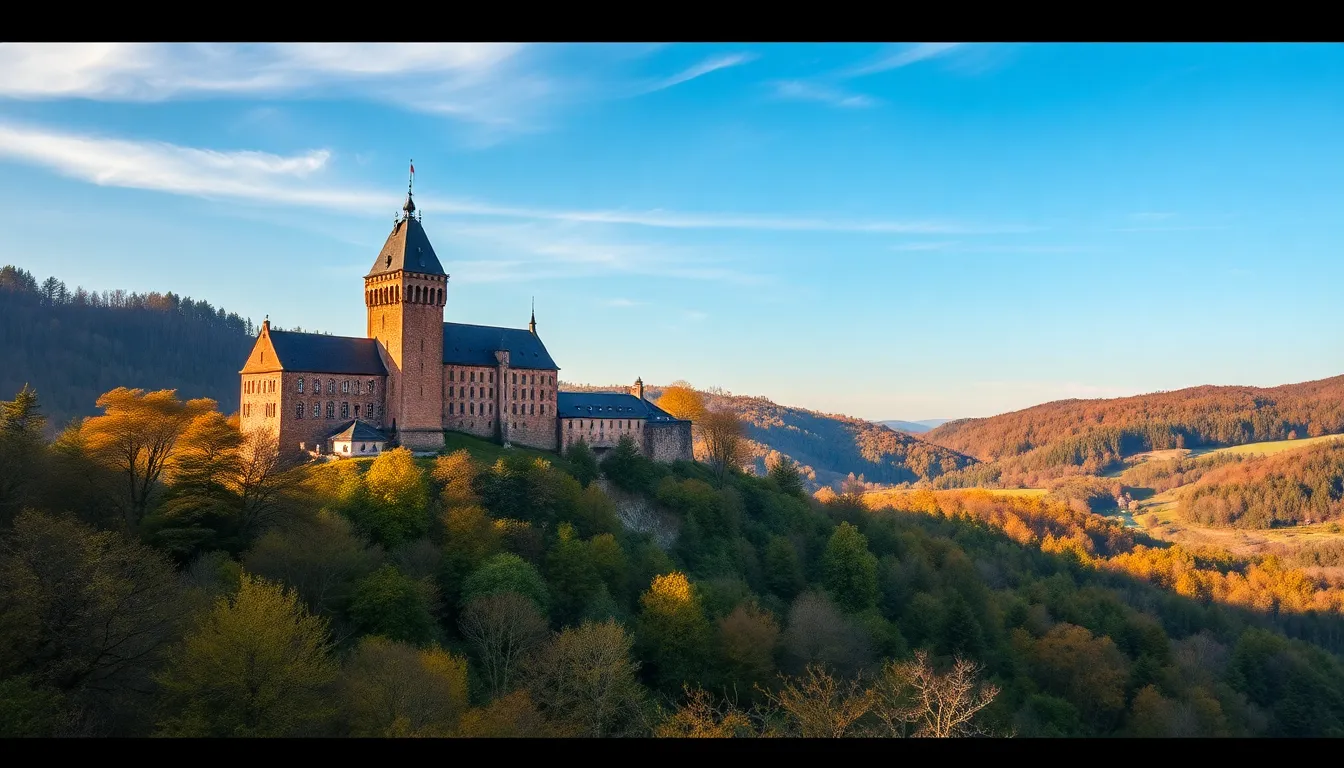
When a pastor asks me where in Germany the Reformation feels closest to the ground, I say Thuringia, without hesitation. This is the region people mean when they call central Germany the green heart of the country, a landscape of forested hills and small old cities, and it happens to be the ground where two of the most important figures in Western faith and culture, Martin Luther and Johann Sebastian Bach, both came of age. You can build an entire heritage trip inside this one region and never run thin.
Most leaders think of German heritage as a string of distant cities you connect by long drives. Thuringia is the opposite. It is a compact region where the sites sit close enough to base in one place and reach the rest on day trips. For a group, that is a real advantage: less time on the road, more time in the places that matter. Let me give you the orientation for the region as a whole.
Why Thuringia Works as a Region, Not Just a List of Cities
Thuringia rewards a group that treats it as a single heritage landscape rather than a checklist. The Reformation story runs through it: Luther was born in Eisleben at its edge, became a monk in Erfurt at its center, and hid at the Wartburg above Eisenach in its west. The musical story runs through it too: Bach was born in Eisenach, and the region shaped the family of musicians he came from. And underneath both runs a deep medieval history, Christian and Jewish, in cities that survived the twentieth century with their old fabric intact.
Because the distances are short, I often base a group in Erfurt, the regional capital, and run the rest as day trips. That keeps the group settled in one hotel, which mixed-age groups appreciate, and turns the region into a hub rather than a march.
Eisenach and the Wartburg: The Heart of the Region
The Castle Where Luther Hid
The Wartburg is the single most important site in Thuringia for a Christian group, and one of the most important in all of Germany. After Luther was declared an outlaw at the Diet of Worms in 1521, his protector spirited him away to this castle above the town of Eisenach, where he lived in hiding under the false name Junker Jörg. In a small room over about ten weeks, he translated the New Testament from Greek into German.
That translation matters more than almost anything else Luther did. By putting scripture into the German people’s own language, in prose so strong it shaped the modern German language itself, he changed how ordinary people could encounter the Bible. When your group stands in the Luther room at the Wartburg, looking out the same window over the same forest, they are in the room where that happened. I tell groups this is where the Reformation became something the common person could hold in their hands.
The Wartburg is also a magnificent medieval castle in its own right, with a long history before Luther, including its connection to Saint Elizabeth of Hungary, who lived here in the thirteenth century and is venerated for her care of the poor. The castle carries layers of faith history, not just one.
Bach’s Birthplace
Eisenach, the town below the Wartburg, is where Johann Sebastian Bach was born in 1685. The Bach House in Eisenach tells the story of the great musical family he came from and the world that formed him. For a group, the pairing is remarkable: in one small town you have the birthplace of the man who gave Germany its Bible in its own language and the birthplace of the man who gave Christian worship some of its greatest music. Luther and Bach, the word and the music, both rooted here.
Erfurt: The Regional Hub
Erfurt, the capital, is where I usually base a group, and it earns the central position on its own merits. It holds the Augustinian monastery where Luther became a monk, before Wittenberg and before the theses, and it holds one of the oldest and best-preserved medieval Jewish heritage sites in Europe, the Old Synagogue, with the extraordinary Erfurt Treasure. The medieval old town, with its cathedral hill and its house-lined Merchants’ Bridge, is beautiful enough to be a destination in itself.
I have written a full orientation to the city, so I will keep it short here: Erfurt gives a group both the Christian and the Jewish heritage of the region in one walkable day, which is part of why it makes such a strong base. For the detail, see our Erfurt heritage guide.
The Wider Luther Trail Through and Around Thuringia
Thuringia connects naturally to the rest of the Reformation story. Eisleben, just beyond the region’s edge, is where Luther was born and where he died. Wittenberg, to the northeast in neighboring Saxony-Anhalt, is where he posted the 95 Theses in 1517 and where the Reformation broke into the open. And Leipzig, also to the northeast, is where the 1519 disputation pushed Luther to his final break with Rome, and where, centuries later, Bach worked and the 1989 peaceful revolution unfolded.
A group can build a Reformation arc that uses Thuringia as its anchor and reaches out to these nearby sites. Our Leipzig heritage guide covers that eastern leg, including the Bach connection that ties back to Eisenach. For the full national map, our Germany heritage travel guide shows how the Reformation, Jewish, and Christian threads connect across the country.
How I Shape a Thuringia Itinerary
Here is the structure I lean on. Base in Erfurt for three or four nights. Spend one full day in Erfurt itself, the Luther monastery, the cathedral hill, and the Old Synagogue with the Jewish heritage sites. Spend a second full day in Eisenach and at the Wartburg, the castle and the Luther translation room in the morning, the Bach House in the afternoon. Use a third day to reach out to Wittenberg or Leipzig, depending on whether your group leans toward the Reformation or wants to add the Bach and 1989 story in Leipzig.
That gives a group a complete, unhurried encounter with the heart of Lutheran Germany without long daily drives. The short distances are the gift of the region. Use them to slow the pace down, not to cram more in.
A Note on Pacing for Group Leaders
Thuringia is hilly, and the Wartburg in particular involves an uphill approach and uneven castle terrain. For mixed-age groups, plan the Wartburg morning with that in mind, allow extra time, and know that there are shuttle and parking options that shorten the climb. The reward at the top is worth the effort, but a good leader prepares the group for the walk rather than surprising them with it. This is the kind of practical detail that an operator who knows the region handles for you in advance.
Group leaders with 15 or more participants travel free with us, which makes a multi-day regional base like Thuringia easier to organize for a congregation of almost any size.
FAQ: Thuringia Heritage Travel
What is Thuringia and why is it called the green heart of Germany?
Thuringia is a region in central Germany of forested hills and small historic cities, which gives it the nickname the green heart of the country. For heritage travelers it matters because it is the ground where both Martin Luther and Johann Sebastian Bach came of age. The Reformation and the great tradition of Lutheran church music are both rooted in this one compact region.
Why is the Wartburg so important for a Christian group?
After being declared an outlaw in 1521, Luther hid at the Wartburg castle above Eisenach and there translated the New Testament from Greek into German in about ten weeks. That translation put scripture into the people’s own language and helped shape the modern German language itself. Standing in the room where it happened is one of the most meaningful stops on any Reformation itinerary.
Can a group base in one place to see Thuringia?
Yes, and I recommend it. The distances are short, so basing in Erfurt, the regional capital, and running day trips to Eisenach, the Wartburg, and out to Wittenberg or Leipzig keeps a group settled in one hotel and off the road. Mixed-age groups especially benefit from not packing and repacking every night. Three or four nights in Erfurt covers the region well.
How does Thuringia connect Luther and Bach in one trip?
Eisenach is both the town below the Wartburg, where Luther translated the New Testament, and the birthplace of Bach. So in one small town a group encounters the word and the music side by side. The connection deepens in Leipzig nearby, where Bach later worked, which lets a group trace both figures across a compact stretch of central Germany.
How physically demanding is a Thuringia heritage trip?
The region is hilly and the Wartburg involves an uphill approach and uneven castle terrain, so it asks more of a group than a flat city tour. Most other sites, including Erfurt’s old town and Eisenach, are manageable on foot at a steady pace. With shuttle options at the Wartburg and a well-planned schedule, mixed-age groups handle Thuringia comfortably when the leader prepares them for the climb in advance.
If Thuringia is on your mind for your community, or you are weighing whether to base here and day-trip out, I would be glad to help you shape the region into a trip that fits your group. The short distances open up real flexibility, and there are a few ways to use them well.
Contact us whenever you are ready to start that conversation.