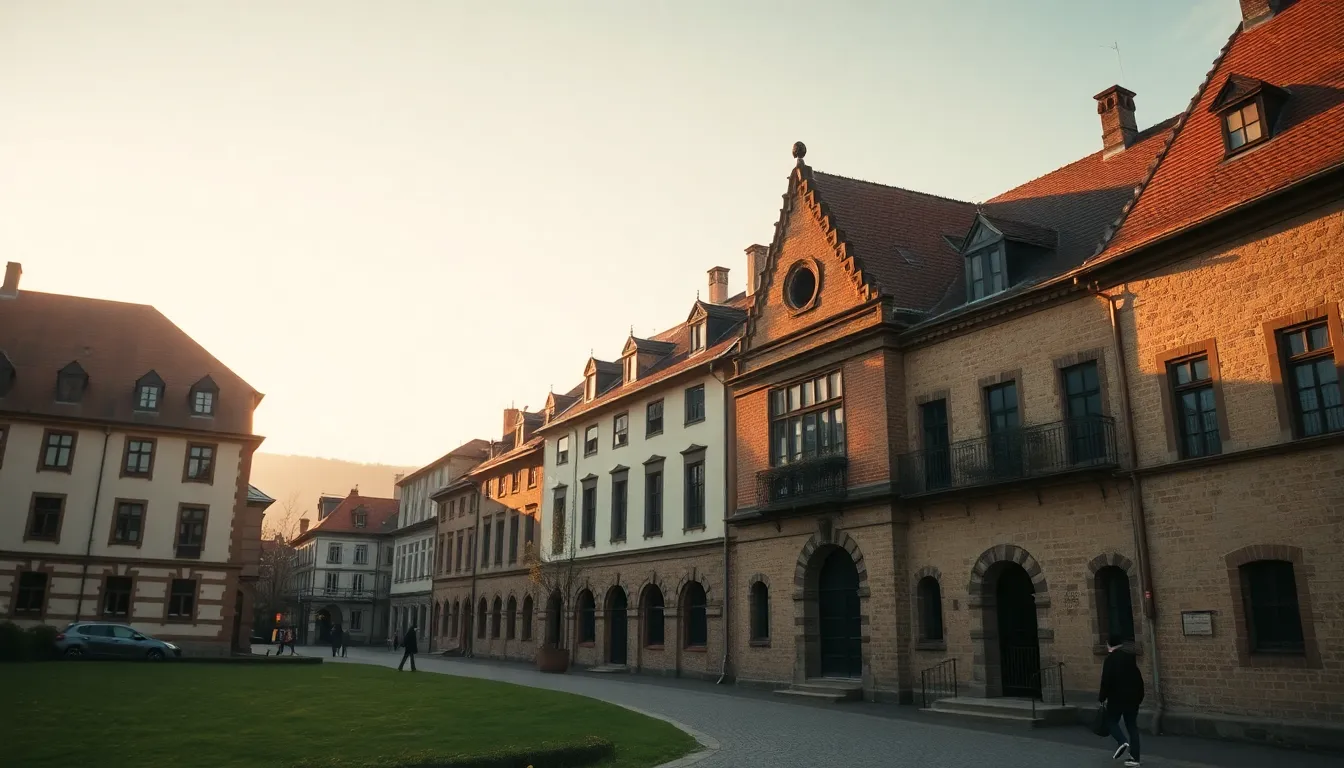
Every learning congregation I have ever taken to Germany has the same quiet realization somewhere along the way. They open a Chumash or a Gemara every week and the first commentary their eyes land on is Rashi. They have done it for years, for decades. And then they are standing in the Rhineland, in the academies where the young Rashi learned the Torah he would go on to explain for the entire Jewish world, and the page they have studied a thousand times suddenly has a place attached to it.
A Rashi-centered Rhineland trail is not a standard itinerary. It is a learning journey, built for congregations that live inside the text. Let me walk you through how Rashi connects to these cities and how a group can follow that thread on the ground.
Who Rashi Was and Why the Rhineland Shaped Him
Rabbi Shlomo Yitzchaki, Rashi, was born in Troyes, in northern France, around 1040. As a young man he traveled to the Rhineland to study at the great academies of Worms and Mainz, the centers of Ashkenazi learning in his era. He sat at the feet of the leading sages of these communities before returning to Troyes, where he wrote the commentaries that would become inseparable from the study of Torah and Talmud.
This is the connection that matters for a heritage trail. The Rashi your congregation studies was formed by the Rhineland. The methods, the texts, the traditions he absorbed in Worms and Mainz are woven through every comment he later wrote. When you trace his path through these cities, you are tracing the formation of the commentator himself.
The Rhineland academies were part of the ShUM world, the three connected communities of Speyer, Worms, and Mainz that together formed the intellectual heart of Ashkenazi Judaism. Rashi studied within that world, and a Rhineland trail moves through the cities that made it.
The Trail: Following Rashi Through the Rhineland
Worms: Where Rashi Studied
Worms is the heart of any Rashi trail. He learned in this city, and the synagogue first built in 1034 carries his name because of it. Beside the synagogue stands the Rashi Chapel, the study house associated with his memory. The building was devastated on Kristallnacht and rebuilt afterward from its own salvaged stones, so the walls hold both the medieval learning and the modern story of destruction and recovery.
The most powerful thing a learning group can do in Worms is study. I build a session directly into the visit: we sit in or near the Rashi Synagogue and we learn a piece of his commentary, in the very place his learning was shaped. For a congregation that opens to Rashi every week, that is the moment the whole trip turns on. You can read more about Worms Jewish heritage and the Rashi Synagogue.
Mainz: The Academy at the Source
Mainz, Magenza, was the other great academy of the Rhineland and one of the centers where Ashkenazi learning took shape. This was the city of Rabbenu Gershom, the Light of the Exile, whose work laid foundations that the academies of Rashi’s time built upon. Tracing the trail through Mainz places Rashi in the longer story of Ashkenazi scholarship, the chain of teachers and rulings that reached him and that he carried forward. More on Mainz, the cradle of Ashkenaz.
Speyer: The Third Pillar
Speyer completes the ShUM trio. While the strongest Rashi connections run through Worms and Mainz, Speyer was part of the same connected world of learning, and its medieval mikveh and Judenhof round out the picture of the communities that produced the scholarship Rashi inherited. See Speyer’s medieval mikveh and Judenhof.
What Rashi Carried Home From the Rhineland
It helps a group to understand what Rashi actually took from his years in Worms and Mainz, because it explains why the trail is more than sentiment. The Rhineland academies preserved teachings and textual traditions that reached back through the chain of transmission, and Rashi absorbed them at the source. When he returned to Troyes, he wrote with a precision and clarity that made the entire body of Torah and Talmud learning accessible in a way it had not been before.
The genius of Rashi’s commentary is that it explains the difficult passage in the fewest possible words, anticipating exactly where a student will stumble. That economy did not come from nowhere. It came from years of learning in the give and take of the Rhineland study halls, hearing the questions students actually ask, watching teachers meet them. The trail through Worms and Mainz is, in a real sense, a walk through the formation of that method.
For a learning congregation, naming this turns the trip from a pilgrimage into a study experience. You are not only honoring Rashi. You are understanding where his way of teaching was born, and you carry that understanding back into every page you open afterward.
Why This Trail Belongs to Learning Congregations
A Rashi-and-the-Rhineland trail is not for every group, and I am honest about that with the leaders I work with. It is built for communities that study, that come with the text alive in them, that want to learn on the road as much as they want to see. For those groups, it is one of the most rewarding journeys in all of Jewish heritage travel.
What makes it work is study built into the sites themselves. Not a lecture in a hotel ballroom, but learning conducted in the academies and synagogues where the learning happened. A daf studied in Worms, a comment unpacked beside the Rashi Chapel, a discussion of Rabbenu Gershom in Mainz. The place and the text become a single experience, and your congregation carries that fusion home into every future study session.
A Rashi trail also sits naturally within the broader story. Many groups frame it inside the full arc of Jewish heritage in Germany, from these medieval academic roots through the later chapters of the German Jewish story.
Building a Rashi Trail for Your Congregation
Heritage Tours builds the Rhineland trail around the way your congregation learns. We arrange study sessions in the synagogues and academies, bring guides who can connect the sites to the text, and pace the journey so the learning has room to breathe. This is a trip designed for communities that want to walk inside the source of the commentary they live by.
Group leaders travel free with fifteen or more participants, which makes a dedicated Rashi and Rhineland heritage trip reachable for communities of nearly any size. You can see how we structure these journeys on our Germany destination page and our group heritage tours page.
FAQ: Rashi and the Rhineland
What was Rashi’s connection to the Rhineland?
Rashi, born in Troyes around 1040, traveled to the Rhineland as a young man to study at the great academies of Worms and Mainz, the centers of Ashkenazi learning in his era. He absorbed the methods and traditions of these communities before returning to Troyes to write his commentaries, so the Rashi the world studies was formed in the Rhineland.
Which cities are on a Rashi heritage trail?
The trail centers on Worms, where Rashi studied and where the Rashi Synagogue and Rashi Chapel stand, and Mainz, the other great Rhineland academy. Speyer completes the ShUM trio as part of the same connected world of learning, rounding out the picture of the communities that shaped Ashkenazi scholarship.
Is a Rashi trail right for any group?
It is built especially for learning congregations, communities that study Torah and Talmud and want to learn on the road. The trail works best when study sessions are built into the sites themselves, so groups that come with the text alive in them gain the most from it.
Can we study Torah at the sites on the trail?
Yes, and it is the heart of the experience. We build study sessions directly into the visits, learning Rashi’s commentary in or near the Rashi Synagogue in Worms and exploring the longer chain of Ashkenazi scholarship in Mainz, so the place and the text become a single encounter.
How does the Rashi trail relate to the ShUM cities?
The Rhineland academies Rashi studied in were part of the ShUM world, the three connected communities of Speyer, Worms, and Mainz that formed the intellectual heart of Ashkenazi Judaism. A Rashi trail moves through these cities with a particular focus on the commentator and the learning that shaped him.
If your congregation lives inside the text and you want to walk it into the academies where Rashi learned, I would be glad to talk through what a Rhineland learning trail could look like for your community. Contact us whenever you are ready to begin.