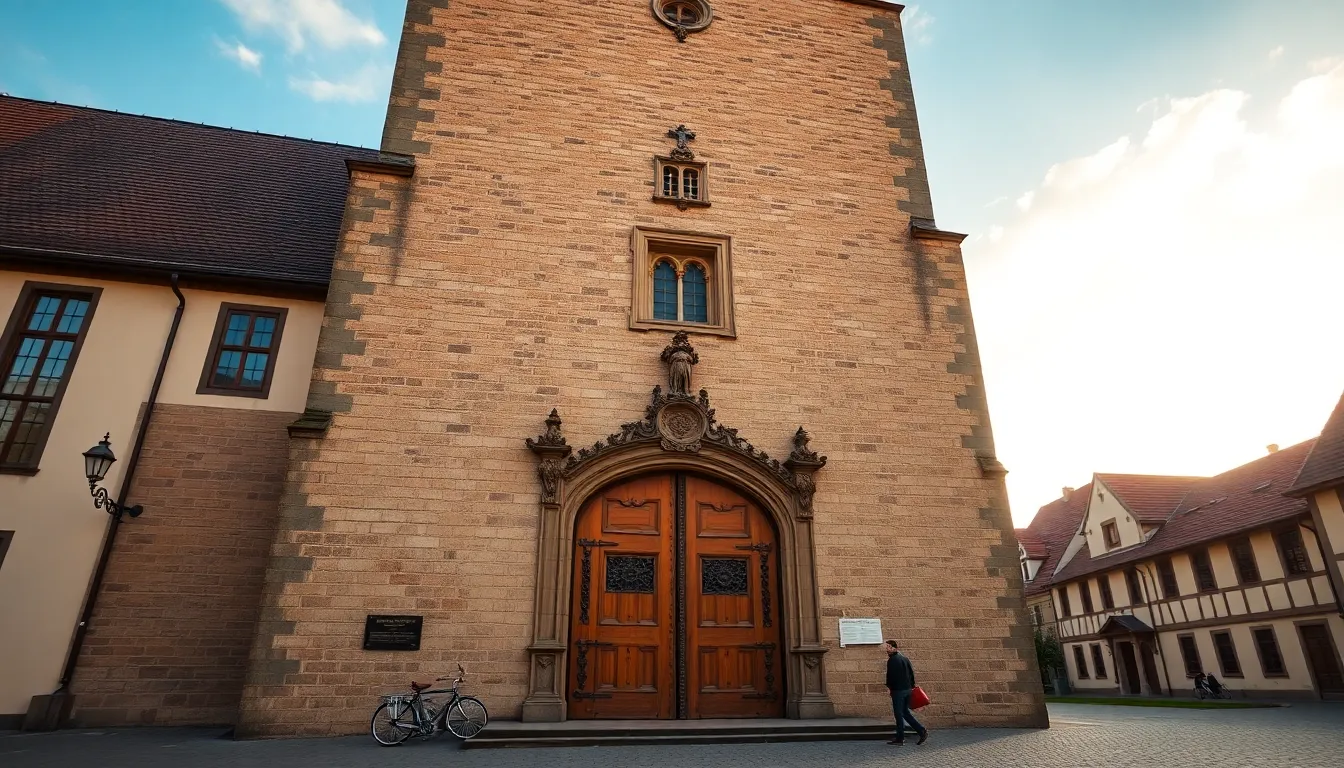
I learned this the hard way on an early trip. We stood at the door of the Castle Church in Wittenberg, the spot where Luther is said to have posted the 95 Theses, and I watched half my group take a photo and move on like it was a plaque on any old building. They were good people. They just did not arrive ready. Nobody had told them what they were about to stand in front of, so it could not land.
That trip changed how I lead. The sites in Germany do not explain themselves. A pilgrimage to the Reformation sites is only as deep as the preparation your group brings to it, and that preparation is your job long before the plane leaves. Here is how I do it now.
Why Preparation Matters More Here Than You Think
A general tourist can stumble into a cathedral and enjoy it cold. A faith group cannot afford to do that. You are not bringing your people to admire architecture. You are bringing them to stand where a movement that shaped their faith began, and that only works if they know the story well enough to feel its weight when they are physically present in it.
The Reformation is also abstract for most congregations. People know the word. They may know “justification by faith” as a phrase. But the actual human drama, a frightened monk, a corrupt indulgence trade, a printing press, a trial, an excommunication, often lives in their heads as a hazy outline. Preparation turns the outline into a story they can step inside.
When the story is alive in your group before they arrive, the sites stop being stops on an itinerary and become chapters they already know. That is the whole difference.
The Pre-Trip Study Arc I Recommend
I structure pre-trip study around the actual route, so each session corresponds to a place the group will stand. This is not a seminary course. It is enough context to make the ground meaningful.
Session One: The World Before Luther
Start by setting the stage. Late medieval Christianity, the role of the church in daily life, the practice of indulgences, the anxiety about salvation that drove so much of the period. Your group needs to feel the pressure Luther was reacting to before they can understand why he reacted.
This is also the session where you name the tension honestly. The Reformation split the church. For Catholic members of a mixed group, or for anyone with Catholic family, the story is not a simple triumph. Setting that up early, with respect, prevents discomfort from surfacing awkwardly at a site later.
Session Two: Eisleben and Erfurt, the Making of a Reformer
Luther was born and died in Eisleben. He became a monk in Erfurt after a thunderstorm and a desperate vow. Erfurt is where the young, terrified Luther wrestled with whether he could ever be acceptable to God. Walking the Augustinian monastery there hits differently when your group already knows what happened inside its walls.
Have your group read a short account of Luther’s early life before this session. The thunderstorm, the monastery, the spiritual crisis. These are deeply human moments, and they make Luther a person rather than a portrait.
Session Three: Wittenberg and the 95 Theses
This is the center of the trip for most Christian groups. Wittenberg is where Luther taught, where he posted the Theses, where the Reformation found its footing. Spend this session on the Theses themselves, the indulgence controversy, and what Luther was actually objecting to.
A practical tip I use: have the group read a handful of the 95 Theses out loud together before the trip. Then, standing at the Castle Church door, read the same ones aloud again. The repetition turns a tourist photo stop into a moment of recognition. People feel the difference physically.
Session Four: Consequences and Conscience
Close with what the Reformation cost and what it produced. The Diet of Worms, Luther’s “here I stand” before the emperor, his translation of the Bible into German, the wars and divisions that followed. This is where you raise the questions that make the trip more than history. What does conscience cost? When is it right to break with authority? What did this movement get right, and what did it get wrong?
These questions travel well. Your group will return to them at dinner in Germany, on the coach, in the cathedral. Plant them before you go.
Choosing the Right Readings
Keep the reading load light and human. A congregation is not a graduate seminar, and a heavy packet will simply go unread.
I lean toward a short, readable biography of Luther over dense theology. A few primary texts in small doses, a selection of the 95 Theses, an excerpt from his speech at Worms, work beautifully because the group reads the actual words, then stands where the words were spoken. Pair these with a single good documentary the group can watch together at an evening gathering. The shared viewing matters as much as the content. It turns preparation into a communal act rather than homework.
If your group spans a range of ages, give the younger members something visual. A well-made video, a graphic retelling, an illustrated map of the route. The goal is a shared baseline, not uniform depth.
Building Reflection Into the Trip Itself
Preparation does not end when the plane lands. The richest Reformation trips build reflection into the daily rhythm on the ground.
Brief your group each morning on the day’s sites and why they matter. Two minutes on the coach. Remind them of the relevant pre-trip session so the connection is fresh. Then, just as importantly, leave space after the heavy sites. Do not race from Wittenberg straight to a shopping street. Give people a quiet half hour, a short group discussion, or a prayer to absorb what they have seen.
I often end significant site visits with a short reading and a moment of silence, right there on the ground. It signals that this is not sightseeing. It is encounter. Your group takes that cue from you. If you treat the Castle Church door as sacred, they will too.
For Christian groups building a fuller route, our group tour guide for pastors and rabbis lays out the Reformation Trail alongside the wider itinerary. If your group has members with different mobility levels to plan around, our guide on mixed mobility groups in Germany covers how to keep everyone included at the cathedrals and historic sites.
When the Group Is Interfaith
Some of the best Reformation trips I have led included Jewish members, or were genuinely interfaith. If that is your group, the preparation needs an honest addition.
Luther’s later writings about Jews are deeply troubling, and a serious Reformation pilgrimage cannot pretend otherwise. Rather than avoid it, the strongest interfaith groups address it directly in pre-trip study. Naming the full record, the genius and the failures both, models the kind of honest reckoning that makes faith travel meaningful rather than triumphalist. If this is your situation, our piece on co-leading an interfaith Germany trip goes deeper on how to hold those tensions well.
FAQ: Preparing a Group for the Reformation Sites
How far in advance should I start spiritual preparation?
Begin at least six to eight weeks before departure. That gives you room for four study sessions spaced comfortably, time for people to do light reading between them, and a final gathering close to the trip to handle logistics and last questions. Starting earlier is fine. Cramming preparation into the week before travel is the one approach I would steer you away from.
What should my group read before a Reformation pilgrimage?
Keep it light and human. A short, readable Luther biography works better than dense theology. Add a small selection of the 95 Theses and an excerpt from his speech at the Diet of Worms, so the group reads the actual words they will later stand near. Pair the reading with one good documentary watched together at an evening gathering.
How do I keep younger members engaged in the preparation?
Give them something visual. A well-made video, an illustrated map of the route, or a graphic retelling of Luther’s story. The goal is a shared baseline across the whole group, not uniform depth. Younger members who arrive knowing the basic drama will connect at the sites just as deeply as anyone.
Should we address the difficult parts of Luther’s record?
Yes, especially for interfaith or mixed groups. Luther’s later writings about Jews are troubling, and a serious pilgrimage handles that honestly rather than ignoring it. Naming the full record, the achievements and the failures, models the kind of honest reckoning that makes a faith trip meaningful instead of triumphalist.
How do I build reflection into the trip itself?
Brief your group each morning on the day’s sites and why they matter, then leave space after the significant ones. Do not rush from a major site straight to shopping. Build in a quiet half hour, a short discussion, or a prayer. Ending a key visit with a reading and a moment of silence signals that this is encounter, not sightseeing, and your group will follow your lead.
If you are planning a Reformation pilgrimage and want help shaping the pre-trip study to your specific route, that is a conversation I genuinely enjoy. The right preparation is what turns a good trip into one your congregation talks about for years.
Contact us when you are ready to start building it.