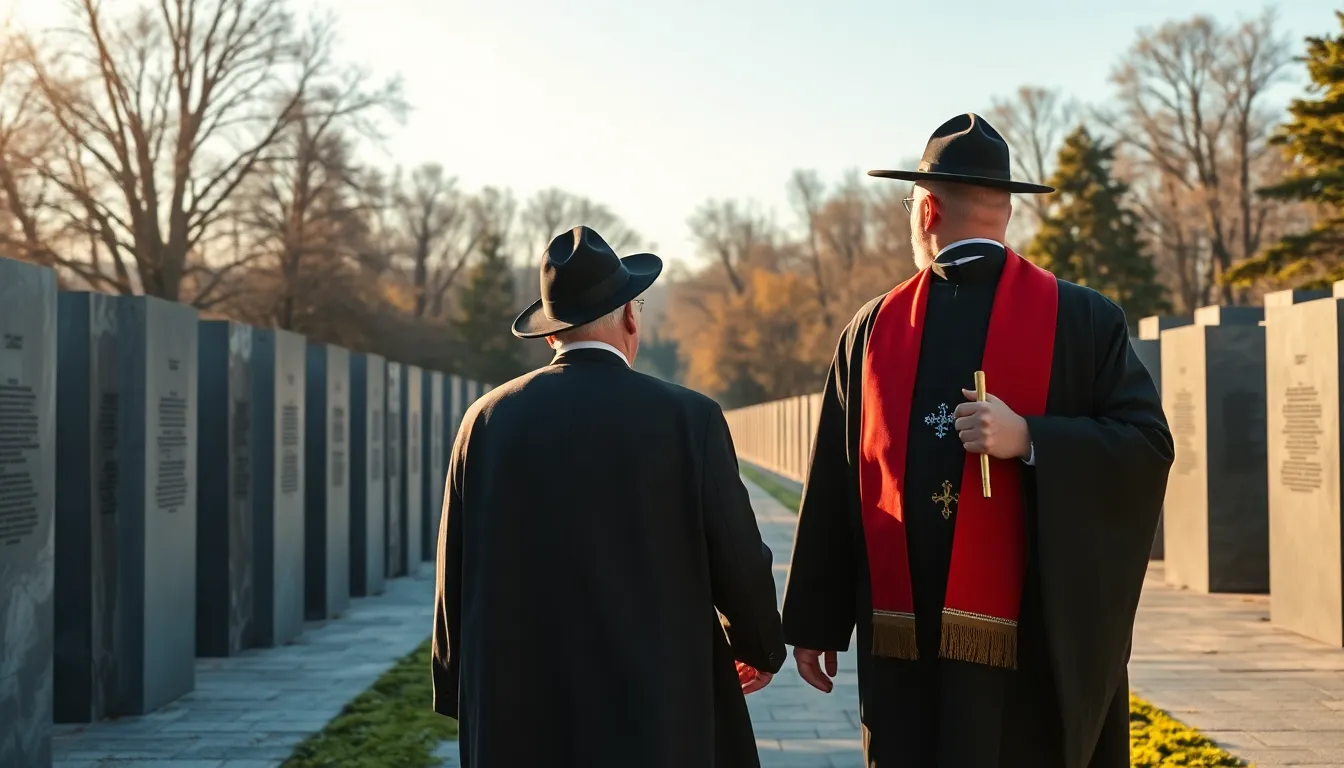
The most powerful trip I have ever been part of was led by a rabbi and a pastor who had been friends for fifteen years and decided to take their two congregations to Germany together. I watched a Lutheran retiree and a Jewish grandmother stand side by side at a Holocaust memorial, neither of them speaking, both of them weeping, and I understood something about why this kind of travel exists. An interfaith Germany trip is not two trips sharing a bus. Done right, it is a single journey where each tradition sees its own story and the other’s at the same time, on the ground where both were tested.
It is also the hardest kind of trip to lead, and the leadership has to be genuinely shared. Here is what I have learned about co-leading one well, because the planning makes the difference between a profound experience and an awkward one.
Why Germany Is Uniquely Suited to This
Germany holds both stories in one landscape, which is rare. The Reformation reshaped Christianity here. The Holocaust devastated European Jewry here. And the ShUM cities of the Rhine Valley hold a thousand years of Jewish life that predates the Reformation entirely. A group that includes both traditions can encounter all of it without ever leaving the country.
More than that, Germany forces the kind of honest reckoning that interfaith travel is supposed to produce. This is not a destination where two faiths admire each other’s pretty sites. It is a destination where Christians confront what was done to Jews on this soil, where Jews encounter both ancient flourishing and modern revival, and where both traditions sit with hard questions about faith, conscience, complicity, and hope. That weight, handled well, is exactly what makes the trip transformative rather than merely interesting.
Real Co-Leadership, Not a Figurehead Arrangement
The first thing I tell a rabbi and pastor planning this together is that the co-leadership has to be real. If one leader is clearly running the trip and the other is along for the ride, the group feels it immediately, and the members of the second leader’s community feel like guests rather than full participants.
Real co-leadership means both leaders shape the itinerary together from the start. Both teach and lead reflections. Both are visibly in charge. At a Reformation site, the pastor naturally takes the lead, but the rabbi is present and engaged, sometimes offering an outside perspective that deepens it. At a Jewish heritage site or a Holocaust memorial, the roles shift. The point is that the group sees two leaders who respect each other’s authority, because that mutual respect is the model the whole trip is teaching.
Sort out the division of labor early. Who leads which reflections, who handles which logistics, how you will make decisions when you disagree on the ground. The friendship and trust between co-leaders is the foundation everything else rests on, and the planning months are where you build it.
Designing an Itinerary Both Traditions Own
A strong interfaith itinerary alternates between shared ground and tradition-specific depth, and is deliberate about both.
Shared sites carry everyone. The Holocaust memorials, Dachau, Bergen-Belsen, the Berlin memorials, speak to the entire group as a human reckoning, not only a Jewish one. The ShUM cities illuminate a shared medieval history. These are the sites where the whole group stands together, and they are the emotional spine of the trip.
Tradition-specific sites give each community its own depth. The Reformation Trail through Eisleben, Erfurt, and Wittenberg is the Christian members’ story. Jewish heritage sites, the old synagogues, the cemeteries, the revived Berlin community, are the Jewish members’ story. The art is in letting each community go deep into its own narrative while the other community witnesses rather than waits. A Jewish member watching Christians encounter the Reformation, with context, learns something. The reverse is just as true.
Some days the group splits for tradition-specific experiences and reunites in the evening to share what each encountered. Those evening gatherings, where each community tells the other what its day meant, are often where the deepest interfaith connection happens. Build them in deliberately.
Our group tour guide for pastors and rabbis lays out the full arc of these routes and how mixed-faith itineraries are structured.
Handling the Hard Conversations Honestly
An interfaith Germany trip cannot avoid the difficult material, and the strongest co-leaders lean into it together rather than tiptoe around it.
Luther’s later writings about Jews are deeply troubling and were later weaponized. A serious interfaith trip names this directly, ideally with the pastor raising it rather than the rabbi, which models accountability rather than accusation. Our guide on preparing your group spiritually covers how to fold this into pre-trip study so it lands as honest reckoning rather than ambush.
The Holocaust raises questions of Christian complicity that an interfaith group is uniquely positioned to face together. When a pastor stands at Dachau and speaks honestly about the church’s failures, and a rabbi stands beside him, something happens that neither could create alone. These are the moments the trip exists for. Do not schedule around them. Prepare for them.
The skill is creating space where these conversations can happen without either community feeling attacked or defensive. That space comes from the co-leaders’ evident trust in each other. If the rabbi and pastor can sit in hard truth together, the congregations will follow.
Worship, Prayer, and Respect
Practical religious questions need answers before you travel, and answering them well prevents the small frictions that can sour an otherwise beautiful trip.
Decide in advance how the group will mark Shabbat if the trip spans a weekend, how daily prayer or reflection will work for each tradition, and what shared moments, a joint reflection at a memorial, a moment of silence both communities can hold, will bring everyone together without asking anyone to compromise their own practice. The principle is that each tradition keeps its own integrity while the group finds genuine common ground, rather than a watered-down blend that satisfies no one.
Dietary observance is part of this respect too. An interfaith group often includes both kosher and halal needs alongside the usual range, and handling them well is a quiet act of hospitality that members notice. Our guide on dietary needs across a mixed group covers how to feed everyone without anyone feeling singled out, which on an interfaith trip is part of the larger work of making each community feel fully at home.
The Practical Side of Two Communities Traveling Together
A few logistics make co-led trips run smoothly.
Two leaders make the group easier to manage, not harder, especially across emotionally demanding sites where two people can hold a large group’s range of responses better than one. This is also where the free group leader benefit matters: on larger groups, a second leader spot can travel free, which means both the rabbi and the pastor may be covered. Our piece on how the free group leader benefit works explains exactly when that second spot is included.
Group size tends to run larger on interfaith trips, since two congregations are contributing members, which often pushes you comfortably past the thresholds for the best per-person pricing and the second free leader. And two leaders splitting the group at demanding or mobility-challenging sites keeps everyone led rather than leaving anyone stranded, which our guide on mixed mobility groups addresses in depth.
Our Germany destination page and group heritage tours page show how we structure these journeys for two communities traveling as one.
FAQ: Co-Leading an Interfaith Germany Trip
Can a rabbi and a pastor genuinely co-lead the same heritage trip?
Yes, and Germany is one of the best destinations for it. The key is that the co-leadership is real rather than a figurehead arrangement. Both leaders shape the itinerary, both teach and lead reflections, and both are visibly in charge, with the lead role shifting naturally between Reformation sites and Jewish heritage sites. The mutual respect between the two leaders is itself the model the trip teaches.
How do you build an itinerary that serves both Jewish and Christian members?
Alternate between shared sites and tradition-specific depth. Holocaust memorials and the ShUM cities carry the whole group together as a human reckoning. The Reformation Trail gives Christian members their story, and Jewish heritage sites give Jewish members theirs, with each community witnessing the other’s depth rather than waiting it out. Reuniting in the evening to share what each day meant is often where the deepest connection happens.
How do you handle Luther’s troubling writings about Jews on an interfaith trip?
Name them directly, ideally with the pastor raising the subject rather than the rabbi, which models accountability rather than accusation. Fold it into pre-trip study so it lands as honest reckoning rather than an ambush at the site. A serious interfaith trip treats this as central material, because facing it together is exactly the kind of work the trip exists to do.
How do worship and prayer work when two traditions travel together?
Decide in advance how each tradition’s prayer and observance will work, how Shabbat will be marked if the trip spans a weekend, and what shared moments will bring everyone together without asking anyone to compromise their practice. The principle is that each tradition keeps its full integrity while the group finds genuine common ground, rather than a blended compromise that satisfies no one.
Do both leaders travel free on an interfaith trip?
Often, yes. On larger groups, a second leader spot can travel free, and interfaith trips tend to run larger because two congregations contribute members. That size frequently pushes the group past the threshold where both the rabbi’s and the pastor’s land packages are covered. Ask us early so we can confirm the exact group size that unlocks the second free spot for your route.
If you and a colleague from another tradition have ever talked about taking your communities to Germany together, I would love to help you shape it. The co-led interfaith trips are the ones I remember most, and they take real care to build well.
Contact us and let us start designing a journey your two communities can take as one.