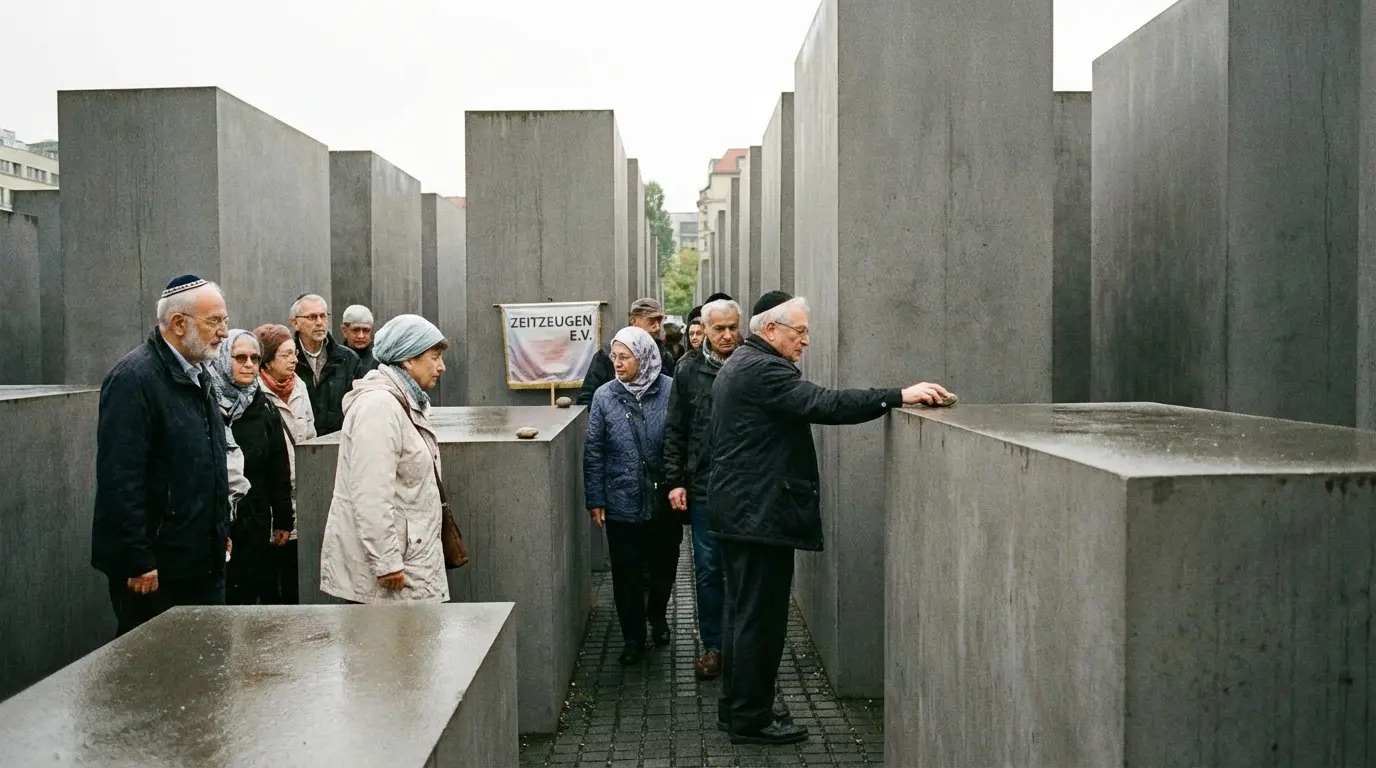
What Makes Germany Different from Other Heritage Destinations
Every heritage destination carries its own emotional register. Israel is awe. Morocco is wonder. Greece is discovery.
Germany is weight.
That is not a reason to avoid it. It is a reason to approach it with care. If you are a pastor or rabbi planning a group heritage tour to Germany, you are not just organizing travel. You are taking responsibility for how your community encounters one of the most emotionally demanding landscapes in the world. That is a serious thing, and it deserves honest preparation.
The good news is that thousands of faith groups travel to Germany every year and come home deeply grateful they went. The ones who have the best experience are the ones whose leaders prepared well. This guide is written to help you do exactly that, and if you want the broader planning framework that applies to any destination, the complete guide for group leaders walks through it step by step.
Preparing Your Group Emotionally, Not Just Logistically
Before you start choosing cities and booking dates, think about your group’s emotional readiness. Are there Holocaust survivors or their descendants in your congregation? Are there members who have never visited a memorial site? Are there young people in the group who may be encountering this history in a physical way for the first time?
These questions matter more than hotel ratings. A good tour operator will ask you about them. If they do not, that tells you something.
Consider holding a pre-trip gathering for your group. Share readings, watch a documentary together, or invite a speaker who has led groups to Germany before. When your community arrives prepared, the experience deepens. When they arrive unprepared, it can overwhelm.
Building Your Itinerary: What Every Group Should Include
For Jewish Groups: The Rhine Valley to Berlin Arc
A Jewish heritage itinerary in Germany has a natural shape. It begins in the Rhine Valley, where Jewish life flourished for a thousand years in the ShUM cities of Worms, Speyer, and Mainz. It moves through the Holocaust memorial sites, Dachau, Bergen-Belsen, Berlin’s memorials. And it ends in modern Berlin, where the fastest-growing Jewish community in Europe is rebuilding what was lost.
This arc, from flourishing to destruction to revival, gives your congregation a complete story rather than a single chapter. It is the difference between a trip that leaves people grief-stricken and one that leaves them both grieving and hopeful.
For Christian Groups: The Reformation Trail and Beyond
Christian groups have a different but equally powerful itinerary available. The Reformation Trail runs from Eisleben (where Luther was born and died) through Erfurt (where he became a monk) to Wittenberg (where he posted the 95 Theses). Adding Cologne Cathedral and Rothenburg ob der Tauber gives the trip architectural grandeur and medieval Christian heritage.
Many Christian groups also choose to include Holocaust memorial sites, particularly Dachau and the Berlin memorials. This is not only a Jewish story. It is a human one, and Christian communities have their own reckoning with it.
For Mixed-Faith Groups: Sites That Speak to Both Traditions
If your group includes members of different faiths, Germany offers remarkable common ground. The Holocaust memorials speak to everyone. The ShUM cities illuminate a shared medieval history. The Reformation sites raise questions about faith, authority, and conscience that cross denominational lines.
A mixed-faith itinerary requires a bit more thought in its design, but it can produce some of the richest group conversations of any heritage trip. The key is choosing sites where both traditions feel honored rather than subordinated.
Group Size, Pricing, and the Free Leader Benefit
Most heritage tour groups to Germany range from 15 to 40 participants. This size works well for motor coaches, hotel accommodations, and guided site visits. Smaller groups of 10 to 15 are possible but may cost more per person. Larger groups above 40 can be accommodated with advance planning.
Here is a fact worth knowing early in your planning: with Heritage Tours, group leaders with 15 or more participants travel free. That means you, the pastor or rabbi organizing this trip, pay nothing for your own travel when your group reaches that threshold. This is standard for us, not a promotional offer. It exists because we believe the person doing the work of leading a group through this kind of journey should not also carry the financial burden.
What to Look for in a Tour Operator (and Red Flags to Avoid)
Not every tour operator is equipped to handle a faith-based heritage group in Germany. Here is what to look for and what to avoid.
Look for an operator that asks about your group’s composition, faith background, and emotional readiness before talking about hotels and prices. Look for someone who has run groups in Germany before and can speak specifically about the sites, not in generalities. Look for custom itineraries, because a fixed-route tour built for general tourists will not serve your congregation well.
Be cautious of operators who treat Germany like any other European destination. Be cautious of itineraries that pack in too many cities without time for reflection. Be cautious of anyone who does not mention the emotional dimension of this trip at all. Germany is not a destination where you want the cheapest option. It is a destination where you want the most thoughtful one.
Practical Details Every Group Leader Needs to Know
Kosher Food in Germany: What to Expect
Kosher food is available in Berlin, Frankfurt, and Munich, with kosher restaurants, bakeries, and grocery options in each city. Outside major cities, kosher options become limited. If your group keeps kosher, communicate this to your tour operator early. A good operator will arrange meals in advance and knows which hotels can accommodate dietary requirements.
In smaller cities along the Rhine Valley or the Reformation Trail, kosher-catered meals can be arranged with advance notice. Do not assume availability. Plan ahead.
How to Brief Your Group Before the Trip
Send your group a reading list or resource packet at least a month before departure. Include a brief overview of the sites you will visit and why each matters. For Holocaust memorial sites, consider sharing guidelines on respectful behavior: silence in certain spaces, photography restrictions, appropriate dress.
Hold at least one group meeting before the trip. Let people ask questions and express concerns. Some members may be anxious about visiting Germany at all. Acknowledging that anxiety openly, as a community, makes the trip stronger.
On the ground, brief your group each morning about what the day holds. If a memorial visit is on the schedule, say so plainly and give people permission to step away if they need to. Not everyone processes grief the same way, and the best group experiences make room for individual responses.
Frequently Asked Questions for Group Leaders
How many people do I need to get the group leader to travel free?
With Heritage Tours, the group leader travels free with 15 or more participants. This applies to the organizing leader, whether that is a pastor, rabbi, minister, or community organizer.
Can I build separate itineraries for Jewish and Christian members of a mixed group?
Yes, though it requires some coordination. A mixed-faith group can visit shared sites together and split for denomination-specific sites on certain days. Heritage Tours designs mixed-faith itineraries regularly and can advise on how to structure the days so both groups feel the trip was built for them.
What is the best way to prepare a group emotionally for Holocaust memorial visits?
Hold a pre-trip gathering that includes readings or a film about the Holocaust. Brief your group before each memorial visit on what they will see and how to approach it respectfully. Build time into the itinerary after each visit for reflection, whether that means a group discussion, a prayer, or simply quiet time. Do not schedule something lighthearted immediately after a memorial visit.
How far in advance should I book a Germany group heritage tour?
Six to nine months is ideal for groups of 15 to 30. For larger groups or travel during peak season (April through October), booking nine to twelve months ahead gives the best selection of hotels and guides. Starting the conversation with an operator even earlier, just to explore options, is always welcome.
Is kosher food available in German cities along the heritage route?
Berlin, Frankfurt, and Munich all have kosher restaurants and grocery options. Smaller cities along the Rhine Valley have limited kosher availability, but meals can be arranged in advance through your tour operator. Communicate dietary needs early in the planning process.
If you are a spiritual leader weighing whether Germany belongs on your community’s horizon, we would be glad to talk it through with you. No pressure, no sales pitch. Just an honest conversation about what this trip could mean for your group. Start by exploring our Germany destination page. If you are also considering the Holy Land, our guide to church group trips to Israel covers the same planning ground for that destination.