I will never forget the woman who told me, three days into a Rhine Valley trip, that she had stopped coming on the morning visits. She had a bad hip, the cobblestones in the old towns were brutal on it, and rather than slow anyone down she had quietly decided to sit in the hotel lobby. She had paid full price to see Germany and was watching it from a chair. That was a failure on my part, not hers, and it taught me that mixed mobility is not something you accommodate as an afterthought. You design the whole trip around the truth that your group walks at different speeds.
Most heritage congregations are not uniformly young and fit. You have people in their seventies and eighties, people recovering from surgery, people with arthritis or heart conditions or a cane they would rather not mention. A good Germany trip includes all of them fully. Here is how I make that happen.
Get the Honest Picture Before You Plan
Mobility is harder to assess than diet, because people are proud and they undercount their own limits. Someone who can walk fine on a flat street may not realize that a cathedral tower is 500 steps, or that a medieval old town is all uneven cobblestone, or that a day of standing on stone floors is a different thing entirely from a walk around the block.
So I ask in concrete terms. Can you comfortably walk for an hour with breaks? Can you manage stairs without a handrail? Do you use a cane, walker, or wheelchair, or might you want one for long days? Are there days you tire faster than others? I frame it as planning, not judgment, and I make clear that naming a limit gets them more of the trip, not less.
The goal is a mobility map of the group that sits next to the dietary map. Once I know who needs what, I can build a trip where the strongest members are challenged and the least mobile members are still fully present.
Germany’s Sites: Where the Real Challenges Are
Knowing the specific obstacles lets you plan around them instead of being surprised on the ground.
Cobblestones are the quiet enemy. The old towns that make Germany beautiful, Rothenburg, the ShUM cities, the historic centers, are paved in uneven stone that is hard on hips, knees, and anyone using a cane or wheels. This is the single most common difficulty, and it is easy to underestimate because it is not dramatic. It just grinds people down.
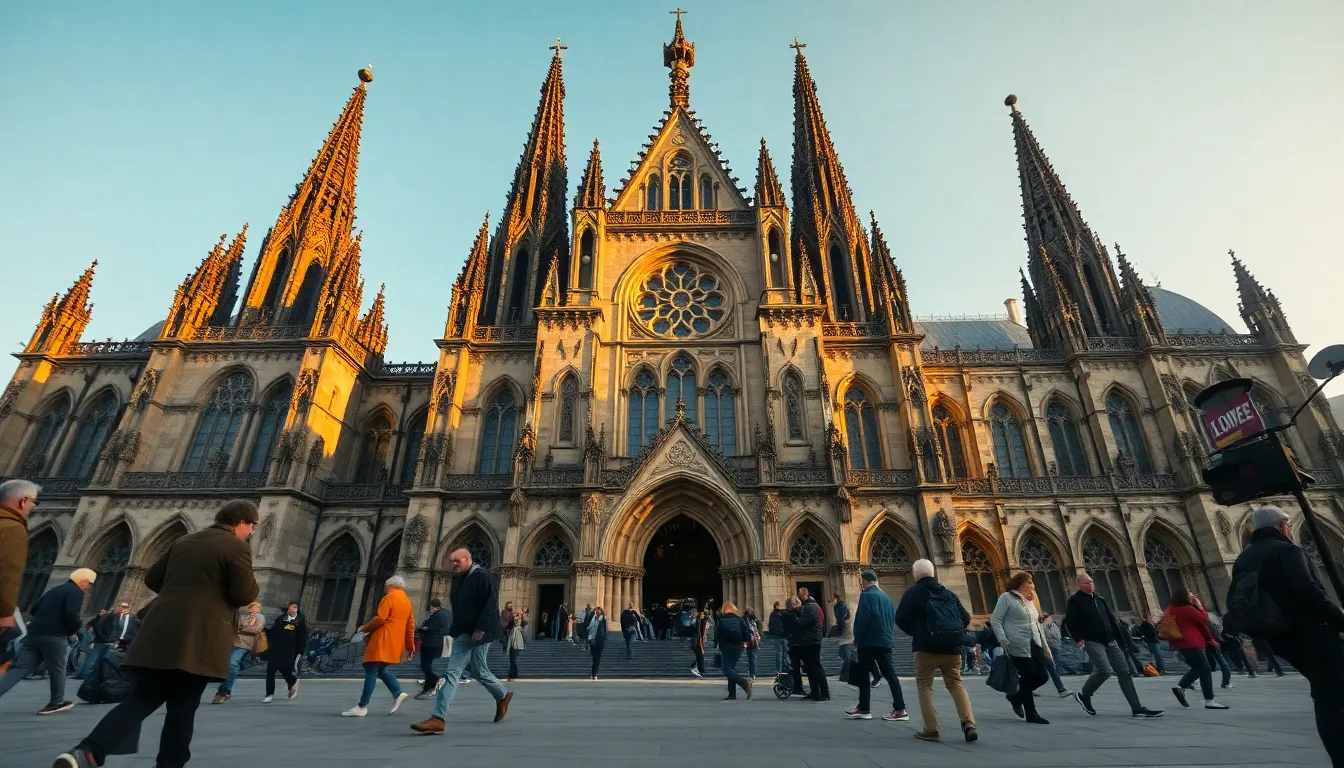
Cathedral stairs and towers are optional in the best sense. Climbing Cologne Cathedral’s tower is a feat. Standing in its nave is not. The key is making sure the climb is genuinely optional and that the people who skip it still have something meaningful to do at ground level, not a long wait by the door.
Standing time matters as much as walking distance. A guided visit can involve a lot of standing on hard floors. For some members, an hour standing still is harder than a mile walking. Portable folding stools, or simply building in seated moments, solves more than people expect.
Distances between the coach and the site can be the real obstacle, not the site itself. A long walk from a parking area to an entrance can exhaust someone before the visit even starts. Knowing these distances in advance lets you arrange closer drop-offs where possible.
Building an Itinerary That Holds Everyone
The principle I work from is this: design the day so the group moves together but no one is forced past their limit.
Pace the days realistically. A trip that crams in three cathedrals and two old towns daily will lose your slower members by day three, exactly as I lost the woman with the hip. Fewer sites, more deeply, with rest built in, serves a mixed-mobility group far better and honestly makes a better trip for everyone.
Build in genuine rest. A café stop is not wasted time. It is what lets an eighty-year-old participant make it to the afternoon site with energy to actually experience it. Sitting in a German café for half an hour is also, frankly, part of the trip.
Create graceful options at demanding sites. At a site with a strenuous tower or a long uneven path, offer a parallel ground-level experience so the people who opt out are doing something, not waiting. The best version is two small groups doing two different things and reuniting, rather than a fast group and a stranded group.
Position the coach as a moving rest stop. On a well-run trip, the motor coach is never far, climate-controlled, and available as a place to rest. A member who tires can return to it without missing the trip, and knowing that safety net exists lets people push a little further than they otherwise would.
Equipment and Arrangements Worth Making
A few practical arrangements remove most of the friction.
For members who can walk but tire, a wheelchair available for the long days, not as a daily fixture but as an option, changes everything. Many people who would never use one at home are grateful for one across a vast cathedral or a sprawling memorial site. Frame it as a tool for covering distance, not a verdict on their health, and the resistance usually disappears.
Folding travel stools let people sit during long guided talks. Hotels chosen with elevators and accessible rooms matter more than star ratings for this group. And confirming which specific sites on your route have accessible entrances, ramps, or lifts is worth doing before you book, because accessibility at historic German sites varies widely and some genuinely old structures simply cannot be made step-free.
A capable operator knows these details site by site. When I plan a route with mobility needs, accessibility is part of the conversation from the first draft, not a problem we discover later.
The Pastoral Side Nobody Talks About
There is a dignity dimension to this that I want to name plainly, because it is the part that actually determines whether your mixed-mobility members have a good trip.
People do not want to be a burden. The woman in the hotel lobby removed herself because she would rather miss Germany than feel like she was holding others back. Your job as a leader is to make staying included feel normal and easy, so no one makes that choice.
That means building accommodations into the trip’s design rather than improvising them in front of the group. It means never letting a slower member feel the group’s impatience, which often means you personally hang back with them while a co-leader moves ahead. It means framing every accommodation, the wheelchair, the rest stop, the skipped tower, as the ordinary shape of the trip rather than a special concession. When inclusion is built into the structure, nobody has to ask for it, and nobody feels diminished by needing it.
This is also where a second leader earns their place. Two leaders can split a group at a demanding site, one taking the climbers, one staying with those at ground level, so both groups are led rather than one being abandoned. Our guide on how the free group leader benefit works covers when a second leader spot is covered, which matters a great deal for groups with real mobility needs.
For the wider planning picture, our group tour guide for pastors and rabbis sets mobility alongside itinerary design, and our piece on preparing your group spiritually pairs well with this, since the reflective pace that suits a mixed-mobility group also deepens the spiritual experience.
FAQ: Mixed Mobility on a Germany Heritage Trip
How do I plan a Germany trip when members have very different mobility levels?
Start with an honest mobility assessment, asking in concrete terms about walking, stairs, standing, and equipment, then build a mobility map alongside your roster. Design the itinerary so the group moves together but no one is pushed past their limit: fewer sites done more deeply, genuine rest built in, and graceful ground-level options at demanding sites. The aim is for the least mobile members to stay fully present, not to sit out.
What are the biggest mobility challenges at German heritage sites?
Cobblestones in the old towns are the most common and most underestimated, hard on hips, knees, and anyone using a cane or wheels. Cathedral towers and long staircases should be genuinely optional. Standing time on hard floors during guided visits tires some members more than walking does. And the distance from the coach to an entrance can be the real obstacle, so knowing those distances in advance helps you arrange closer drop-offs.
Should we bring or rent a wheelchair?
For members who can walk but tire on long days, having a wheelchair available as an option, not a daily fixture, is often transformative. Many people who would never use one at home are grateful for one across a vast cathedral or sprawling memorial site. Frame it as a tool for covering distance rather than a judgment on their health, and most resistance fades.
How do I keep slower members from feeling like a burden?
Build accommodations into the trip’s design rather than improvising them in front of the group, so inclusion is the normal shape of the trip rather than a special concession. Never let a slower member feel the group’s impatience, which often means a leader hangs back with them while a co-leader moves ahead. When the structure already accounts for different speeds, nobody has to ask for help and nobody feels diminished.
Are German cathedrals and historic sites wheelchair accessible?
It varies widely. Major cathedrals often have accessible nave-level entrances even where towers are not reachable, and many sites have added ramps and lifts. But some genuinely old structures cannot be made fully step-free. Confirm accessibility site by site before booking, and choose hotels with elevators and accessible rooms. A good operator builds this into the route from the first draft.
If your group spans a real range of mobility and you want a trip where every member is fully included rather than quietly left behind, that is exactly what thoughtful planning is for. I would rather solve it before you go than watch someone end up in a hotel lobby.
Contact us and we will build a route that holds your whole group.