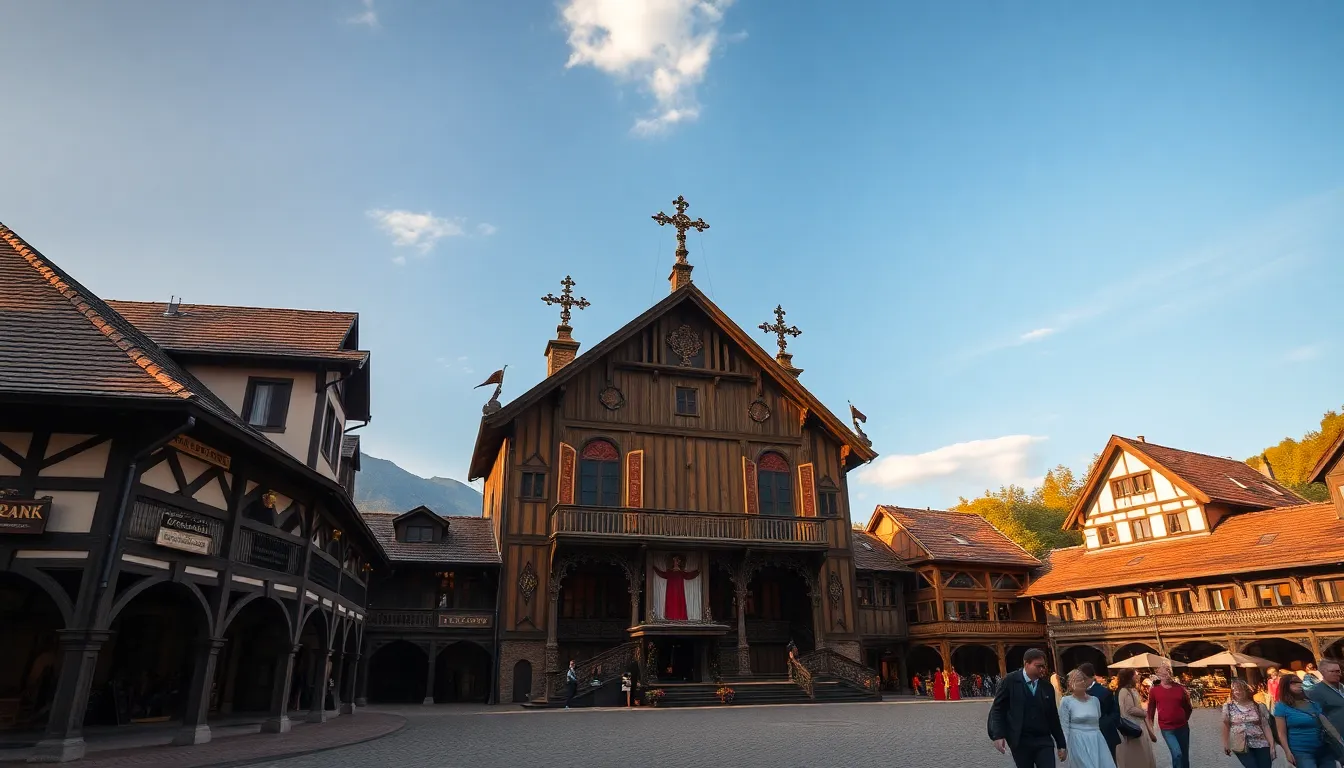
I have taken groups to a great many sacred performances over the years, but nothing prepares people for Oberammergau. You sit in a covered theater open to the Bavarian sky and the mountains behind the stage. The light changes through the afternoon and into evening as the story moves from triumph to betrayal to the cross. The cast is not made of professional actors flown in from somewhere. They are the villagers themselves, hundreds of them, who have grown their hair and beards for over a year for this. And every one of them is keeping a promise their ancestors made almost four hundred years ago.
That is the thing I most want group leaders to understand before they decide whether to plan for it. The Oberammergau Passion Play is not a show. It is the fulfillment of a vow. When you bring your congregation here, you are not buying theater tickets. You are joining a village in keeping a promise to God. Frame it that way for your people, and the day becomes one of the most moving of any trip to Germany.
The Vow of 1634
The story begins in 1633. The Thirty Years’ War was tearing through central Europe, and with the armies came the plague. It reached the region around Oberammergau, a small woodcarving village in the Bavarian Alps. People were dying. According to the village’s account, the inhabitants gathered and made a vow: if God would spare them from further deaths by plague, they would perform a play depicting the suffering and death of Jesus, the Passion, every ten years forever.
The tradition holds that from the moment of the vow, no further villagers died of the plague. In 1634, the people of Oberammergau performed the Passion Play for the first time, on a stage set up in the cemetery over the graves of plague victims. They have kept that vow ever since. The play has been performed roughly every ten years for nearly four centuries, with a small number of interruptions and date adjustments over that long span. What began as a desperate prayer in a dying village became one of the longest-kept communal promises in the Christian world.
Why “Once a Decade” Matters
The ten-year rhythm is central, and it changes how you must plan. This is not a performance you can catch any summer you happen to be passing through Bavaria. It runs in years ending in zero, across a single season, roughly May through early October of that year, and then not again for another decade. The tickets, the lodging, the entire region book up far in advance. A group leader who wants to bring a congregation to Oberammergau in a performance year needs to be thinking and reserving years ahead, not months. I cannot stress this enough. The scarcity is the whole logistical challenge.
What the Experience Is Actually Like
The performance is long, and people should know that going in. It runs across an afternoon and evening with a meal break in the middle, when the audience leaves the theater for dinner in the village and returns for the second half. The full experience takes most of a day. This is not a complaint. The length is part of the gravity. You are meant to live inside the Passion narrative for hours, not skim it.
The Villagers as Cast
Only people who were born in Oberammergau or have lived there long enough qualify to take part. Hundreds of villagers participate, on stage and behind it, alongside a large choir and orchestra, all local. In the run-up to a performance year, the village observes the so-called hair and beard decree. Cast members stop cutting their hair and beards well in advance so they look the part naturally rather than in costume wigs. Walking through the village in a performance year, you see ordinary shopkeepers and farmers who are about to portray apostles and Roman soldiers. That blurring of village life and sacred drama is exactly what makes Oberammergau different from any staged production.
The Music and the Living Tableaux
Between the acted scenes, the play uses tableaux vivants, living pictures, where the cast forms still scenes from the Old Testament that mirror the moment in the Passion being told. It is an old way of teaching that the Old and New Testaments speak to each other, and for a thoughtful group it adds real depth. The original music score, composed in the nineteenth century, carries the whole thing. The combined effect of music, the unfolding sky, the mountain backdrop, and a cast performing a promise is something most of my travelers struggle to put into words afterward.
A Note on History and Sensitivity
I owe group leaders honesty here, because it matters for how you prepare people. For much of its history, the Passion Play’s text reflected the anti-Jewish currents that ran through European Passion traditions, portraying Jewish figures in ways that fed centuries of hostility. This is a known and serious part of its past. Over recent decades, in serious dialogue with Jewish scholars and organizations, the production has revised the script and staging substantially to remove anti-Jewish content, to restore the Jewishness of Jesus and his followers, and to present the Passion responsibly. The reforms have been real and widely recognized.
I raise this not to discourage anyone but because a good group leader prepares the conversation in advance. If your group includes people sensitive to this history, or if you simply want to lead well, talk about it beforehand. Acknowledge the play’s past honestly, explain the reforms, and frame the visit with care. That honesty makes the experience stronger, not weaker.
Planning Oberammergau for a Group
Because the play runs only in years ending in zero, the planning conversation is unlike any other site. Here is what I tell group leaders.
Start years ahead. In a performance year, demand from faith groups worldwide is enormous, and the village is small. Packages typically combine the play ticket with overnight lodging in or near Oberammergau, since one night’s stay is usually part of the arrangement. Build the play into a broader Bavaria and Reformation itinerary rather than flying in only for the performance. Oberammergau pairs naturally with Augsburg and the Reformation south, and it fits within a wider journey through Germany’s spiritual and Christian heritage sites. For groups also following the Reformation story, it complements the Luther pilgrimage route, giving a southern, devotional counterweight to the northern Luther sites.
Prepare your group spiritually, not just logistically. Read the Passion narrative together before you go. Set the day apart. The travelers who arrive understanding the vow, the history, and the scale of what they are about to witness get far more from it than those who treat it as a long afternoon at the theater.
FAQ: The Oberammergau Passion Play
What is the Oberammergau Passion Play?
It is a dramatization of the suffering, death, and resurrection of Jesus, performed by the villagers of Oberammergau in Bavaria. It began in 1634 as the fulfillment of a vow made during the plague, and it has been performed roughly every ten years ever since, making it one of the longest-running communal traditions in Christianity.
Why is the Passion Play only performed once every ten years?
The villagers’ original vow in 1634 promised to perform the Passion every ten years in gratitude for being spared from the plague. The village has kept that decade rhythm for nearly four centuries. It runs across a single season in years ending in zero, then not again for another ten years.
How far in advance should a group plan to attend?
Years in advance. Because the play runs only one season per decade and Oberammergau is a small village, tickets and lodging book up far ahead. Faith groups should begin planning and reserving well before the performance year, not in the months leading up to it.
How long is the performance?
It takes most of a day. The play runs across an afternoon and evening with a meal break in the middle, when the audience leaves for dinner in the village and returns for the second half. The length is part of the experience, immersing the audience in the Passion narrative for hours.
Has the Passion Play addressed concerns about anti-Jewish content?
Yes. For much of its history the text carried anti-Jewish elements common to European Passion traditions. Over recent decades, in dialogue with Jewish scholars and organizations, the production has substantially revised the script and staging to remove that content and to present the Passion, and the Jewishness of Jesus and his followers, responsibly. Good group leaders prepare this conversation in advance.
Oberammergau is a once-a-decade opportunity, and the planning has to start early to make it work for a congregation. If your group is hoping to attend in a performance year, the time to talk is well ahead of it. Group leaders travel free with fifteen or more participants. Start with our Germany destination page, see how our group heritage tours work, and reach out early so we can secure your place.