When I lead a group through Wittenberg, almost everyone arrives thinking about one man. Martin Luther. And that is fair, this is Luther’s town. But about halfway through the day, at a quieter house a short walk from the Luther sites, I get to introduce groups to the man without whom the Reformation might never have held together. Philip Melanchthon. The scholar. The teacher. The one who took Luther’s thunder and gave it a structure the church could actually use.
I love this stop because it surprises people. Most American Christians have never heard the name Melanchthon, and yet they have been shaped by him. If you have ever read a systematic statement of Protestant belief, you owe something to this quiet, scholarly man. After more than twenty years of these trips, watching a group discover Melanchthon is one of my favorite moments in Wittenberg. Let me tell you who he was and why his house belongs on your itinerary.
The Teacher of Germany
Philip Melanchthon arrived in Wittenberg in 1518 as a brilliant young professor of Greek, only twenty-one years old. He was small, slight, and not physically imposing, the opposite of the booming Luther. But his mind was extraordinary. He had been a prodigy, a master of the classical languages, deeply formed by Renaissance humanism and its love of careful textual scholarship. The great humanist Erasmus praised him early.
In Wittenberg, Melanchthon and Luther became close partners and friends. Luther had the fire, the prophetic voice, the willingness to stand before emperors and refuse to recant. Melanchthon had the organizing intellect, the gift for clear exposition, the patience to build a curriculum and a coherent body of teaching. They needed each other. I tell groups it was one of the great working partnerships in church history, two very different men who together did what neither could have done alone.
Melanchthon earned the title Praeceptor Germaniae, the Teacher of Germany. He reformed the German school and university system so thoroughly that his influence on education long outlived the religious disputes of his day. For a group of educators, and I lead many, this is a man worth knowing. He believed that reform of the church required reform of learning, and he built the schools to make it happen.
The Loci Communes and Protestant Theology
Melanchthon’s first great contribution was a book, the Loci Communes, published in 1521. It was the first organized, systematic presentation of the new Protestant theology, a clear account of the main themes of Christian doctrine as the reformers understood them. Luther himself praised it lavishly. Where Luther’s writing was passionate and occasional, often written in the heat of a controversy, Melanchthon’s was ordered and teachable.
This is the point I make to pastors. Luther gave the Reformation its voice. Melanchthon gave it a textbook. Movements need both. A revolution that cannot be taught to the next generation dies with its founders. Melanchthon made sure the Reformation could be taught, and that is a large part of why it endured.
The Augsburg Confession
Melanchthon’s most lasting single act came in 1530 at the Diet of Augsburg. The Protestant princes needed to present a formal, unified statement of their faith to the Emperor Charles V. The task of drafting it fell to Melanchthon, and what he produced, the Augsburg Confession, became the foundational confession of the Lutheran church and one of the most important documents of the entire Reformation.
I want groups to understand why this matters so much. The Augsburg Confession was not a fighting document. It was conciliatory in tone, careful, an attempt to show that the reformers stood within the historic Christian faith rather than outside it. That was pure Melanchthon. He spent much of his life seeking agreement where Luther was often content to draw lines. The Augsburg Confession is still confessed by Lutheran churches around the world, nearly five centuries later. A document drafted by this scholarly man in 1530 still shapes how millions of Christians state their faith.
The Melanchthon House in Wittenberg
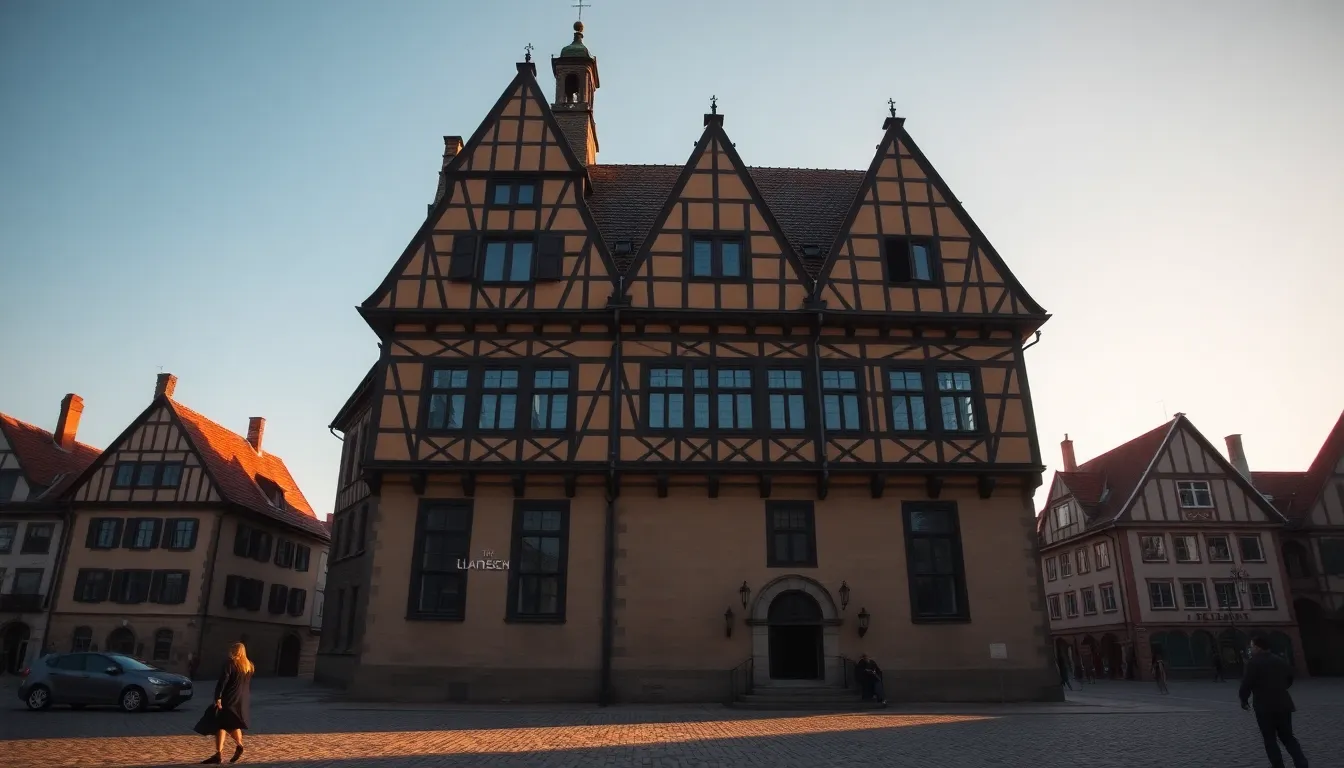
The Melanchthonhaus is where you meet the man up close. It is a fine Renaissance building, given to Melanchthon by the elector so he would stay in Wittenberg, and it is one of the best-preserved homes of any Reformation figure. Today it is a museum dedicated to his life and work, and it is recognized, together with the Luther sites, as part of the UNESCO World Heritage listing for Wittenberg.
Inside, the house tells the story of Melanchthon the scholar, teacher, husband, and father. You see the study where he worked, exhibits on his enormous correspondence and publishing, and the death room where he died in 1560. What strikes most groups is the contrast with the Luther House nearby. Luther’s home feels like the household of a force of nature, full and loud and busy. Melanchthon’s feels like the home of a thinker. Together, the two houses give you the whole Reformation in microcosm, the prophet and the professor, a few minutes’ walk apart.
Why This Stop Changes the Wittenberg Day
I have found that visiting Melanchthon’s house reframes the whole town for a group. Wittenberg stops being a one-man story. It becomes a community of reform, with Luther at the center but surrounded by scholars, artists like Lucas Cranach who lived and worked here too, princes, and students. The Reformation was a movement, not a solo performance, and the Melanchthon House is where that truth becomes visible. For groups that include teachers and academics, this is often the stop they talk about afterward, because they recognize themselves in him.
Planning the Visit
The Melanchthon House sits within easy walking distance of the other Wittenberg sites, the Lutherhaus, the Town Church of St Mary’s where Luther preached, the Castle Church with its famous door, and the market square with the statues of both Luther and Melanchthon standing together. The whole historic core is compact and flat, which makes Wittenberg a friendly town for mixed-age groups.
My advice on pacing. Do not try to rush Wittenberg in two hours. The Lutherhaus alone deserves a couple of hours, and the Melanchthon House deserves real time rather than a quick pass on the way to lunch. A full day in Wittenberg, with both houses, both churches, and the square, is time well spent for a Protestant group, and it lets Melanchthon get the attention he is usually denied.
To put Melanchthon in the wider story, read our Reformation site-by-site guide, which maps the full circuit of Reformation towns. The Bach country that often pairs with a Reformation route is covered in our guides to Bach in Leipzig and Bach in Thuringia. The complete German Christian heritage route is laid out in our Germany spiritual sites guide.
You can learn more about how we structure these journeys on our Germany destination page, and our group heritage tours page explains the group leader experience, including that group leaders travel free with fifteen or more participants.
FAQ: Melanchthon and Wittenberg
Who was Philip Melanchthon?
Philip Melanchthon was a brilliant young scholar who arrived in Wittenberg in 1518 and became Martin Luther’s closest partner in the Reformation. Known as the Teacher of Germany, he systematized Protestant theology, reformed the German education system, and drafted the Augsburg Confession in 1530.
What is the Augsburg Confession?
The Augsburg Confession is the foundational statement of Lutheran faith, drafted by Melanchthon and presented to Emperor Charles V at the Diet of Augsburg in 1530. Conciliatory in tone, it aimed to show that the reformers stood within historic Christianity. Lutheran churches still confess it today, nearly five centuries later.
Why was Melanchthon called the Teacher of Germany?
He earned the title Praeceptor Germaniae for reforming the German school and university system so thoroughly that his influence on education outlasted the religious disputes of his time. He believed reforming the church required reforming learning, and he built the schools and curriculum to carry it forward.
What can groups see at the Melanchthon House?
The Melanchthonhaus is a well-preserved Renaissance home, now a museum and part of Wittenberg’s UNESCO World Heritage listing. Groups see his study, exhibits on his writing and vast correspondence, and the room where he died in 1560. It offers a striking contrast with the nearby Luther House.
How does Melanchthon fit into a Wittenberg visit?
He completes the picture. Visiting his house alongside the Luther sites turns Wittenberg from a one-man story into a community of reform, the prophet and the professor working together. For groups with teachers and academics, the scholarly Melanchthon is often the figure they connect with most.