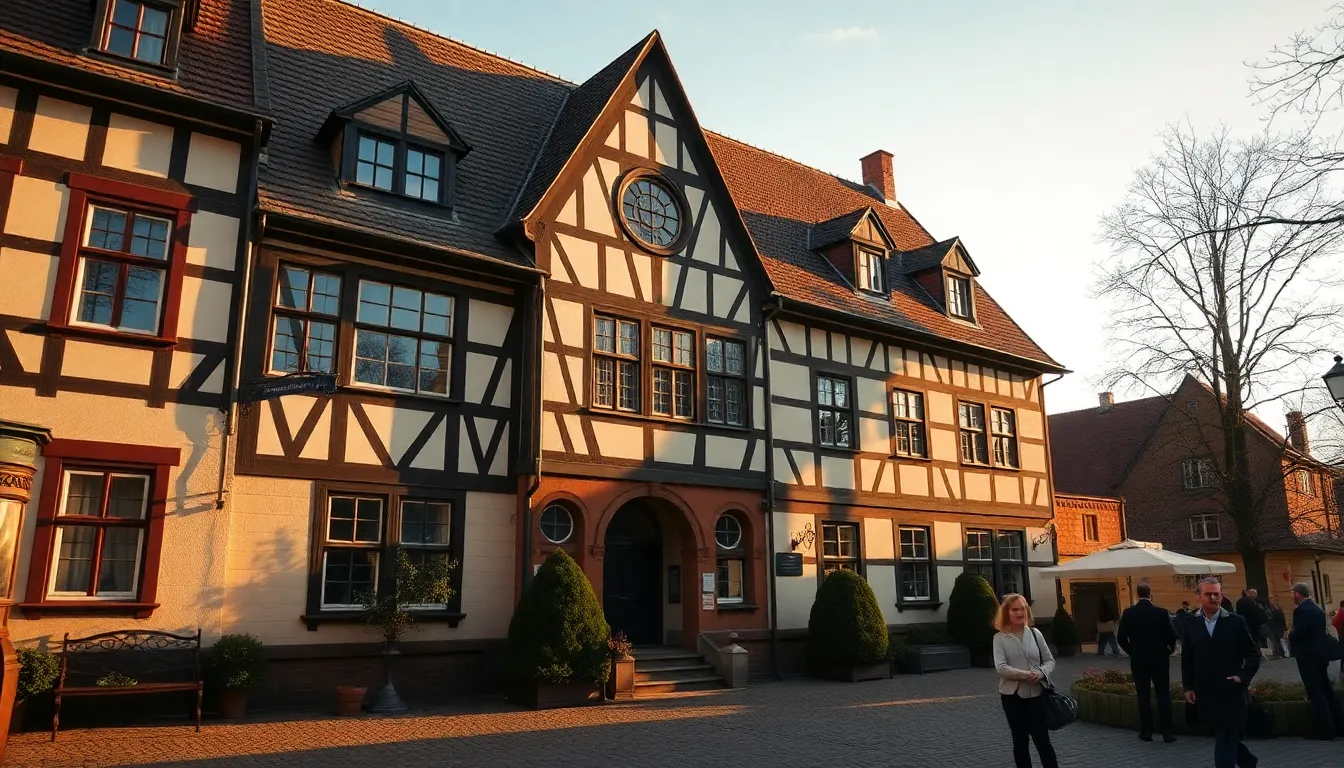
Most groups I bring to Germany want to see Bach in Leipzig, and they should. But when I can talk a group into spending a day or two in Thuringia first, the Leipzig visit hits differently. Because Thuringia is where Bach came from. It is where he was born, where his family had been making music for generations, and where a young, ambitious, sometimes hot-headed organist learned his craft in small-town churches before the world knew his name. See Thuringia first, and Leipzig stops being a monument and becomes the end of a story.
Thuringia is the green, hilly heart of central Germany, dense with the towns of Bach’s early life. After more than twenty years of leading heritage trips, I think of this region as the place where you meet the human being before you meet the legend. Let me walk you through the three towns that matter most.
Eisenach: Where Bach Was Born
Johann Sebastian Bach was born in Eisenach in 1685, into a family that was practically synonymous with music in the region. The Bachs had been organists, town musicians, and church players for generations. To be a Bach in Thuringia was, more or less, to be a musician by birthright. That family context matters, and I always set it up for groups before we talk about the man himself. He did not appear from nowhere. He was the brightest light in a long musical dynasty.
The centerpiece in Eisenach is the Bachhaus, the Bach House, one of the oldest and best music-composer museums in the world. It tells the story of Bach’s origins and his family, and it holds a collection of historical instruments. The real treat is the live demonstration, when a guide plays period keyboard instruments for visitors. Hearing the actual sound of the instruments Bach would have known turns a museum visit into something your group will remember.
St George’s Church and Luther’s Eisenach
Eisenach gives a faith group a two-for-one that I love to point out. Bach was baptized in St George’s Church, the Georgenkirche, on the market square. But that same church and town are saturated with Martin Luther. Luther attended school in Eisenach as a boy, and famously, the Wartburg Castle that overlooks the town is where Luther hid in 1521 after the Diet of Worms and translated the New Testament into German.
So in one small town you can stand in the church where Bach was baptized and look up at the castle where Luther gave the German people the Bible in their own tongue. For a Protestant group, the connection between the Word made accessible and the music made to carry it is right there in the landscape. I never let a group leave Eisenach without making that link explicit.
Arnstadt: Bach’s First Real Job
Arnstadt is where the young Bach took his first significant post, as organist at the New Church around 1703, when he was only eighteen. The organ he played has been preserved, and the church, now often called the Bachkirche, lets a group stand in the very space where Bach began his professional life as a church musician.
What I enjoy about Arnstadt is the human story. The teenage Bach was brilliant and difficult. The church records from his time there are wonderfully candid. He got into trouble for an extended unauthorized leave when he walked a long way to hear the great organist Buxtehude play and stayed far longer than permitted. He was reprimanded for confusing the congregation with overly elaborate, lengthy embellishments to the hymns. He was even involved in a street scuffle with a student.
I share these stories with groups on purpose. They make Bach real. This is not the marble genius of the textbooks. This is a gifted, restless young man learning his trade, testing limits, walking enormous distances because he was hungry to hear the best players alive. Groups connect with that. The young Bach of Arnstadt is far more relatable than the towering cantor of Leipzig, and meeting him first makes the later achievement more moving, not less.
A New Church, A New Organ
The post at Arnstadt mattered because it gave Bach a fine instrument to grow on. A young organist with a good organ and time to experiment will develop fast, and Bach did. Some of his early keyboard works trace to this period. When a group stands by the preserved organ, I remind them that the dazzling structure of Bach’s mature music was built on years of exactly this kind of daily, hands-on church work.
Muehlhausen: A Short but Important Chapter
In 1707 Bach moved to Muehlhausen to become organist at the Divi Blasii Church, St Blaise. He did not stay long, only about a year, but the chapter is important for a few reasons that I make sure groups understand.
First, Muehlhausen is where Bach married his first wife, Maria Barbara, beginning the family life that would be central to him. Second, while at Muehlhausen he wrote some of his earliest surviving church cantatas, the form he would later master in Leipzig. And third, he drafted plans for rebuilding the church organ, showing an early, practical engagement with the instruments themselves, not just the playing of them.
Muehlhausen also reveals something about Bach’s convictions. He left partly over tensions in the church environment, and in his letter of resignation he spoke of his goal of a “well-regulated church music to the glory of God.” That phrase tells you what drove him even at twenty-two. The aim was never personal fame. It was ordered, excellent music offered in worship. I read that line to groups when I can, because it frames everything that follows.
Building a Thuringia Day or Two
Thuringia rewards a slower pace than a single packed day. The towns are real towns, not a museum strip, and the driving between them runs through pretty countryside. If you have one day, anchor it in Eisenach for the Bachhaus and the Luther connections, which give you both the music and the Reformation in one stop. If you have two, add Arnstadt and Muehlhausen for the early-career story.
A practical note for group leaders. These are smaller towns, so confirm opening hours and any live instrument demonstrations in advance, since they are not always running and they are the best part. The terrain in the town centers is generally manageable, though some of the older streets are cobbled, which is worth knowing for groups with mobility considerations.
Thuringia sets up Leipzig perfectly. Do the birthplace and the first posts here, then travel to Leipzig to stand at the grave and hear the Thomanerchor. The arc from young organist to master cantor becomes a single journey your group walks rather than a fact they read.
For the destination of that arc, read our guide to Bach in Leipzig and St Thomas Church. The Luther and Reformation country woven through Thuringia is covered in our Reformation site-by-site guide and our piece on Philip Melanchthon and Wittenberg. The full route is laid out in our Germany spiritual sites guide.
You can learn more about how we structure these journeys on our Germany destination page, and our group heritage tours page explains the group leader experience, including that group leaders travel free with fifteen or more participants.
FAQ: Bach in Thuringia
Where was Bach born?
Bach was born in Eisenach in Thuringia in 1685, into a large musical family that had supplied organists and town musicians to the region for generations. His birthplace is honored at the Bachhaus museum, and he was baptized in St George’s Church on the Eisenach market square.
What are the main Bach sites in Thuringia?
The three key towns are Eisenach, his birthplace and home of the Bachhaus museum; Arnstadt, where he took his first organist post around 1703 and where his organ is preserved; and Muehlhausen, where he served at St Blaise from 1707 and wrote some of his earliest cantatas.
Why visit Thuringia before Leipzig?
Thuringia is where Bach grew up and learned his craft as a young church organist, while Leipzig is where he reached maturity as a master cantor. Seeing the early towns first turns Leipzig from an isolated monument into the conclusion of a story your group has followed from the beginning.
Is there a Luther connection in Eisenach?
Strongly. Luther went to school in Eisenach as a boy, and the Wartburg Castle above the town is where he hid in 1521 and translated the New Testament into German. A group can stand in the church where Bach was baptized and look up at the castle where Luther gave Germans the Bible in their own language.
Are the Thuringia towns suitable for group travel?
Yes, with planning. They are smaller, real towns connected by scenic drives, so confirm opening hours and live instrument demonstrations ahead of time, as those are the highlights. Town centers are generally walkable, though some older streets are cobbled, which is worth noting for groups with mobility needs.