I have a habit, when I bring a group into the Gutenberg Museum in Mainz, of waiting until we are standing in front of one of the original Gutenberg Bibles before I say anything. Then I tell them: before this book, a Bible was copied by hand over months or years, and only the wealthy and the powerful held one. After this book, scripture began to move into the hands of ordinary people, in their own languages, and the religious world you all come from would not exist without it. People look at that book differently after that. Mainz is where the word became reachable.
I have led faith groups through Germany for more than twenty years, and Mainz is one of the richest single stops on the whole journey. It is the city of Gutenberg and the printing revolution. It is a great cathedral city and seat of an archbishop who was one of the most powerful men in the empire. And it is Magenza, the third of the ShUM cities, a founding center of Ashkenazi Judaism. Three threads, one city. This guide is how I help leaders weave them together.
Why Mainz Matters
Most heritage stops give your group one strong story. Mainz gives three, and they are intertwined in ways that reward a thoughtful visit.
The printing of the Bible here in the 1450s reshaped Christianity and made the Reformation possible. The cathedral and the archbishopric made Mainz a center of imperial church power for centuries. And the Jewish community of Magenza, alongside Worms and Speyer, helped lay the foundations of Ashkenazi Jewish life and learning. To stand in Mainz is to stand where the printed word, the medieval church, and one of the oldest Jewish communities in Europe all converge.
Gutenberg: The Book That Changed Everything
The Gutenberg Museum
Johannes Gutenberg, born in Mainz, invented movable-type printing in Europe around 1450, and the first major work he printed was the Bible. The Gutenberg Museum holds original copies of the Gutenberg Bible, among the most valuable books in the world, and a working reconstruction of his press where you can watch a page being printed the way it was five hundred years ago.
For a Christian group, the significance is hard to overstate. Within decades of Gutenberg’s press, scripture was being printed in vast numbers and translated into the languages people actually spoke. When Luther’s writings spread across Germany in the early 1500s, they spread because of the printing press. The Reformation was, in part, a media event, and the medium was invented here. I tell pastors: this room is upstream of your whole tradition.
For a Jewish group, the printing revolution matters too. Hebrew printing followed quickly, and the mass production of religious texts, prayer books, and commentaries transformed Jewish study and access to sacred literature. The book that democratized scripture did it across both traditions.
What to Watch For
The live printing demonstration is the highlight for most groups. Seeing a page pulled from the press, the ink, the pressure, the physical labor of it, turns an abstraction into something your people can feel. I always make sure we catch a demonstration, because it lands with groups in a way the display cases alone do not.
The Mainz Cathedral
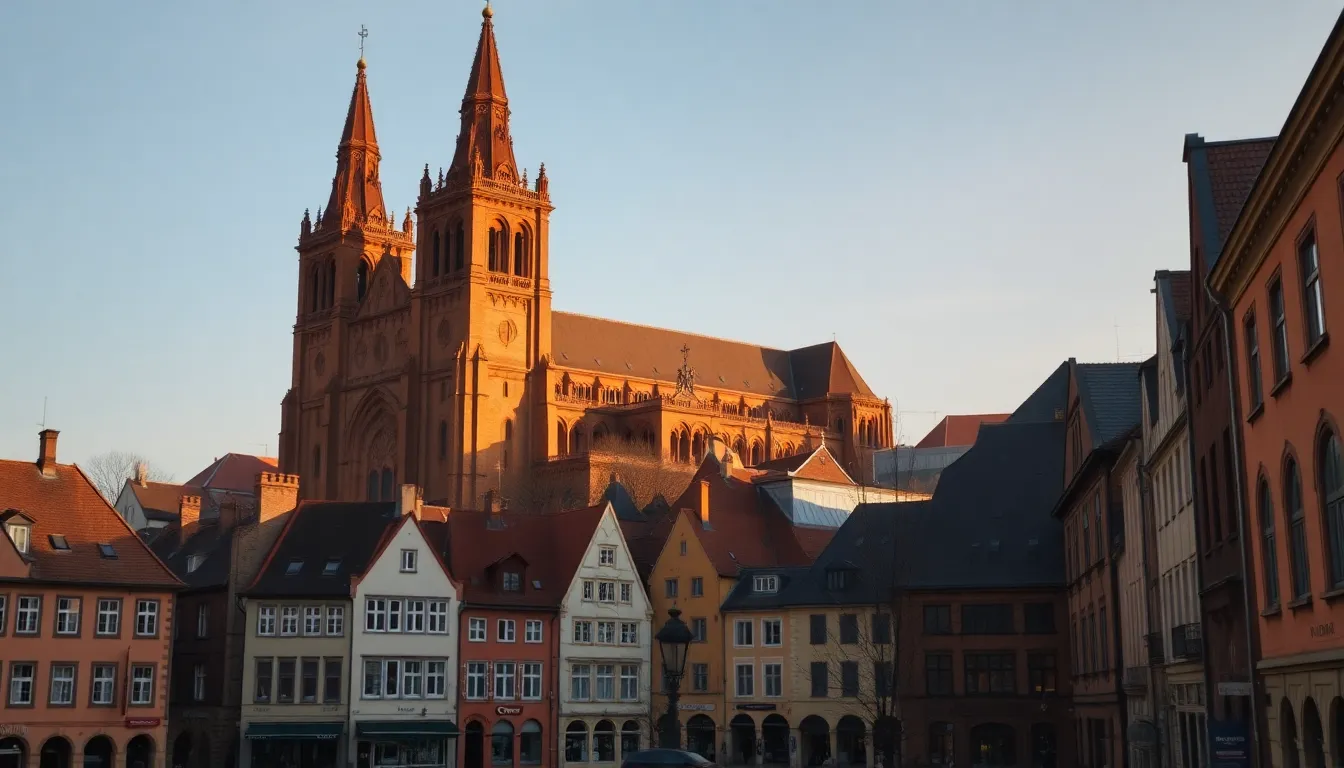
The Mainz Cathedral, built of deep red sandstone, has stood at the heart of the city for over a thousand years. It was the seat of the Archbishop of Mainz, who held the title of arch-chancellor of the empire and was one of the prince-electors who chose the emperor. This was not a quiet provincial church. It was a center of power, and its scale and history show it.
For a Christian group, the cathedral grounds your visit in the medieval church that Gutenberg’s Bible and Luther’s reforms would both transform. Standing in the long nave, your group feels the weight of the institution that printing and reformation challenged and changed. The cathedral and the Gutenberg Museum, a short walk apart, tell two halves of one story: the church of the manuscript era and the press that began to remake it.
Magenza: The Third ShUM City
Jewish Mainz
Mainz, called Magenza in medieval Hebrew, was one of the three ShUM cities, together with Worms and Speyer, that formed the cradle of Ashkenazi Judaism. From the tenth century, Mainz was home to towering scholars, including Rabbeinu Gershom, known as the Light of the Exile, whose rulings shaped Jewish practice across Europe for a thousand years. Much of what became standard Ashkenazi law and custom traces to the academies of Mainz.
The community here, like its sisters in Worms and Speyer, suffered terribly in the massacres of the First Crusade in 1096. That memory became part of the Jewish liturgy itself. The glory of the scholarship and the depth of the suffering both belong to Magenza, and I name both with groups.
The Old Jewish Cemetery
The old Jewish cemetery of Mainz holds medieval gravestones, some of the oldest Jewish funerary monuments in Europe, including stones connected to the great scholars of Magenza. Several recovered medieval gravestones are gathered in a memorial area that lets your group stand among the physical traces of this thousand-year community. For a Jewish group, completing the ShUM triangle at Mainz, after Worms and Speyer, closes a circle that began over a thousand years ago.
Planning a Mainz Visit With Your Group
Mainz works well as a full day, or a half day if you are focusing on Gutenberg and the cathedral alone. The old town is compact and walkable, with the Gutenberg Museum, the cathedral, and the central squares all close together, which suits mixed-age groups. I usually build the day around the Gutenberg Museum, the cathedral, and the Jewish heritage sites, with a printing demonstration timed in.
Mainz is one of the keystones of the Germany heritage journey covered in our Germany heritage travel guide. It completes the ShUM triangle alongside Worms and Speyer, which most groups visit in the same Rhineland segment. Groups tracing the Reformation often connect the Gutenberg story here to the Luther route and to Augsburg, where the printed word fueled the religious settlements.
This is where an operator who knows the territory earns their keep. Heritage Tours builds custom itineraries, so a Christian group can weight the visit toward Gutenberg and the cathedral while a Jewish group can focus on Magenza and complete the ShUM circle. Mixed groups can hold all three threads together. You can see how we structure these journeys on our Germany destination page and our group heritage tours page.
Group leaders with 15 or more participants travel free. For a congregation organizing a trip, that is a benefit worth knowing from the first planning conversation.
FAQ: Mainz Heritage Travel
Why is Mainz important for faith travelers?
Mainz holds three intertwined stories. It is the city where Gutenberg printed the Bible and launched the printing revolution that made the Reformation possible. It is a great cathedral city and a former center of imperial church power. And it is Magenza, the third ShUM city and a founding center of Ashkenazi Judaism. Few single stops give a group that much to engage with.
What is the significance of the Gutenberg Bible?
Before Gutenberg’s press, around 1450, Bibles were copied by hand and held only by the wealthy and powerful. Printing made scripture reproducible in large numbers and, soon, in the languages people spoke. This reshaped Christianity and made Luther’s Reformation possible, since his writings spread through print. Hebrew printing followed quickly and transformed Jewish study as well. The Gutenberg Museum holds original copies and a working reconstruction of the press.
What is Magenza and how does it connect to Worms and Speyer?
Magenza is the medieval Hebrew name for Mainz, the third of the ShUM cities alongside Worms (Varmaisa) and Speyer (Shpira). Together these Rhineland communities were the cradle of Ashkenazi Judaism from the tenth century. Mainz was home to scholars like Rabbeinu Gershom, the Light of the Exile, whose rulings shaped Jewish practice for a thousand years. Most groups visit all three cities to complete the ShUM triangle.
Is there much Jewish heritage to see in Mainz today?
Yes. The old Jewish cemetery holds medieval gravestones, among the oldest Jewish funerary monuments in Europe, including stones connected to the great scholars of Magenza. Recovered medieval gravestones are gathered in a memorial area. Visiting Mainz after Worms and Speyer closes the ShUM circle and completes the story of the community that helped found Ashkenazi Judaism.
How long should we spend in Mainz?
A full day lets your group take in the Gutenberg Museum with a printing demonstration, the cathedral, and the Jewish heritage sites with time to reflect. A half day works if you are focusing on Gutenberg and the cathedral alone. The old town is compact and walkable, which makes it comfortable for mixed-age groups.
If Mainz fits the story your community wants to tell, the birth of the printed word, the medieval church, or the deep roots of Ashkenazi Judaism, I would welcome the chance to talk it through. It is one of my favorite stops to lead anywhere in Germany. Every congregation brings a different focus, and the itinerary should reflect yours. Contact us whenever you are ready to start that conversation.