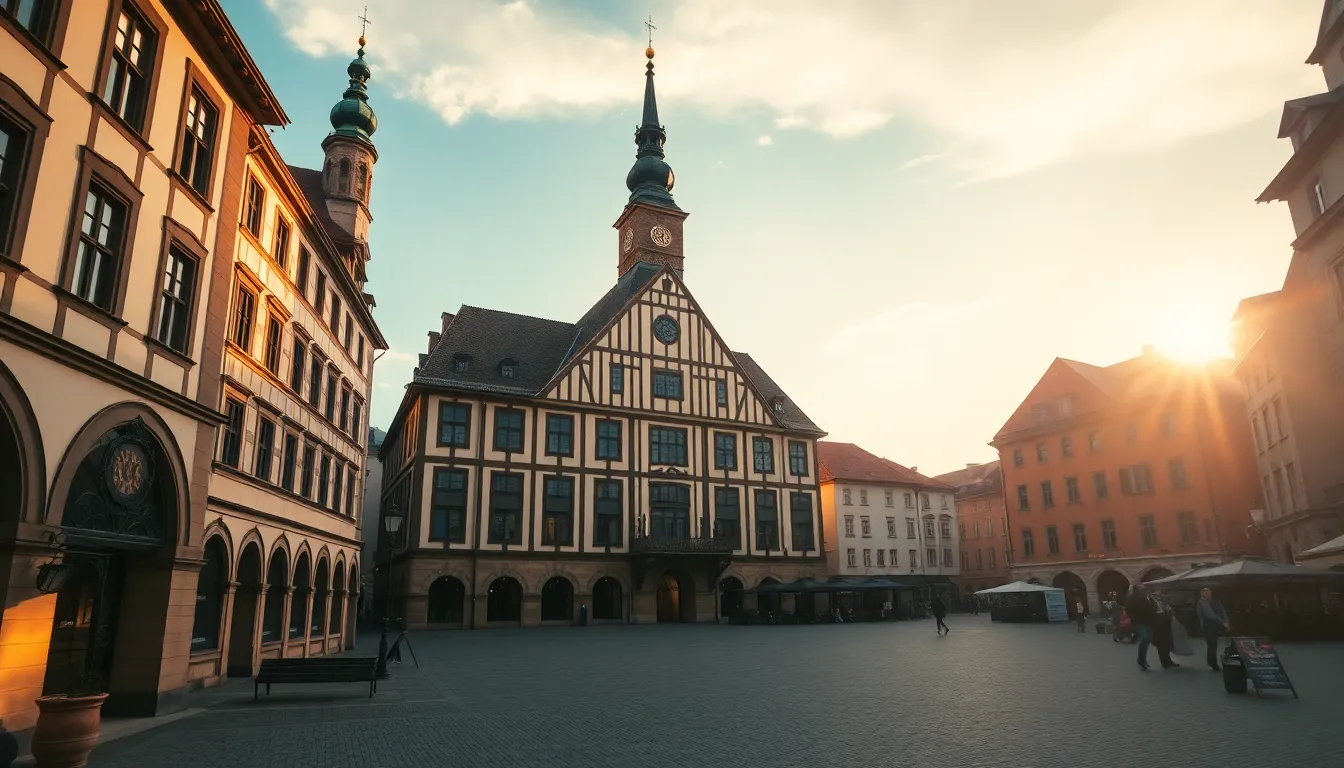
I had a pastor on one of my Germany trips who knew the Augsburg Confession backwards. He could quote articles of it. But when we walked into the actual hall connected to where it was read aloud in 1530, he went quiet, and then he said something I have never forgotten: “I have been teaching this for thirty years and I never once thought about the room it happened in.” That is what Augsburg does. It takes a document your people may know on paper and gives it a floor to stand on.
I have led faith groups through Germany for more than twenty years, and Augsburg is one of the most rewarding stops for Christian groups, especially Lutheran and Protestant congregations, because so much of what shaped their tradition was decided here. But it is more than a Reformation stop. It is one of the oldest cities in Germany, a Renaissance center of wealth and art, and a place where Catholics and Protestants worked out how to share a single city. This guide is how I help leaders think it through.
Why Augsburg Matters
Augsburg is where two of the defining moments of the Reformation happened, and they are different moments that people often blur together. The first is the Augsburg Confession of 1530, the foundational statement of Lutheran faith. The second is the Peace of Augsburg of 1555, the political settlement that, for the first time, gave legal recognition to Protestant territories within the empire.
One is a confession of belief. The other is a treaty about how rival faiths can coexist. For a faith group, holding both is the whole point of Augsburg. It is a city that asks not only what you believe but how you live alongside people who believe otherwise. That second question is as urgent now as it was then.
The Augsburg Confession: A Statement of Faith
What Happened in 1530
In 1530, the emperor summoned the German princes to Augsburg to settle the religious conflict that Luther’s reforms had set loose. The Lutheran princes presented a written statement of their faith, drafted largely by Philipp Melanchthon, Luther’s closest colleague. It was read aloud in German so that everyone present could understand it. That document, the Augsburg Confession, became the central confession of the Lutheran church and remains so to this day.
Luther himself was not present, he was under imperial ban and could not safely attend, but his theology runs through every article. For a Lutheran or Protestant group, standing in Augsburg and tracing where this happened connects the congregation directly to the moment their tradition put its faith into words.
St. Anne’s Church
St. Anne’s Church is the essential Reformation site in Augsburg. Luther stayed here in 1518 when he was summoned to defend his views before a papal representative, an early and tense confrontation that came years before the Confession. The church now houses a Luther exhibition that walks your group through these events. For Christian groups, St. Anne’s is where the Reformation story in Augsburg becomes concrete, the place where Luther actually stood his ground.
The Peace of Augsburg: Learning to Coexist
The Settlement of 1555
After decades of religious war, the Peace of Augsburg of 1555 established a principle that changed Europe: each ruler could determine the religion of his own territory, Catholic or Lutheran. It was imperfect, it did not include other Protestant groups, and it did not grant individual freedom of conscience as we understand it today. But it was a first attempt to let two faiths share one empire without one destroying the other.
Augsburg lived out that principle in an unusual way. For centuries it was a city where Catholics and Protestants shared governance, with public offices split between the two confessions. Some churches in the city were even used by both communities. I tell groups: this is one of the earliest laboratories of religious coexistence in Europe, and it was messy, partial, and hard-won. That is exactly why it is worth studying. Coexistence is rarely clean.
The Fugger Legacy: Faith and Wealth
The Fuggerei
No visit to Augsburg is complete without the Fuggerei. Jakob Fugger, the immensely wealthy Augsburg banker who financed kings and emperors, founded this walled settlement of small houses in 1521 as housing for the city’s needy. The remarkable thing is that it still operates today, on its original terms. Residents pay a token annual rent, the same amount in real terms as it was five hundred years ago, and in return they are asked to pray daily for the founder and his family.
For a faith group, the Fuggerei is a rich text. It raises real questions about wealth, charity, faith, and motive. Jakob Fugger built his fortune in part through practices the church of his day condemned, and he built the Fuggerei in part to secure prayers for his soul. Was it charity or transaction? Both? Your group will have opinions, and the conversation it sparks is one of the better ones a heritage trip can offer.
The Fugger Chapel
In St. Anne’s Church you can also see the Fugger funerary chapel, one of the earliest Renaissance structures in Germany. It shows how completely the Fugger wealth shaped the religious and artistic life of the city. Faith, money, art, and power all sit together in Augsburg in a way that is honest about how history actually works.
Jewish Heritage in Augsburg
Augsburg also had a Jewish community, and the region around it holds an important thread of rural Jewish life. The city’s main synagogue, an early twentieth-century building with a striking dome, survived the Nazi era and now houses a Jewish museum alongside an active congregation. It is one of the more architecturally significant synagogues in southern Germany.
The surrounding Swabian countryside was home to numerous small rural Jewish communities for centuries, a different texture from the great Rhineland centers. For a Jewish group, the Augsburg synagogue and its museum give a window into both the urban community and that wider rural Jewish world of southern Germany.
Planning an Augsburg Visit With Your Group
Augsburg works well as a half day or a full day, depending on how deep you go into the Reformation and Fugger sites. The historic center is compact and walkable, which makes it comfortable for mixed-age groups. I usually anchor the day on St. Anne’s Church, the Fuggerei, and the synagogue, with the Peace of Augsburg story woven through as we walk.
Augsburg sits naturally on a Reformation route through Germany and connects to the broader heritage threads covered in our Germany heritage travel guide. Many groups pair it with the reconciliation story of Dresden or with the layered history of Nuremberg nearby in Bavaria.
This is where an operator who knows the territory matters. Heritage Tours builds custom itineraries, so a Lutheran or Protestant group can go deep on the Confession and the Reformation sites, while a mixed group can focus on the coexistence story and the Fugger legacy. You can see how we structure these journeys on our Germany destination page and our group heritage tours page.
Group leaders with 15 or more participants travel free. For a congregation organizing a trip, that benefit is worth factoring in from the first conversation.
FAQ: Augsburg Heritage Travel
Why is Augsburg important for Christian groups?
Augsburg is where two defining Reformation moments happened. The Augsburg Confession of 1530 is the foundational statement of Lutheran faith, and the Peace of Augsburg of 1555 was the first legal settlement letting Catholic and Protestant territories coexist within the empire. For Lutheran and Protestant congregations especially, the city connects them directly to the roots of their tradition.
What is the difference between the Augsburg Confession and the Peace of Augsburg?
The Confession of 1530 is a statement of belief, the central confession of the Lutheran church, drafted by Melanchthon and read aloud before the emperor. The Peace of 1555 is a political treaty that, twenty-five years later, gave legal recognition to Protestant territories and established that each ruler could set the religion of his own land. One is about what is believed, the other about how rival faiths share a single empire.
What is the Fuggerei and why visit it?
The Fuggerei is a walled settlement of small houses founded by the banker Jakob Fugger in 1521 as housing for the needy. It still operates on its original terms, residents pay a token annual rent unchanged for five hundred years and are asked to pray for the founder. For a faith group it raises rich questions about wealth, charity, and motive, and the discussion it sparks is one of the highlights of an Augsburg visit.
Is there Jewish heritage in Augsburg?
Yes. The city’s main synagogue, an early twentieth-century building with a notable dome, survived the Nazi era and now houses both an active congregation and a Jewish museum. The surrounding Swabian countryside was also home to many small rural Jewish communities for centuries, giving a fuller picture of Jewish life in southern Germany.
How much time do I need in Augsburg?
A half day covers the core sites, and a full day lets your group go deeper into the Reformation, the Fuggerei, and the synagogue with time for discussion. The historic center is compact and walkable, which makes it easy for mixed-age groups.
If Augsburg fits the story your community wants to tell, whether the Reformation, the hard work of coexistence, or the tangle of faith and wealth, I would welcome the chance to talk it through. Every congregation comes with a different focus, and the itinerary should reflect yours. Contact us whenever you are ready to start that conversation.