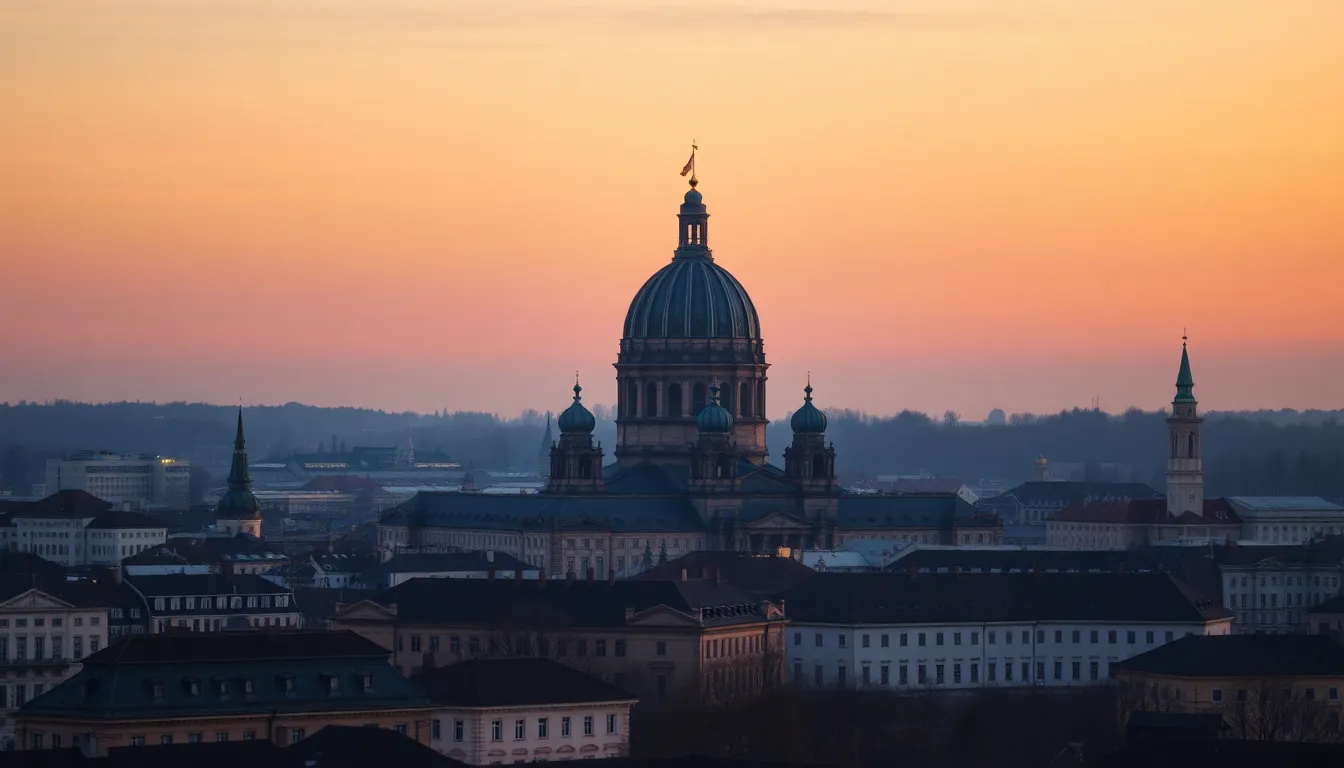
The first time I brought a group into Dresden, I asked them to look up at the dome of the Frauenkirche before I told them anything about it. Then I told them: for nearly sixty years, this was a pile of blackened rubble in the middle of the city, left there on purpose, as a wound the people refused to hide. What you are looking at now was rebuilt stone by stone, with old fragments set right into the new walls, by people from the countries that once dropped the bombs. There was a long silence in the group. That silence is why I bring people to Dresden.
I have led faith groups through Germany for over twenty years, and Dresden is the city I reach for when I want to talk about what comes after destruction. It is not a Holocaust site, though it sits within that history. It is a reconciliation site. And for rabbis, pastors, and educators thinking about how to teach forgiveness, rebuilding, and the long work of repair, few places on earth say it more plainly.
Why Dresden Belongs in a Heritage Itinerary
Dresden was once called the Florence of the Elbe, a baroque jewel of palaces, churches, and art collections built up by the kings of Saxony. In February 1945, in the final months of the war, Allied bombing raids destroyed the historic center and killed tens of thousands of people in a firestorm. The city that had stood for centuries was gone in two nights.
What happened next is the part that matters for a faith group. Dresden did not stay a ruin, and it did not rebuild in bitterness. The story of how it came back, especially the story of the Frauenkirche, is one of the clearest pictures of reconciliation you can put in front of a congregation.
I want to be careful here. The Dresden bombing has been used in bad faith by people who want to draw a false equivalence with the Holocaust, and your group may have heard those arguments. Part of leading Dresden well is naming that honestly. The suffering of Dresden’s civilians was real. It does not cancel out or balance the crimes of the regime that started the war. Both things are true. A mature faith community can hold that tension, and Dresden is a good place to learn how.
The Frauenkirche: The Heart of the Story
From Rubble to Resurrection
The Frauenkirche, the Church of Our Lady, was an eighteenth-century baroque masterpiece with a massive stone dome that was the symbol of the city. The 1945 firestorm gutted it, and two days later the heat-weakened structure collapsed. The Communist government of East Germany left the ruins standing for decades as an anti-war memorial.
After German reunification, a movement began to rebuild it. Archaeologists catalogued thousands of original stones from the rubble pile, and many were set back into their original positions in the new structure. If you look closely at the exterior, you can see the darker, older stones woven among the bright new sandstone. The church wears its history on its walls.
The reconstruction was finished in 2005. It was funded in large part by donations from around the world, including significant gifts from Britain and the United States, the very nations whose air forces destroyed it. The golden cross atop the dome was made by a British silversmith whose father had flown in the raids. I tell groups that detail every time, and it lands every time.
Standing Inside
The interior is bright, almost luminous, painted in soft pastels and crowned by the great dome. After the heaviness of the city’s history, walking into that light does something to people. I usually give groups quiet time here. For Christian groups, the rebuilt church is a living parable of resurrection. For Jewish groups and mixed groups, it speaks to the human capacity to repair what hatred breaks.
The Reconciliation Story Beyond the Church
Coventry and the Cross of Nails
The Frauenkirche is part of a wider network of reconciliation that is worth explaining to your group. The English city of Coventry, whose cathedral was destroyed by German bombing in 1940, became a global center of reconciliation work after the war. Coventry forged crosses from the nails of its own ruined cathedral and sent them around the world as symbols of forgiveness. One of those Crosses of Nails sits inside the Dresden Frauenkirche.
Two cities, each destroyed by the other’s nation, choosing partnership instead of grievance. That is the lesson Dresden hands you, and it is a lesson a faith group can carry home and apply to their own divisions.
The Restored Old Town
Beyond the Frauenkirche, much of Dresden’s baroque center has been restored. The Zwinger palace with its art collections, the Semper Opera House, the Royal Palace, and the long mural called the Procession of Princes all give your group a sense of the city that was lost and the determination that brought it back. Walking the restored Neumarkt square around the Frauenkirche, it is hard to believe this was all rubble within living memory.
Jewish Dresden
Dresden also had a Jewish community, and that thread belongs in the visit. The original Dresden synagogue, a striking nineteenth-century building, was destroyed by the Nazis on Kristallnacht in 1938. A new synagogue was built on the same site and opened in 2001, a modern, angled structure that has become a landmark of the city’s renewal.
For a Jewish group, visiting the new synagogue alongside the Frauenkirche makes the day complete. Two houses of worship, both destroyed by the same regime, both rebuilt by a later generation determined to choose life over ruin. The parallel is exact, and your people will see it.
Planning a Dresden Visit With Your Group
Dresden works well as a full day, and the historic center is compact enough that most of the key sites are within an easy walk of each other. I usually structure the day around the Frauenkirche, the new synagogue, and the restored old town, with time built in for reflection inside the church.
Dresden pairs naturally with the rest of a Germany heritage journey. It connects to the broader Reformation and Jewish heritage routes covered in our Germany heritage travel guide, and it makes a strong reconciliation counterpoint to the harder history of Nuremberg. Groups focused on the Reformation often combine it with the Luther sites and with Augsburg, where the religious peace was negotiated.
This is where an operator who knows the territory earns their keep. Heritage Tours builds custom itineraries, so a Christian group can lean into the resurrection theme of the Frauenkirche while a Jewish group can weight the visit toward the new synagogue and the wider story of rebuilding. You can see how we structure these journeys on our Germany destination page and our group heritage tours page.
Group leaders with 15 or more participants travel free. For a congregation organizing a trip, that is a straightforward benefit worth knowing from the start.
FAQ: Dresden Heritage Travel
Why visit Dresden on a faith heritage tour?
Dresden is the reconciliation city. Its rebuilt Frauenkirche, restored with original stones and funded partly by the nations that destroyed it, is one of the clearest pictures of repair and forgiveness you can show a congregation. For groups thinking about how communities recover from catastrophe, Dresden teaches what the harder sites cannot.
Is the Dresden bombing comparable to the Holocaust?
No, and it is important to say so clearly with your group. The suffering of Dresden’s civilians was real, but it does not balance or cancel the crimes of the Nazi regime that started the war. Some people misuse the Dresden bombing to draw a false equivalence. Leading the visit well means naming that honestly and holding both truths: the civilian loss was real, and the moral weight of the war rests with the regime that began it.
What is the story of the Frauenkirche?
The Frauenkirche was a baroque church whose great stone dome was the symbol of Dresden. The 1945 firestorm destroyed it, and the ruins stood for decades as a war memorial. After reunification it was rebuilt using thousands of original stones, finished in 2005, and funded in large part by international donations, including from Britain and the United States. You can still see the darker original stones set among the new ones.
Is there Jewish heritage in Dresden?
Yes. The original Dresden synagogue was destroyed by the Nazis on Kristallnacht in 1938. A new synagogue was built on the same site and opened in 2001, becoming a landmark of the city’s renewal. Visiting it alongside the Frauenkirche shows two houses of worship destroyed by the same regime and rebuilt by a later generation, an exact and moving parallel.
How long should we spend in Dresden?
A full day covers the essentials: the Frauenkirche, the new synagogue, and the restored baroque old town, with time for reflection inside the church. The historic center is compact and walkable, which makes it comfortable for mixed-age groups.
If Dresden speaks to something your community is wrestling with, the work of repair, the possibility of reconciliation, I would love to talk it through with you. It is a city that gives groups hope, and hope is not a small thing to bring home from a heritage journey. Contact us whenever you are ready to start that conversation.