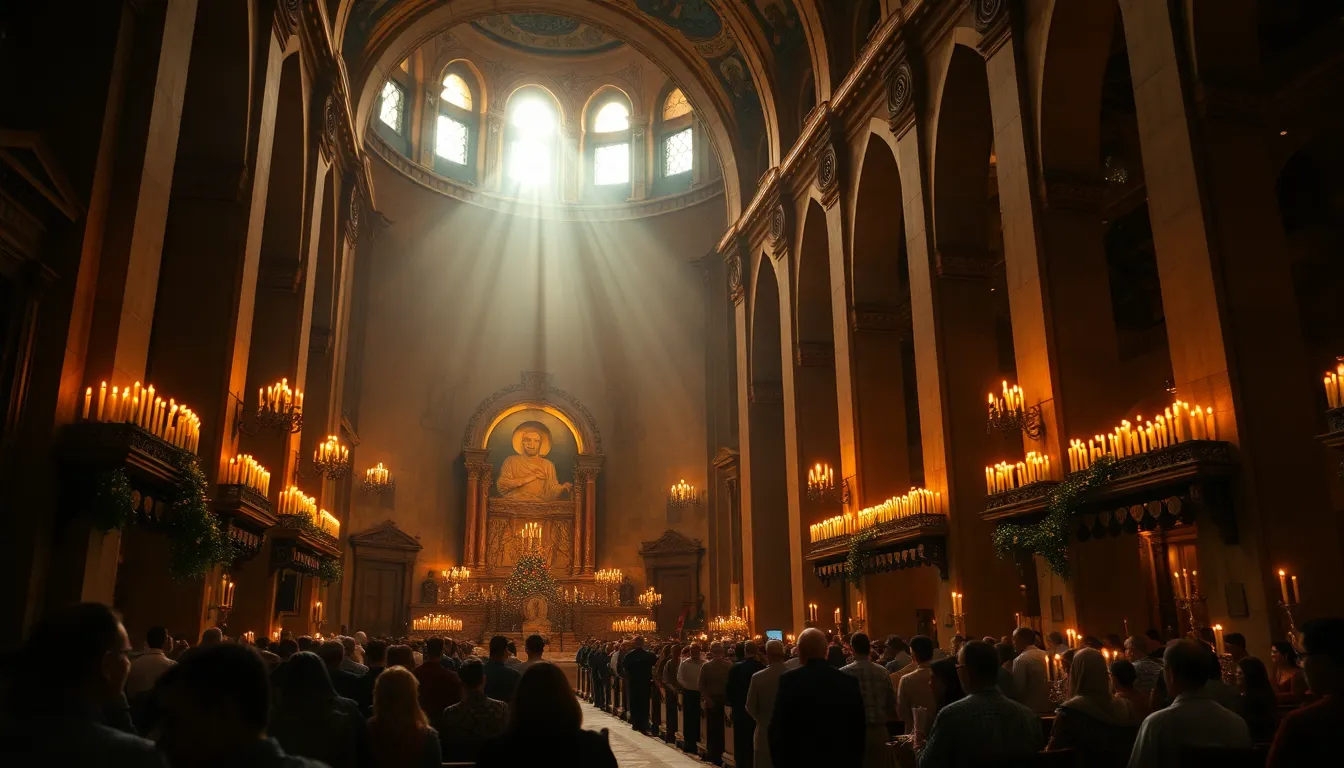
I will never forget the first time I brought a group to a Coptic Christmas Eve service. We arrived at the church well before midnight on January 6, and the place was already full, the air thick with incense, the chanting rising and falling in a language older than English itself. One of the women in my group, a retired Sunday school teacher, leaned toward me with tears on her face and whispered, “I had no idea Christmas could sound like this.” It does not sound like this anywhere I have been except in Egypt.
Coptic Christmas, celebrated on January 7, is one of the most moving things a Christian group can experience in Egypt, and one of the least known to Western travelers. While much of the world has packed away its decorations, Egypt’s ancient churches fill for the Nativity feast of one of the oldest Christian communities on earth. For a faith group, being present for it is a chance to celebrate Christ’s birth inside a tradition that has kept this feast, in these places, for more than fifteen hundred years.
Here is what a Coptic Christmas heritage trip actually involves: why the date is different, what the services are like, and how to plan a journey around them.
Why Coptic Christmas Falls on January 7
The first question every group asks is the obvious one. Why January 7 and not December 25? The answer is the calendar. The Coptic Orthodox Church follows the older Julian reckoning for the feast of the Nativity, and over the centuries the gap between the Julian and the modern Gregorian calendar has grown to thirteen days. December 25 on the old calendar now lands on January 7 on ours.
Not a Different Christmas, an Older One
I am careful to explain this so groups understand it correctly. The Copts are not celebrating a different event or a lesser holiday. They are celebrating the Nativity of Christ, the same feast, on a date set by a calendar the church was using long before the Gregorian reform. If anything, the Coptic date connects the feast to the ancient practice of the early church. Our Coptic Christianity primer explains the calendar and the church behind it in fuller detail.
The Fast Before the Feast
Something Western Christians rarely realize: Coptic Christmas comes at the end of a long fast. The Copts observe a Nativity fast of more than forty days leading up to January 7, abstaining from animal products. The feast, when it arrives, is the joyful breaking of that long discipline. Understanding the fast helps a group grasp why the celebration carries such weight. These believers have been preparing their bodies and souls for weeks. The joy on Christmas morning is earned.
What the Christmas Eve Service Is Like
The heart of Coptic Christmas is the liturgy on the night of January 6, the eve of the feast, often running late into the night and traditionally building toward midnight. This is the service I work hardest to get my groups into, because it is the moment the whole journey crystallizes.
The Atmosphere
Picture an ancient church, lit by lamps and candles, filled to capacity. Incense moves through the air in clouds. The clergy, in their vestments, lead a liturgy that is almost entirely sung, much of it in the Coptic language that survives now mainly in worship. The chanting is haunting and repetitive in the best sense, the kind of sound that stops feeling like a performance and starts feeling like prayer you are inside of. The congregation knows the responses by heart. Children doze on parents’ shoulders. The whole thing moves at the pace of eternity, not the pace of a Western Christmas Eve service that ends in time for bed.
What I Prepare Groups For
I am honest with groups about the realities. The service is long. It is crowded. It is in a language you will not understand. You will be on your feet for stretches of it. None of that is a drawback once you understand it. I tell my people: you are not here to follow along word for word. You are here to be present at a celebration of Christ’s birth as the ancient church has kept it. Let the chanting and the incense carry you. The not-understanding is part of the gift, because it returns you to wonder.
Where Groups Celebrate
Cairo is the natural base for a Coptic Christmas trip, and it offers several settings of different character.
The Ancient Churches of Old Cairo
The churches of Coptic Cairo, including the Hanging Church and the Church of Saint Sergius, hold Christmas services in spaces that are themselves seventeen centuries old. For a heritage group, celebrating the Nativity inside a church this ancient, where Christians have kept this feast since the early centuries, is the experience. Our spiritual sites in Egypt guide describes these churches in depth.
The Saint Mark Cathedral
The Coptic Cathedral of Saint Mark in Cairo, the principal seat of the Coptic pope, holds the largest and most prominent Christmas celebration, often led by the pope himself and attended by enormous crowds. It is a different experience from the intimate ancient churches, grander and more public. Some groups want the scale of it; others prefer the intimacy of the old churches. We help you choose based on what your community is looking for. Our guide to Saint Mark in Egypt tells the story of the evangelist whose see this cathedral represents.
The Desert Monasteries
Groups with a contemplative streak sometimes want to experience the feast at a desert monastery, where the celebration is quieter, more austere, and rooted in the monastic tradition of the Desert Fathers. This is a particular kind of Christmas, stripped down and deeply still.
Building a Coptic Christmas Itinerary
A Coptic Christmas trip is built around the January 7 feast but rewards a fuller itinerary on either side of it.
The Shape of the Trip
The Christmas services anchor the journey, and the surrounding days fill out the Coptic heritage story: the churches of Old Cairo, the Saint Mark Cathedral, the Holy Family sites connected to the flight into Egypt, and a possible day trip to the monasteries of Wadi Natrun. Winter is a fine time to travel in Egypt generally, with mild days in Cairo, so the broader heritage sites remain comfortable to visit.
A Word on Timing and Crowds
Because the date is fixed, a Coptic Christmas trip has less calendar flexibility than other journeys, and the major services draw large crowds, especially at the Saint Mark Cathedral. That means planning ahead matters even more than usual. Securing the right church, arranging access for your group, and booking accommodation over the holiday all need lead time. Our broader Christian pilgrimage planning guide walks through the end-to-end process.
The Practical Note
As with all our journeys, the group leader travels free with fifteen or more participants, which helps the planning conversation with your church. You can see how we structure these trips on our Egypt heritage destination page, and our group heritage tours page explains how leading a group works.
FAQ: A Coptic Christmas Trip to Egypt
Why do Copts celebrate Christmas on January 7?
The Coptic Orthodox Church follows the older Julian calendar for the Nativity feast. Because the Julian calendar now runs thirteen days behind the Gregorian one, the traditional December 25 date falls on January 7 in modern reckoning. It is the same feast of Christ’s birth, kept on an older calendar.
What is the Coptic Christmas Eve service like?
It is a long, sung liturgy on the night of January 6, held in candlelit, incense-filled churches, much of it chanted in the ancient Coptic language. The atmosphere is reverent and timeless, very different from a brief Western Christmas Eve service. We prepare groups for the length, the crowds, and the beauty of being present at it.
Where is the best place to experience Coptic Christmas?
It depends on what your group wants. The ancient churches of Old Cairo offer intimacy and overwhelming antiquity. The Saint Mark Cathedral offers the largest, most public celebration, often led by the Coptic pope. The desert monasteries offer a quiet, contemplative version. We help you choose and arrange access.
Is it cold in Egypt at Coptic Christmas?
Cairo in early January is mild and pleasant during the day, cooler at night. The Sinai mountains and desert can get genuinely cold after dark, so groups visiting those areas should pack warmly. The broader heritage sites remain comfortable to visit in winter.
How far in advance should we plan a Coptic Christmas trip?
Earlier than usual, because the date is fixed and the major services draw large crowds. Securing the right church, arranging group access, and booking holiday accommodation all need solid lead time. We recommend starting roughly a year out to make the most of the experience.
Celebrating the Nativity inside a church that has kept this feast for fifteen centuries, in a language older than your own, surrounded by believers breaking a forty-day fast, is a Christmas your community will not forget. If you want to bring your people into that experience, reach out to our team and we will help you plan the journey around the January 7 feast.