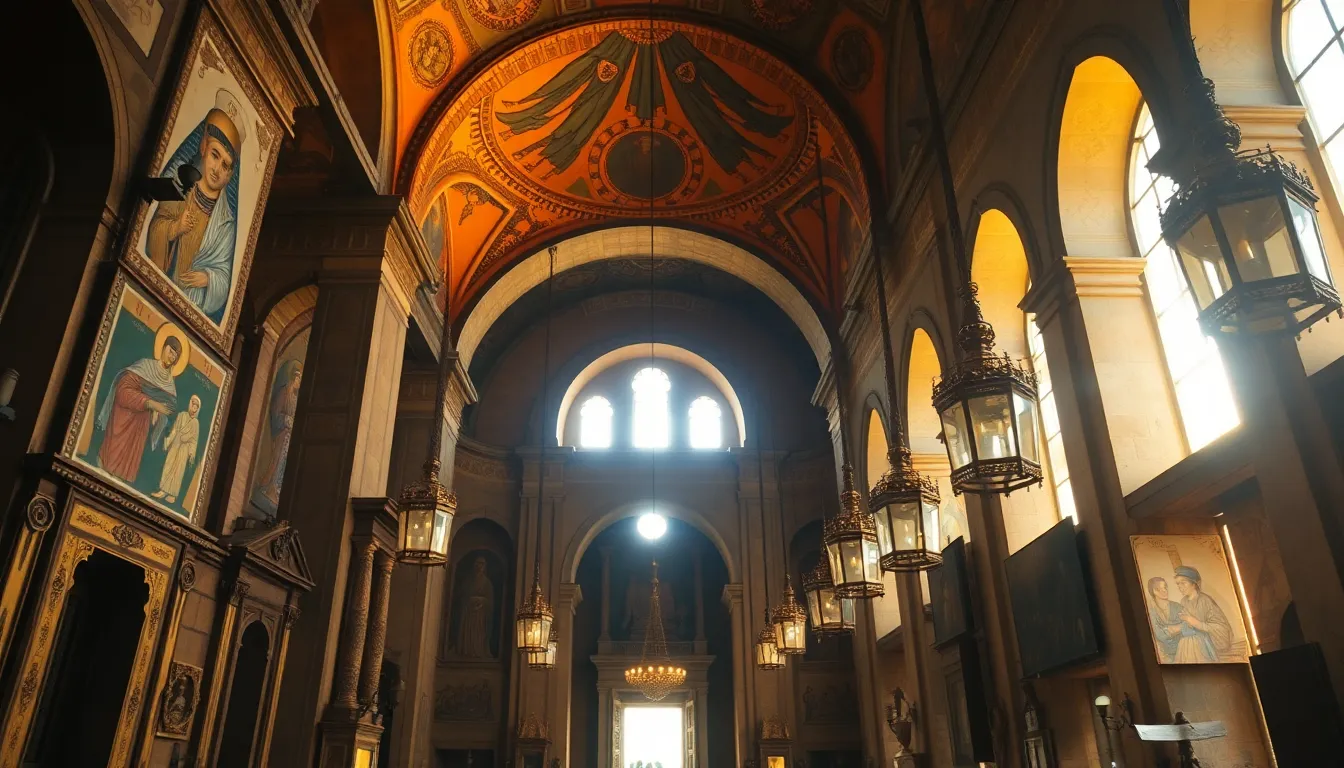
I have learned to spend twenty minutes on the bus, before we ever reach Old Cairo, explaining what Coptic Christianity actually is. Without it, groups walk into the Hanging Church and treat it like any other beautiful old building. With it, they walk in understanding that they are stepping into one of the oldest continuous Christian communities on earth, a church that has been praying in this country since the first century without a single break. That changes how a person stands in a room.
Most of the pastors and educators I work with know the broad strokes of church history, but the Coptic story sits in a blind spot for a lot of Western Christians. It is not Catholic, not Protestant, not the same as Greek or Russian Orthodoxy. It is its own ancient stream, and it is very much alive. Egypt is home to the largest Christian community in the Middle East, and that community is overwhelmingly Coptic.
So here is the primer I wish every group had before they arrived. Origins, beliefs, calendar, and the living tradition you will actually encounter on the ground.
Where the Word “Copt” Comes From
Let me start with the name, because it answers a question every group asks. “Copt” is simply an old word for “Egyptian.” It comes through Arabic from the Greek word for Egypt, which itself goes back to an ancient name for the city of Memphis. So “Coptic Christianity” means, at root, “Egyptian Christianity.” The Copts are the Christian descendants of the ancient Egyptians, and the Coptic language is the last living stage of the language of the pharaohs, written in Greek letters.
I find groups light up at this. The people they are meeting in these churches are, in a real sense, the continuation of ancient Egypt itself, carried forward through Christianity.
The Origins: Saint Mark and the Church of Alexandria
Coptic tradition holds that the church in Egypt was founded by Saint Mark the Evangelist, the writer of the second Gospel, who came to Alexandria in the middle of the first century and was eventually martyred there. From that beginning, Alexandria became one of the great centers of early Christianity, alongside Rome, Antioch, and Jerusalem.
Alexandria as a Christian Powerhouse
For the first few centuries, Alexandria was an intellectual capital of the Christian world. Its catechetical school produced thinkers whose names still appear in any serious church history: Clement, Origen, and especially Athanasius, the bishop who defended the full divinity of Christ at the Council of Nicaea and whose name is attached to one of the church’s great creeds. When you understand that Coptic Christianity flows from this source, the depth of the tradition comes into focus. Our primer on Saint Mark in Egypt tells that founding story in full.
The Council of Chalcedon and the Parting of Ways
I always cover this carefully, because it explains why the Coptic Church is distinct. In the year 451, the Council of Chalcedon defined how the divine and human natures of Christ relate. The churches of Egypt, along with several others, could not accept the council’s exact wording, and a split followed that has never fully healed. The Coptic Church became part of what we call the Oriental Orthodox family, separate from both Roman Catholicism and the Eastern Orthodox churches.
I am careful to present this fairly. Modern theologians on different sides increasingly agree that the original split was as much about language and politics as about genuine difference in faith. For a visiting group, the point is simply this: the Coptic Church has held its own ancient course for over fifteen hundred years, and that independence is part of what preserved its distinct beauty.
What the Coptic Church Believes and How It Worships
The Coptic Church holds the core of historic Christian faith: the Trinity, the divinity of Christ, the resurrection, the authority of Scripture, the sacraments. A Protestant or Catholic visitor will recognize far more than they expect. But the texture of Coptic worship is ancient and distinct, and that is what your group will feel in the room.
The Liturgy
The Coptic liturgy is long, sung, and deeply reverent. Much of it goes back to the early centuries, and parts are still chanted in the Coptic language that almost no one speaks in daily life anymore but which survives in worship. Incense, icons, and long stretches of chant fill the space. For a Western group used to a forty-minute service, a Coptic liturgy is a different experience of time. I tell groups: you do not need to follow every word. Let it wash over you. This is close to what the early church sounded like.
Icons and the Visual World
Coptic art has a recognizable style, faces with large, direct eyes, bold lines, a flatness that is intentional and theological rather than primitive. The icons are not decoration. They are windows, in Coptic understanding, meant to draw the worshipper toward the holy. When we visit churches in Old Cairo or the desert monasteries, I point out how the same visual language runs across centuries, from medieval wall paintings to icons painted last year.
Fasting and Discipline
The Copts fast more than almost any other Christian body, more than two hundred days of the year by some counts, abstaining from animal products. This rigor traces straight back to the Desert Fathers. Understanding it helps a group grasp that Coptic Christianity is not a museum piece. It is a demanding, living spiritual discipline practiced by millions of ordinary Egyptians today.
The Coptic Calendar
This trips up a lot of visitors, so I cover it directly. The Coptic Church keeps its own calendar, and its major feasts often fall on different dates than the ones Western Christians expect.
Coptic Christmas and Easter
Coptic Christmas is celebrated on January 7, not December 25, because the Coptic calendar follows the older Julian reckoning for this feast. Coptic Easter is calculated differently from the Western date and frequently lands on a different Sunday. If your group hopes to be present for a major Coptic feast, the calendar has to be checked for the specific year, and we do that as part of planning. Our guide to a Coptic Christmas trip walks through what it means to travel for the January 7 services.
The Calendar of Martyrs
The Coptic calendar even counts its years from a different point: the Era of the Martyrs, dated from the start of the brutal persecution under the Emperor Diocletian. That choice tells you something about how this church understands itself. Its identity is rooted in faithfulness under suffering. That history is not abstract to Copts today, and a sensitive group should know it.
The Living Tradition You Will Encounter
Here is what I want groups to carry into Egypt. The Coptic Church is not a relic. It is the spiritual home of millions of Egyptian Christians, with a living pope, active monasteries full of young monks, packed churches, and a continuous line of practice reaching back to the apostles. When you visit Coptic Cairo or a desert monastery, you are meeting that living church, not a historical reenactment.
Where to See It
In Old Cairo, the Hanging Church and the Church of Saint Sergius give groups direct contact with the ancient urban heart of Coptic Christianity. In the desert, the monasteries of Wadi Natrun and the Red Sea show the monastic tradition the Copts have carried since the Desert Fathers. Our spiritual sites in Egypt guide maps these together, and our Desert Fathers introduction explains the monastic roots.
When we visit, I try to arrange for groups to be present at a service or to spend unhurried time with a monk or church guide. The most lasting impressions on my trips do not come from the architecture. They come from meeting a Coptic believer and realizing this faith has been held, here, without a break, for two thousand years.
A practical note for group leaders: with Heritage Tours, the leader travels free with fifteen or more. You can see how we build these journeys on our Egypt heritage destination page and how group travel works on our group heritage tours page.
FAQ: Understanding Coptic Christianity
What is Coptic Christianity?
It is the ancient Christianity of Egypt, traditionally founded by Saint Mark the Evangelist in the first century. The Coptic Orthodox Church is one of the oldest continuous Christian communities on earth and the largest Christian body in the Middle East. The word “Copt” simply means “Egyptian.”
How is the Coptic Church different from Catholic or Protestant churches?
It holds the core of historic Christian faith but belongs to the Oriental Orthodox family, which separated from the rest of the church after the Council of Chalcedon in 451 over the wording of how Christ’s natures relate. Its worship is ancient, sung, and rich in icons and incense, and it keeps its own calendar and fasting traditions.
Why does the Coptic Church celebrate Christmas on January 7?
The Coptic Church follows the older Julian calendar for the feast of the Nativity, which places Christmas on January 7 rather than December 25. Coptic Easter is also calculated differently and often falls on a different date than Western Easter.
Is Coptic Christianity still practiced today?
Very much so. Millions of Egyptian Christians are Coptic Orthodox, with a living pope, full churches, and active monasteries. When you visit Coptic sites in Egypt, you are encountering a living faith, not a historical relic.
Can our group attend a Coptic church service?
Yes, and it is one of the most memorable parts of an Egypt heritage trip. Coptic services are open and the community is welcoming to respectful visitors. We coordinate timing so your group can be present for a liturgy or arrange a quiet, guided visit outside service hours.
Once a group understands the Coptic story, Egypt’s churches and monasteries stop being old buildings and become something far more alive. If you want to bring your community into real contact with this ancient and continuing faith, reach out to our team and we will help you build it into your journey.