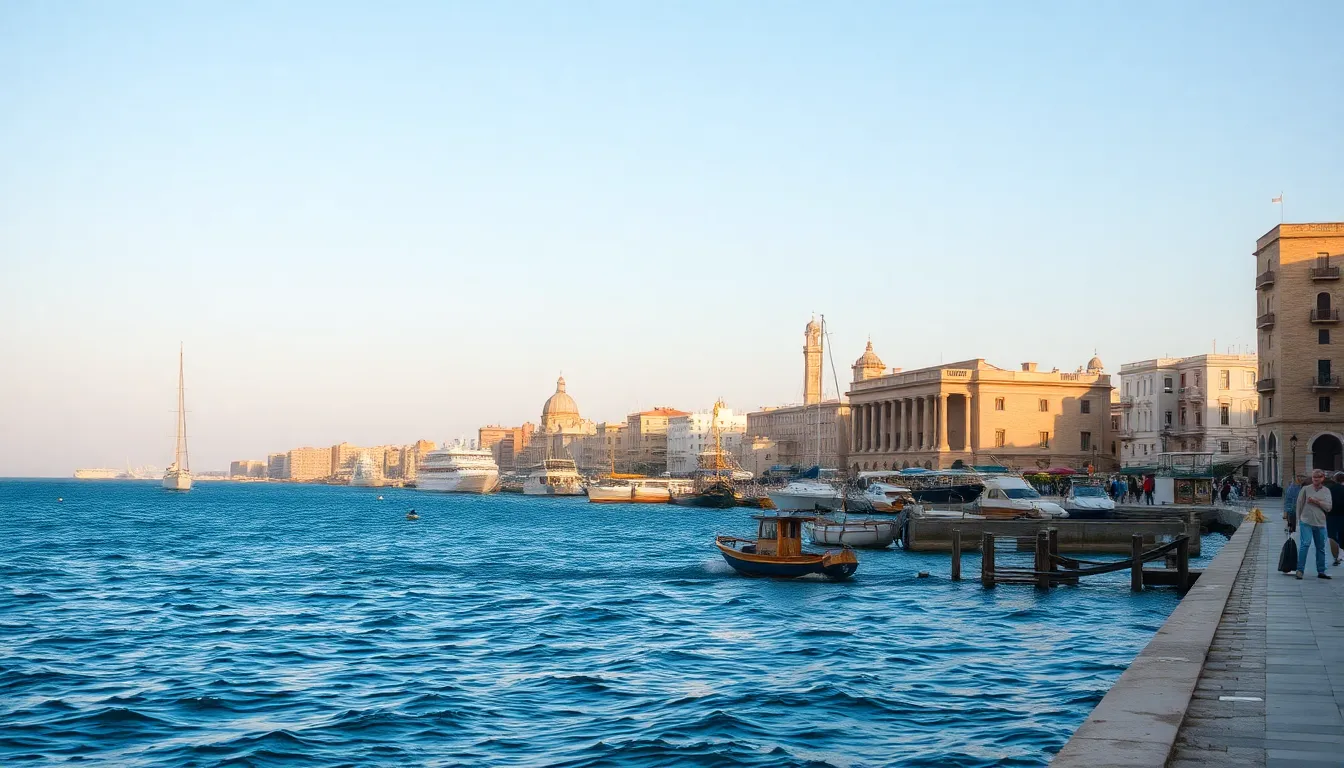
On the bus into Alexandria, I usually ask my groups a simple question: who wrote the second Gospel? Most of them know it was Mark. Then I ask where Mark went and what he did after the events of the New Testament close. The answers thin out fast. Almost no one in a typical church group knows that Mark, by ancient tradition, carried the Gospel to Egypt, founded the church in Alexandria, and was martyred on its streets. They know his book. They have never thought about his mission.
That gap is one of the reasons Alexandria moves people. This is the city where one of the four evangelists is believed to have planted a church that has never died. The Coptic pope to this day is counted as a successor of Saint Mark, sitting on what the tradition calls the See of Saint Mark. For a faith group, standing in Alexandria with that history in mind connects the New Testament to a living church in a way that few places can.
Let me lay out the story of Mark in Egypt: what tradition tells us, why Alexandria mattered, and what a group can actually encounter there today.
Who Was Saint Mark?
Mark appears in the New Testament under the name John Mark. He was a companion of Paul and Barnabas on early missionary travels, the cause of a sharp disagreement between them when he turned back partway, and later a trusted co-worker again. Peter refers to him warmly as “my son Mark.” Early Christian tradition holds that his Gospel preserves Peter’s preaching, which is why Mark’s account has the vivid, eyewitness immediacy that readers notice.
From Jerusalem to Alexandria
The New Testament does not tell us where Mark went at the end of his life. For that, we rely on the early church historians and the strong, consistent tradition of the Egyptian church itself. According to that tradition, Mark traveled to Alexandria, the great cosmopolitan city of the eastern Mediterranean, around the middle of the first century, and began to preach the Gospel there.
The Coptic tradition even preserves a story about his arrival: that his sandal broke as he entered the city, that a cobbler named Anianus pierced his hand with an awl while repairing it and cried out in pain to God, and that Mark healed him, leading to the conversion of Anianus and his household. Anianus became, by tradition, the second leader of the Alexandrian church after Mark. Whether one takes such a story as literal history or as the church’s way of remembering its origins, it captures something real about how the faith took root in Egypt person by person.
Why Alexandria Mattered
To understand the significance of Mark founding a church here, a group needs to grasp what Alexandria was. This was not a backwater. It was one of the largest and most important cities in the Roman world, home to the famous Library, a center of Greek learning, and the seat of a huge Jewish community that had produced the Greek translation of the Hebrew Scriptures.
A Strategic Place to Plant a Church
Mark was not planting a seed in empty ground. He was planting it in the intellectual heart of the eastern Empire, in a city already wrestling with the deepest questions of philosophy and faith. That setting shaped Alexandrian Christianity into something distinctly intellectual and theological. Within a couple of generations, the city had a catechetical school that became one of the great training grounds of early Christian thought.
The Theological Giants Who Followed
The church Mark founded produced some of the towering figures of Christian history. Clement of Alexandria and Origen taught at its school. Athanasius, perhaps the most important defender of the doctrine that Christ is fully God, was its bishop during the great fourth-century controversies. When the Nicene Creed affirms that Christ is “true God from true God,” it carries the fingerprints of Alexandria. A line runs directly from Mark’s mission to the creed that much of the Christian world still recites. Our Coptic Christianity primer follows that line into the living church today.
The See of Saint Mark
Here is the detail that most surprises groups. The line of leadership Mark began has, by the Coptic reckoning, never broken. The current Coptic Orthodox Pope of Alexandria is counted as a successor of Saint Mark, in an unbroken chain of patriarchs stretching back to the evangelist himself. The Copts call their patriarchate the See of Saint Mark.
What That Continuity Means
I ask groups to sit with this. Most Christian traditions in the West can trace their institutional roots back a few centuries, or to the Reformation, or to a founding figure of the modern era. The Coptic Church traces its leadership in a continuous succession to one of the men who wrote the Gospels. That is not a marketing claim. It is the self-understanding of the largest Christian community in the Middle East, and it gives the Coptic Church a sense of rootedness that is hard for outsiders to fully imagine until they encounter it.
The Martyrdom of Mark
Tradition holds that Mark’s preaching provoked the anger of the pagan population of Alexandria. He was seized, by the common account, dragged through the streets of the city by a rope, and killed. The early church honored him as a martyr, and his death became part of the foundation story of Egyptian Christianity, the first in a long line of Egyptian Christians who gave their lives for the faith.
The Relics and Saint Mark’s Cathedral
The history of Mark’s relics is its own remarkable story. In the ninth century, his remains were taken from Alexandria to Venice, where the great Basilica of Saint Mark was built to house them and where the city adopted him as its patron. Centuries later, in 1968, a portion of the relics was returned to Egypt, an event of enormous emotional weight for the Coptic Church, and they are venerated in the Coptic Cathedral of Saint Mark in Cairo, the principal seat of the Coptic pope. For groups, that cathedral offers a tangible connection to the evangelist at the heart of the modern Coptic Church.
What a Faith Group Can Experience Today
I will be honest with groups about what remains and what does not. Ancient Alexandria has been swallowed by the modern city and, in places, by the sea. You will not walk into a first-century church Mark built. What Alexandria offers is something different: the setting, the sea, the sense of standing in the city where an evangelist preached and died, and the living thread that runs from him to the Coptic Church you can meet today.
Alexandria Itself
We spend time on the Mediterranean waterfront, visit the sites that evoke the ancient Christian and Jewish city, and use the place to open the story of Mark and the Alexandrian church. For many groups, Alexandria pairs naturally with the Coptic sites of Old Cairo and the Saint Mark Cathedral, so the founding story and the living church come together across the itinerary.
Building It Into a Journey
Whether Alexandria belongs on your group’s itinerary depends on your community’s focus and time. For groups drawn to the origins of the early church, it is a meaningful addition. Our spiritual sites in Egypt guide shows how Alexandria and Coptic Cairo connect, and our Desert Fathers introduction traces what grew out of the church Mark founded.
A practical note for the planning conversation: with Heritage Tours, the group leader travels free with fifteen or more participants. You can see how we structure these journeys on our Egypt heritage destination page, and our group heritage tours page explains how leading a group works.
FAQ: Saint Mark and the Church of Alexandria
Did Saint Mark really found the church in Egypt?
According to strong and consistent early tradition, yes. Mark the Evangelist is believed to have come to Alexandria around the middle of the first century, preached the Gospel, and founded the Christian community there. The Coptic Church regards him as its founder, and its patriarchs trace their succession back to him.
Why was Alexandria so important to early Christianity?
Alexandria was one of the largest, wealthiest, and most intellectually significant cities in the Roman world. The church Mark founded there grew into a major center of Christian thought, producing figures like Clement, Origen, and Athanasius, and shaping the doctrine affirmed at the Council of Nicaea.
What is the See of Saint Mark?
It is the name for the Coptic Orthodox patriarchate, the line of church leadership that, by Coptic tradition, descends in unbroken succession from Saint Mark himself. The current Coptic pope is counted as a successor of the evangelist.
Where are the relics of Saint Mark today?
Most of Mark’s relics were taken to Venice in the ninth century and house the Basilica of Saint Mark there. In 1968 a portion was returned to Egypt and is venerated in the Coptic Cathedral of Saint Mark in Cairo, the seat of the Coptic pope.
What can our group actually see in Alexandria related to Saint Mark?
Ancient Alexandria has largely been built over, so there is no surviving first-century church to visit. What groups experience is the setting itself, the Mediterranean city where Mark preached and died, paired with the living Coptic tradition you can encounter at the Saint Mark Cathedral and the Coptic sites of Cairo.
Mark wrote a Gospel that millions read, and he gave his life founding a church that still exists. Bringing your community to the place where that mission unfolded connects the New Testament to a living faith in a way that stays with people. When you are ready to talk it through, reach out to our team and we will help you shape the journey around your community’s story.