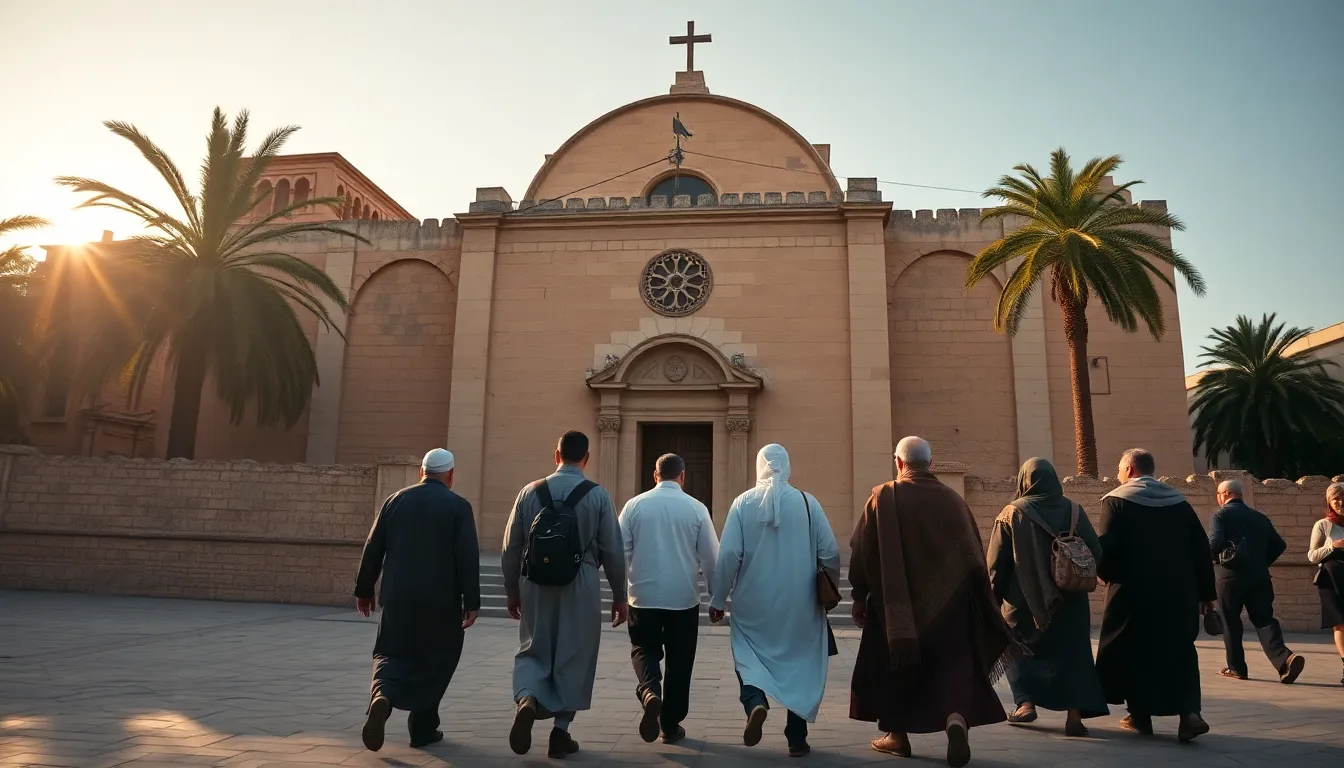
Every Christian pilgrimage to Egypt I have led started the same way: a pastor or church leader sitting across from me, excited and slightly overwhelmed, asking some version of “Where do I even begin?” It is a fair question. Egypt is a big country with a deep and tangled sacred geography, and planning a meaningful group journey through it is genuinely different from planning a vacation. You are responsible for people. You are shaping an encounter with the faith. And you are managing a budget your congregation can live with.
After more than twenty years of building these trips, I can tell you the work is very doable when you take it in the right order. The mistake leaders make is starting with hotels and flights. The right starting point is your community and what you want this journey to do for them. Get that right, and the logistics follow.
This is the end-to-end planning guide I wish every group leader had before our first conversation. Walk through it, and you will arrive at our planning call already thinking clearly.
Step One: Name the Heart of the Journey
Before any dates or sites, answer one question. What do you want your people to come home with? A pilgrimage is not a sightseeing trip with prayers attached. It has a spiritual spine, and naming that spine first shapes everything else.
The Threads Egypt Offers
Egypt holds several distinct Christian pilgrimage threads, and a strong trip usually leans into one or two rather than trying to touch them all. There is the Holy Family thread, tracing the flight into Egypt through Cairo and the Nile Delta. There is the early church thread, following Saint Mark and the founding of Alexandria. There is the monastic thread, the Desert Fathers and the ancient monasteries of Wadi Natrun and the Red Sea. And there is the Exodus thread, Sinai and the wilderness, which many Christian groups feel as deeply as Jewish ones.
I ask leaders to pick the thread their congregation is hungry for. A church that has been studying the early church will want Alexandria and the Coptic origins. A contemplative community will want the desert monasteries. A congregation steeped in the Old Testament will want Sinai. Our spiritual sites in Egypt guide lays out all the threads so you can see which one fits your people.
Step Two: Choose the Timing
Once you know the heart of the trip, timing comes next, and it carries both practical and spiritual weight.
Climate and Crowds
Egypt is comfortable for travel from roughly October through April, with the deep summer genuinely too hot for mixed-age groups doing outdoor sites. Spring is the busiest season. Late October, November, and the winter months offer cooler weather and thinner crowds. Our full breakdown lives in our guide to the best time to visit Egypt, which goes season by season.
Liturgical Timing
For a Christian group, the calendar can add meaning. Traveling during Lent or around Easter gives the journey a liturgical frame. Groups focused on Coptic heritage sometimes time their visit to Coptic Christmas on January 7, when the ancient churches hold their most beautiful services. Our Coptic Christmas guide covers what that timing involves.
Lead Time
Here is the rule I give every leader: start earlier than feels necessary. For most windows, eight to twelve months gives you room to secure good hotels, handle site permissions, and, most importantly, fill your group. For peak spring travel, give yourself twelve to eighteen months. Groups that start late end up with second-choice logistics or struggle to reach the numbers that make the trip work.
Step Three: Build the Itinerary
Now the route. A good pilgrimage itinerary has a rhythm. It is not a checklist of every site crammed into every day. The best trips breathe.
A Sensible Backbone
Most Christian pilgrimages to Egypt anchor in Cairo, which puts you within reach of Coptic Cairo, the Saint Mark Cathedral, the Giza pyramids, and day trips to Wadi Natrun. From there, the itinerary extends along your chosen thread. A monastic focus reaches out to the Red Sea monasteries of Saint Anthony and Saint Paul. An early-church focus adds Alexandria. An Exodus focus heads to the Sinai for the Mount Sinai ascent and Saint Catherine’s Monastery.
I encourage leaders to resist the urge to add one more site. The groups that come home most changed are the ones who had room to sit, read, and pray at the places that mattered most. A morning that is just one church, one passage of Scripture, and an hour of quiet often outweighs a day of five rushed stops.
Building in Worship
A pilgrimage needs devotional structure, and we build it in deliberately. A reading at the cave of the Holy Family. A gathering inside an ancient church. Time for silence at a desert monastery. Decide in advance who leads devotions, what passages anchor each site, and where you want unhurried space. We help shape this with you so the spiritual rhythm is planned, not improvised on the bus.
Step Four: Handle the Group Logistics
This is where leaders often feel out of their depth, and where the right partner removes nearly all of the burden.
Numbers and the Economics
Group size drives the economics of a pilgrimage. Costs per person come down as the group grows, and there is a threshold where the trip becomes financially comfortable for everyone. With Heritage Tours, the group leader travels free with fifteen or more participants, which both rewards the leader and sets a clear, reachable target for building the group. I tell pastors to treat fifteen as the number to plan toward from day one.
Recruiting Your Group
Filling a pilgrimage is its own work, and lead time is your friend. Present the trip to your congregation early, with a clear sense of the spiritual purpose, the dates, and the cost. Host an information evening. Let people ask questions. The trips that fill well are the ones where the leader communicated the heart of the journey, not just the price and the dates.
Documents, Visas, and Access
Egypt requires valid passports and, for most travelers, an entry visa, and several heritage sites require advance permissions to access properly. These are exactly the details a faith group leader should not be tracking alone. Our group heritage tours page explains how we carry this load so you can focus on your people rather than paperwork.
Step Five: Prepare Your People
A pilgrimage begins before the plane. The groups that arrive prepared go deeper, faster.
Spiritual Preparation
I encourage leaders to run a short teaching series or study before departure, covering the sites the group will visit and the Scripture connected to them. When a group has already studied the flight into Egypt before standing at the cave of the Holy Family, the moment lands far more powerfully. Our Coptic Christianity primer and Desert Fathers introduction make excellent pre-trip reading.
Practical Preparation
Cover the realities honestly: comfortable shoes, modest dress for churches and monasteries, the physical demands of sites like the Mount Sinai ascent, the heat, and reasonable expectations about pace. A well-briefed group complains less and absorbs more. We give leaders a clear pre-trip packet so nothing comes as a surprise.
Step Six: Choose the Right Partner
The final piece is who you walk this road with. A Christian pilgrimage to Egypt involves transport across a large country, site access, qualified guides who understand the faith dimension, accommodation, and the constant small decisions that shape a group’s experience. Trying to assemble that alone is how leaders burn out before the trip even begins.
The right partner handles the logistics invisibly and protects the spiritual purpose of the journey. That is the work we do. You bring the people and the spiritual leadership. We carry everything else. You can see how we structure these journeys on our Egypt heritage destination page.
FAQ: Planning a Christian Pilgrimage to Egypt
How long should a Christian pilgrimage to Egypt be?
Most meaningful group pilgrimages run between eight and twelve days. That gives you time to anchor in Cairo, reach the sites along your chosen thread, and keep a rhythm that allows for worship and reflection rather than a rushed checklist. The exact length depends on which sites your community most wants to reach.
What is the best time of year for a Christian pilgrimage to Egypt?
October through April is comfortable for travel, with summer too hot for most mixed-age groups. Spring is the busiest season. Many groups choose late autumn or winter for cooler weather and thinner crowds, and some time their visit to Lent, Easter, or Coptic Christmas on January 7 for added meaning.
How many people do we need for a group pilgrimage?
Group economics improve as numbers grow, and fifteen participants is the practical target to aim for. With Heritage Tours, the group leader travels free at fifteen or more, which rewards the leader and gives the group a clear goal to build toward from the start.
How far in advance should we start planning?
Start earlier than feels necessary. Eight to twelve months works for most windows, and twelve to eighteen months is wise for peak spring travel. Early planning secures better logistics and, crucially, gives you time to present the trip to your congregation and fill the group properly.
Do we need to plan the spiritual content ourselves?
The spiritual leadership stays with you, but you do not plan it alone. We help build devotional structure into the itinerary, suggest readings tied to each site, and protect the quiet, unhurried moments that make a pilgrimage more than sightseeing. You lead the worship; we shape the space for it.
Planning a Christian pilgrimage to Egypt feels large until you take it one step at a time, and you do not have to take those steps by yourself. Bring me the heart of the journey you want for your people, and we will build the rest around it. When you are ready, reach out to our team and we will start with your community’s story.