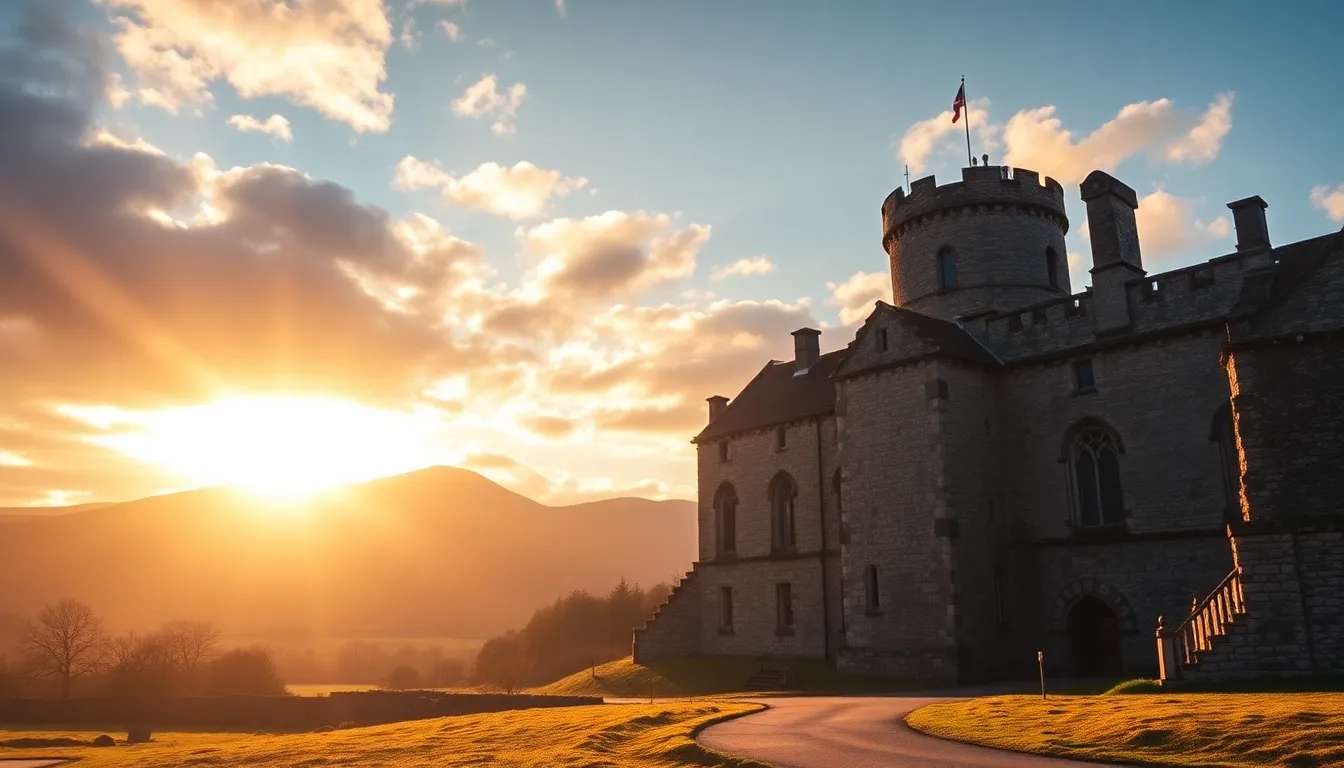
A Different United Kingdom Than the One You Picture
When a group leader tells me they want to take a congregation to the United Kingdom, I always ask the same question first: which United Kingdom? Because the faith heritage of Scotland, Wales, and Northern Ireland is a world apart from England’s cathedral cities. England is its own journey, well worth taking. But these three nations hold a story that is older, more rugged, and far less traveled, and that is exactly why I keep coming back.
I have led heritage groups across these nations for over twenty years, and the thing that still moves me is how present the past feels. You stand on an island where a sixth-century monk first carried the Gospel to Scotland. You walk a Glasgow street where refugees from the pogroms built a synagogue within a generation of arriving with nothing. You visit a Welsh chapel where, in 1904, an entire nation turned to prayer. This guide is meant to give you the full picture, the sacred sites, the history that ties them together, and the practical knowledge to plan a trip that stays with your group long after they fly home.
The Four Layers of Faith History
To plan well, it helps to understand that the spiritual heritage of these nations sits in roughly four layers, each from a different era. A good itinerary usually draws on two or three of them rather than trying to cover all four.
Layer One: Celtic Christianity
The oldest layer is the Celtic Christian faith that arrived by sea in the fifth and sixth centuries. This was a Gospel of monasteries and missionary monks. Columba founded Iona off the Scottish coast in 563. Patrick made Armagh the heart of his Irish mission. David established his monastic community in the remote southwest of Wales. These sites carry an ancient, contemplative quality that many groups find to be the spiritual high point of the entire journey. Our deeper guides to Iona and Celtic Christianity, Saint Patrick and Armagh, and Saint David and his cathedral cover each in full.
Layer Two: The Reformation and the Covenanters
The second layer is the Reformation, which reached Scotland with particular intensity under John Knox in 1560. Out of it grew the Presbyterian church and, in the seventeenth century, the Covenanters, who suffered and died for the right to worship as they believed. For Protestant groups, the Covenanter story is among the most stirring on the trip. You can follow it on our Covenanters heritage trail.
Layer Three: The Welsh Revival
The third layer is the most recent, and for many Christian groups the most surprising. In 1904, a spiritual awakening swept through Wales under the preaching of a young miner named Evan Roberts. More than a hundred thousand people are said to have come to faith within a year. Walking those valleys is a chance to stand where the Spirit moved with power within recent generations. The Welsh Revival trail maps it out.
Layer Four: Jewish Heritage
The fourth layer runs alongside the others. From the 1880s onward, Jewish families fleeing the pogroms of Eastern Europe built communities in Glasgow, Edinburgh, Cardiff, and Belfast. These were small congregations that achieved remarkable things, including producing a future President of Israel in Belfast. For a synagogue group, this is living family history. Our overview of Jewish heritage across the three nations is the place to begin.
Choosing Where to Go: A Nation-by-Nation Picture
Scotland
Scotland offers the widest range. From Iona in the west to the Covenanter country of the southern uplands, from Edinburgh’s Old Town to Glasgow’s immigrant heritage, you can build an entire trip without leaving the country. Edinburgh and Glasgow are easy bases, well connected by train and air, with strong hotel options. For many first-time groups, Scotland alone is the right answer.
Wales
Wales is compact and deeply rewarding. St Davids in the southwest holds the Celtic story, while the valleys of the south carry the Revival of 1904 and the Jewish history of Cardiff and the mining towns. Wales pairs naturally with a journey across to Ireland, or it can anchor a focused trip of its own. The scenery alone, from the Pembrokeshire coast to the green valleys, gives groups room to breathe.
Northern Ireland
Northern Ireland is the smallest of the three in heritage footprint but carries real weight. Armagh holds the legacy of Patrick, Belfast holds a Jewish community linked to the modern state of Israel, and the wider landscape connects to the broader Irish Christian story. It works beautifully as part of a trip that includes Scotland by ferry, or paired with the Republic of Ireland.
When to Go
Timing matters more than most group leaders expect, because the weather and the daylight in these northern nations swing hard across the year.
Late spring through early autumn, roughly May to September, is the comfortable window for group travel. Days are long, with daylight stretching past nine in the evening in midsummer, which gives you more hours at each site. Temperatures are mild rather than warm, so pack for changeable weather in any season. June and September are my personal favorites: the crowds are lighter than peak July and August, and the light is beautiful.
Winter trips are possible but demanding. Days are short, ferries to remote islands like Iona run on reduced schedules, and the weather can close in. I rarely recommend the deep winter for a group unless there is a specific reason.
If your community observes Jewish holidays, build around the High Holiday calendar in September and October. For Christian groups, Easter and the surrounding season can add a meaningful liturgical frame, though it is also a busier travel period.
Getting Around These Nations
A word on the practical mechanics of moving a group, because the geography here shapes everything. The three nations are well connected to one another by road and ferry, but the distances and the remoteness of the best sites mean travel time has to be planned honestly rather than squeezed.
Scotland and Wales are linked by a long but scenic road journey that I treat as part of the trip rather than a chore. Northern Ireland is reached from Scotland by a short sea crossing, or from Wales by ferry to the Republic of Ireland and then north. Within each nation, the cities are easy, but the remote sites that give this region its soul, Iona above all, require ferries and single-track roads that no large coach can rush.
For groups, this means a few things in practice. First, the right vehicle matters; some sites need a smaller bus than the standard tour coach. Second, ferry schedules drive the itinerary, especially for island sites, so dates and timings need to be locked early. Third, generous travel days are not wasted days. Some of the best conversations of a whole trip happen on the longer legs, when the group has time to talk and reflect on what they have seen.
What to Pack and Prepare
The weather in these northern nations is the single thing first-time visitors underestimate. It is changeable in every season, and a bright morning can turn to rain by afternoon. I tell every group to pack layers, a genuinely waterproof jacket, and comfortable shoes that can handle uneven ground, stone floors, grassy graveyards, and the occasional muddy path to a remote chapel or grave.
Beyond clothing, a little spiritual preparation goes a long way. Groups that arrive having read something of Columba, the Covenanters, or the Welsh Revival get far more from standing in these places. I often suggest a short reading list or a few sessions before the trip so the group arrives primed. When people already know the story, the sites speak louder.
Practical Notes for Group Leaders
A few things I tell every group leader at the start of a planning conversation.
First, these nations reward depth over breadth. You cannot see Iona, the Welsh valleys, and Armagh well in a single short trip. Pick a focus and let the group truly absorb it. A meaningful heritage tour usually concentrates on one or two nations.
Second, distances are real. The remote sites that give this region its power, Iona above all, take time to reach. A ferry to Iona is not a detour you squeeze in. It is a half-day commitment that becomes part of the pilgrimage. Build your itinerary with honest travel time and you will never feel rushed.
Third, the right operator matters. A heritage tour is not a standard coach trip. You need someone who understands why your group is there, who can arrange worship at the right moments, brief the group on the history, and handle the logistics so you can focus on leading your people. At Heritage Tours, we build every itinerary around what matters to your specific community, and with 15 or more participants, the group leader always travels free.
If these nations are calling to your community, I would love to talk about what the trip could look like. Start by exploring our United Kingdom heritage destination and our group heritage tours. There is no obligation, just a conversation about what is possible.
FAQ: Heritage Travel to Scotland, Wales, and Northern Ireland
Is this trip different from a heritage tour of England?
Yes, substantially. England’s heritage centers on its cathedral cities and the established church. Scotland, Wales, and Northern Ireland hold an older and more rugged story: Celtic Christianity that arrived by sea, the Scottish Reformation and the Covenanters, the Welsh Revival of 1904, and the immigrant Jewish communities of Glasgow, Cardiff, and Belfast. Many groups find these nations more spiritually raw and far less crowded.
Which of the three nations should I choose?
It depends on your focus. Scotland offers the widest range and can fill a whole trip on its own, from Iona to the Covenanter trail. Wales is compact and rich, with St Davids and the Revival valleys. Northern Ireland is smaller in footprint but holds Armagh and Belfast and pairs well with Scotland by ferry. We help every group match the destination to their spiritual interests.
When is the best time of year to go?
May through September is the comfortable window, with long daylight hours and mild weather. June and September offer lighter crowds and beautiful light. Winter is possible but demanding, with short days and reduced ferry schedules to remote sites. If your community observes Jewish holidays, plan around the High Holiday calendar in September and October.
How long should a group trip be?
For a focused trip within one nation, seven to nine days allows a meaningful pace with time for worship and reflection. A trip spanning two nations, such as Scotland and Northern Ireland by ferry, usually needs nine to twelve days. I always advise against trying to cover all three nations in a single trip, since the travel time would crowd out the reflection that makes a heritage journey worthwhile.
Do group leaders really travel free?
Yes. When your group includes 15 or more participants, the group leader travels free on all Heritage Tours group itineraries, including these nations. It is our way of honoring the work that pastors, rabbis, and educators put into bringing their communities together for these experiences.