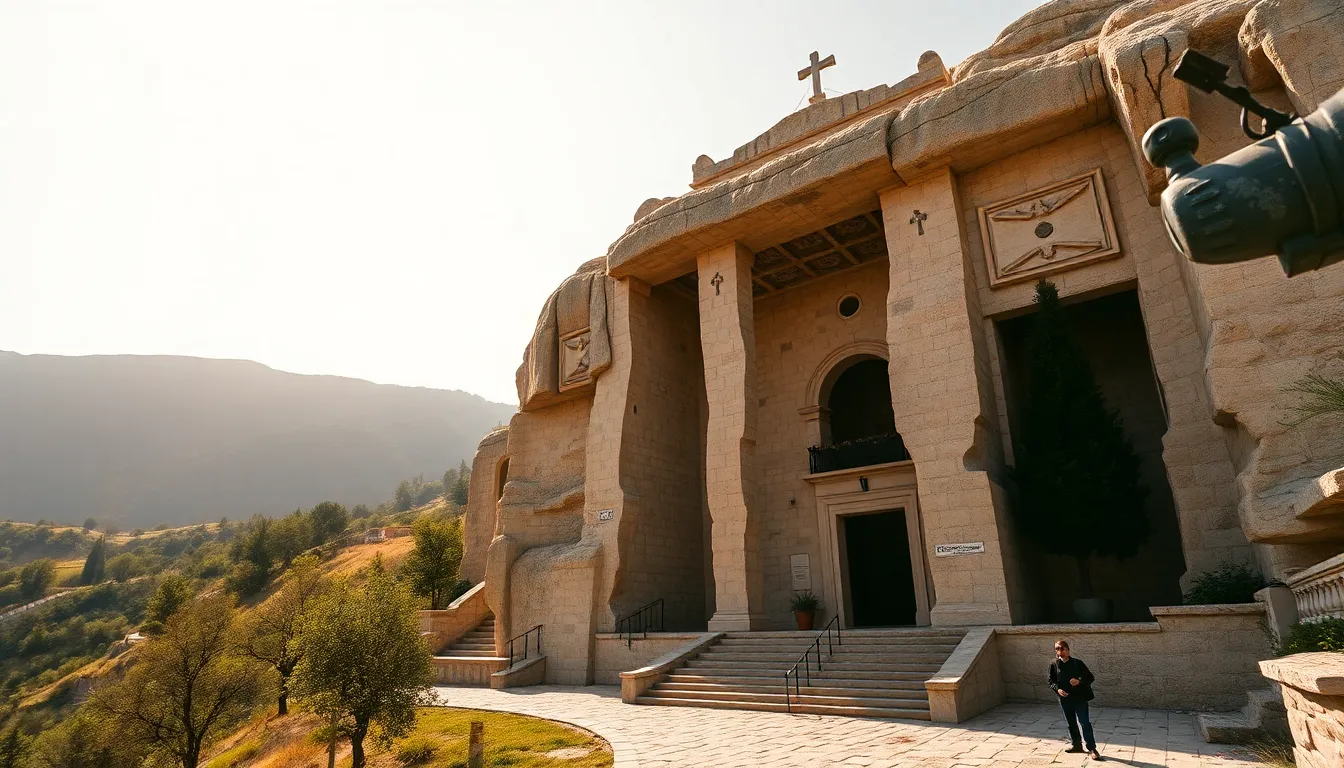
I have stood in a lot of churches with groups, grand cathedrals, basilicas, places built to take your breath away. The Cave Church of St. Peter does the opposite, and that is exactly why it moves people. You climb the slope of a mountain above Antakya, you pass through a stone facade, and you step into a plain rock grotto, dark and cool, with a simple altar. There is no gold, no soaring ceiling. And someone in the group almost always whispers the same thing: this is what it actually looked like. This is where they hid and prayed when being a Christian could get you killed. That whisper is the whole reason to come here.
This cave church, on the edge of the city where believers were first called Christians, is claimed as one of the oldest Christian places of worship in the world. For a faith group, it is one of the most spiritually direct sites in all of Turkey.
Why This Cave Matters
To understand the cave, you have to remember where it sits. Antakya is ancient Antioch on the Orontes, the city where, as Acts 11:26 tells us, “the disciples were called Christians first in Antioch.” This was the great church that taught Paul, that sent out the missionary journeys, and that became the cradle of the Gentile faith. The cave church sits on the hillside just outside that city, carved into the slope of Mount Starius.
Tradition holds that this grotto was one of the meeting places of the very early Christian community in Antioch, the community Peter, Paul, and Barnabas ministered to. It is associated by long tradition with the Apostle Peter, who according to early church accounts led the church at Antioch before going on to Rome. The Catholic Church recognizes it as one of Christianity’s earliest sites of worship. That is a strong claim, and I always frame it carefully for groups: the cave itself is ancient, the tradition is very old, and the city’s role in Acts is beyond dispute. Whether Peter himself prayed in this exact grotto is a matter of tradition rather than proof. But the early Christians of Antioch were real, this is their city, and caves like this are exactly the kind of hidden place a persecuted community would have gathered.
What makes the cave so powerful for a group is its honesty. The early church did not begin in glory. It began in borrowed rooms and quiet caves, among people who met in secret because the wider world was hostile. Standing in this grotto, your congregation feels the truth of that in a way no painting or sermon quite delivers.
What Your Group Will See
The site is modest in scale and rich in meaning. Set expectations with your group and let the simplicity do its work.
The facade
The stone front of the church that you see today was added much later, with a Crusader-era and 19th-century history, when the Latin Church reinforced and decorated the entrance. It frames the grotto with a dignified face, but the heart of the site is what lies behind it.
The grotto interior
Step inside and you are in a natural and carved cave, simple and bare. There is a stone altar, the remains of ancient floor mosaics, and traces of old frescoes on the rock. A small spring inside the cave was traditionally used for baptisms, and pilgrims still touch the water. Look for the narrow passage at the back, an escape tunnel that tradition says allowed worshippers to flee into the hills if the gathering was discovered. That detail, more than anything, tells your group what it cost to belong to this church.
The setting
The cave looks out over the Orontes valley and the modern city below. It is a quiet, contemplative spot, well suited to gathering your group for a short service, a reading, or silent prayer. Many leaders find this is the natural place to hold a moment of worship on the southern leg of a Turkey trip.
Leading a Service at the Cave
I want to give you something practical here, because the cave church is one of the best places in Turkey for a group to worship together. The grotto is small, so a large group will need to take turns or gather just outside, but the acoustics inside are intimate and a few voices singing in that rock space is a sound people remember. Read from Acts 11, the founding of the Antioch church. Read the naming of the Christians. Then let your group sit in the silence of the cave and consider the people who first met in places like this. I have seen pastors hold communion here. I have seen groups who came as tourists leave as something closer.
A note of reverence: this is a venerated site and on occasion a place of active worship. We coordinate timing so that your group has space for its own service without intruding on others, and so the experience is contemplative rather than rushed.
How the Cave Church Fits a Turkey Itinerary
The cave church sits on the doorstep of Antioch on the Orontes, where they were first called Christians, and the two belong together as the spiritual center of a southern leg. From here a group can travel to Tarsus, the birthplace of the apostle Paul, a few hours west, and then follow the missionary journeys inland through Pisidian Antioch and Paul’s first recorded sermon.
Most groups combine this southern story with the western highlights covered in our guide to spiritual sites in Turkey, Ephesus, Cappadocia, and the Seven Churches of Revelation. The cave church works beautifully as a worship anchor near the start of a trip, setting a tone of reverence before the larger sites.
One practical thing as you build the plan: with Heritage Tours, the group leader travels free when you bring fifteen or more participants. For a pastor planning a congregational journey, that matters early, so factor it in from the start.
A word on current conditions: Antakya was severely affected by the earthquakes of February 2023, and the area is rebuilding. We coordinate closely on access to the cave church and the surrounding sites before finalizing any itinerary that includes the city, and we keep groups informed of what to expect.
You can see how we structure the southern leg on our Turkey heritage page, or read about the group experience on our group heritage tours page.
FAQ: Visiting the Cave Church of St. Peter
Is the Cave Church of St. Peter really one of the oldest churches in the world?
It is claimed as one of the oldest Christian places of worship, and the Catholic Church recognizes it as such. The cave is ancient, and it sits in Antioch, the city where believers were first called Christians and where Peter, Paul, and Barnabas ministered. The grotto’s long association with the very early Antioch community is what gives it that standing.
Did the Apostle Peter actually pray in this cave?
The cave is linked by long tradition to Peter, who according to early church accounts led the church at Antioch. Whether he prayed in this exact grotto is a matter of tradition rather than archaeological proof. I am always straight with groups about that. What is certain is that this is Peter and Paul’s church city, and that early Christians gathered in hidden places like this one.
What will my group actually see at the cave?
A simple carved grotto behind a later stone facade, with a stone altar, remnants of old floor mosaics and frescoes, a small spring used for baptisms, and a narrow escape tunnel at the back. The site is modest in scale. Its power is in its plainness and in what it reveals about how the persecuted early church worshipped.
Can a group hold a worship service in the cave?
Yes, and it is one of the best worship spots on a Turkey itinerary. The grotto is small, so larger groups take turns or gather at the entrance, but the intimate space suits readings, singing, and prayer. We coordinate timing so your group has room for its own service in a contemplative setting.
Is the cave church accessible after the 2023 earthquakes?
Antakya was severely affected by the February 2023 earthquakes and is rebuilding. Visits to the cave church are possible, and we confirm current access and conditions before including it in an itinerary. For many groups, visiting now adds depth, holding the city’s recent suffering alongside the resilience of the faith that began here.
If you want your congregation to worship where the early church hid and prayed, this cave is one of the most honest holy places in Turkey. Start on our Turkey destination page or contact us when you are ready to plan.