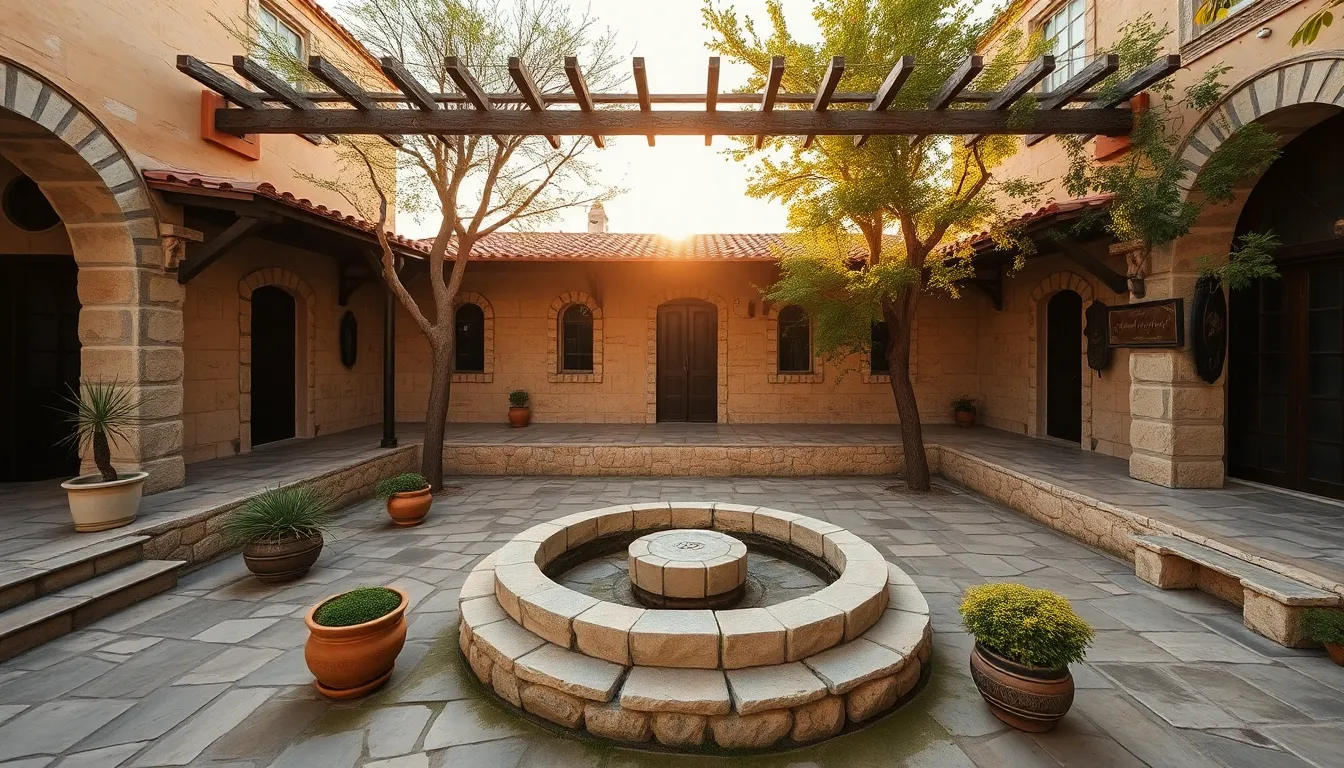
The first time I brought a group to Tarsus, somebody asked me why we were bothering. We had Ephesus on the itinerary, Cappadocia, the big names. Tarsus is a working modern city in southern Turkey, and the ancient remains are scattered and modest. Then we stood at St. Paul’s Well, in the courtyard of the house where tradition says he grew up, and the pastor leading the group said something I have never forgotten. He said, “This is where the man who wrote half my New Testament learned to read.” The group went quiet. That is what Tarsus does. It takes the apostle off the page and puts him in a place.
Tarsus is not a ruins-heavy site like Ephesus. It is something else. It is the hometown. And for a faith group that wants to understand who Paul was before he was Paul, this is the ground that explains him.
Why Tarsus Matters in the Story of Paul
Paul tells us himself where he came from. In Acts 21:39 he says, “I am a man which am a Jew of Tarsus, a city in Cilicia, a citizen of no mean city.” That last phrase is worth sitting with. Tarsus in the first century was not a backwater. It was the capital of the Roman province of Cilicia, a wealthy port and trade center, and home to a respected school of philosophy that the geographer Strabo ranked alongside Athens and Alexandria.
This is the city that shaped Paul. He grew up speaking Greek in a cosmopolitan crossroads, learned the trade of tentmaking that he would later use to support his ministry, and held Roman citizenship by birth, a status that he would invoke more than once to protect himself and to reach Rome itself. When you understand Tarsus, a lot of Paul makes sense. The man who could quote Greek poets on Mars Hill and argue Torah in a synagogue came from exactly the kind of place that produces that range.
He was born here as Saul, a Jew of the tribe of Benjamin, raised in a devout household, and later sent to Jerusalem to study under Gamaliel. After his conversion on the Damascus road and his early conflicts, Acts 9:30 tells us the believers sent him back to Tarsus for safety. He spent quiet years here before Barnabas came looking for him and brought him to Antioch to help lead the growing church. So Tarsus bookends the early Paul. It is where he started, and where he waited.
What Your Group Will Actually See
I always set expectations before we arrive, and I will do the same for you. Tarsus is a city of around three hundred thousand people, and the ancient sites sit inside the modern fabric. You are not walking through a preserved archaeological park. You are walking through a living Turkish city and stopping at the places that hold the story.
St. Paul’s Well
This is the heart of a Tarsus visit. In a small courtyard sits an ancient well, marked by tradition as belonging to the family home of the apostle. The well is real and old, and the water still rises in it. Excavations around the site have uncovered Roman-era flooring. Is it provably Paul’s house? No, and I tell groups that plainly. But it sits in the right part of the old city, it has been venerated for centuries, and standing over that water while someone reads from Acts is a genuinely moving thing. Pilgrims draw a cup and drink. Most of my groups do.
The Cleopatra Gate
At the western edge of the old city stands a large Roman stone gateway, often called Cleopatra’s Gate, named for the tradition that Mark Antony and Cleopatra met in Tarsus. It is the most substantial ancient structure still standing, and it gives your group a sense of the scale of the Roman city Paul knew.
St. Paul’s Church
A 19th-century church building dedicated to the apostle stands in the city and is preserved as a museum and occasional place of worship. It is a quiet, fitting spot for a group to gather, reflect, and pray together before moving on.
The Roman Road and Ancient Tarsus excavations
A section of the original Roman road has been excavated below the modern street level, black basalt paving that Paul’s own feet may have crossed. There are also ongoing excavations of the ancient city. These are modest in scale but real, and a good guide makes them come alive.
How Tarsus Fits a Turkey Heritage Itinerary
Tarsus sits in the south of Turkey, near the city of Mersin and not far from Adana. Geographically it pairs naturally with Antioch on the Orontes, modern Antakya, which is the next great chapter of Paul’s story. A thoughtful southern leg of a Turkey trip can move from Tarsus, the hometown, to Antioch, where they were first called Christians, and on to the Cave Church of St. Peter at Antakya. That sequence walks your group from Paul’s beginnings into the launch point of his missionary journeys.
Most groups combine this southern leg with the western highlights covered in our guide to spiritual sites in Turkey, Ephesus, Cappadocia, and the Seven Churches. Tarsus by itself is a half-day stop. Its weight comes from where it sits in the narrative, not from the size of the ruins.
One thing worth knowing as you build the budget: with Heritage Tours, the group leader travels free when you bring fifteen or more participants. For a pastor planning a trip for the congregation, that changes the math early, so factor it in from the start.
Leading Tarsus Well
The mistake I see leaders make at Tarsus is treating it as a quick photo stop because the ruins are small. Do the opposite. This is a teaching site. Gather your group at St. Paul’s Well, read from Acts 22 where Paul names his hometown before the crowd in Jerusalem, and talk about the years he spent here in obscurity before his ministry began. For most congregations, the lesson of Tarsus is patience. God formed Paul in a quiet hometown season before the work began, and that resonates with people who feel they are waiting for their own call.
You can see how we structure the southern leg on our Turkey heritage page, or read how the group experience works on our group heritage tours page.
FAQ: Visiting Tarsus, the Birthplace of Paul
Is St. Paul’s Well actually from Paul’s house?
The well is genuinely ancient, and Roman-era remains have been found around it, but there is no archaeological proof that it belonged to Paul’s family home. It sits in the right part of the old city and has been venerated as his family’s well for centuries. I tell groups the honest version and let the place speak for itself. The tradition is old and meaningful even where the certainty is not.
What does the Bible actually say about Tarsus?
Paul names Tarsus as his birthplace in Acts 21:39 and again in Acts 22:3, calling himself “a Jew of Tarsus.” Acts 9:11 and 9:30 place him in Tarsus after his conversion, and Acts 11:25 tells us Barnabas went there to find him and bring him to Antioch. So Tarsus is both where Paul was born and where he spent his quiet years before his public ministry.
How much time should a group spend in Tarsus?
Half a day is enough to see St. Paul’s Well, the Cleopatra Gate, St. Paul’s Church, and the Roman road excavations with time for reflection. Tarsus works best as a teaching stop paired with Antioch and Antakya in the south, rather than as a destination on its own.
Is Tarsus easy for older travelers?
Yes. The main sites are accessible and the walking is light compared with the larger archaeological parks like Ephesus. The streets are those of a busy modern city, so a good local guide keeps the group together, but the physical demands are gentle.
How does Tarsus connect to the rest of a Turkey trip?
Tarsus pairs naturally with Antioch on the Orontes, modern Antakya, where Paul launched his missionary journeys. Many groups combine this southern leg with the western sites, Ephesus, Cappadocia, and the Seven Churches of Revelation, for a fuller picture of early Christianity in Turkey.
If you want to give your congregation the place where Paul’s story begins, I would be glad to help you build it into a trip. The ruins are modest, but the meaning is not. You can start on our Turkey destination page or contact us whenever you are ready to plan.