There is a stop on the road through central Turkey that most tour buses drive right past, and every time I take a group there, I watch the same thing happen. We climb up to the ruins of Pisidian Antioch, near the modern town of Yalvac, and I have someone read Acts 13 aloud. Not a summary. The whole speech. And as the words go on, “Men of Israel, and ye that fear God, give audience,” people start looking around at the actual stones, realizing that this is the place. This is where Paul stood up in the synagogue and preached the first sermon Luke records in full. You can hold that in your hands here, and it changes the group.
Pisidian Antioch is not famous the way Ephesus is famous. That is part of why it is so good for a faith group. It is quiet, it is real, and the moment Paul’s voice first reaches us in detail happened on this hill.
Why Pisidian Antioch Is a Turning Point in Acts
To understand why this site matters, you have to place it in the journey. After the church at Antioch on the Orontes set Paul and Barnabas apart for the work, they sailed to Cyprus, then crossed to the southern coast of Asia Minor and traveled inland to Pisidian Antioch. This was the start of the inland mission on the first journey, and Luke chose this moment to give us Paul preaching at length for the first time.
The sermon in Acts 13 is a careful piece of work. Paul stands in the synagogue on the Sabbath, walks his hearers through the history of Israel, from the Exodus through David, and then makes his claim: that Jesus, descended from David, is the promised Savior, crucified and raised. He quotes the Psalms, he reasons from scripture, and he offers forgiveness of sins through Christ. It is the template for how Paul would preach to Jewish audiences for the rest of his ministry.
What happens next is just as important. Acts 13:44 says that on the following Sabbath “almost the whole city came together to hear the word of God.” When some of the Jewish leaders contradicted him, Paul and Barnabas turned to the Gentiles, declaring, “Lo, we turn to the Gentiles.” This is one of the hinge moments in the whole book of Acts. The gospel formally opening to the non-Jewish world happens here, in Pisidian Antioch. For a group studying how the early church became a worldwide faith, this is foundational ground.
The two were eventually driven out of the region, but Luke notes that “the disciples were filled with joy, and with the Holy Ghost.” The seed was planted. Paul would return to strengthen this church on the way back through.
What Your Group Will See at the Site
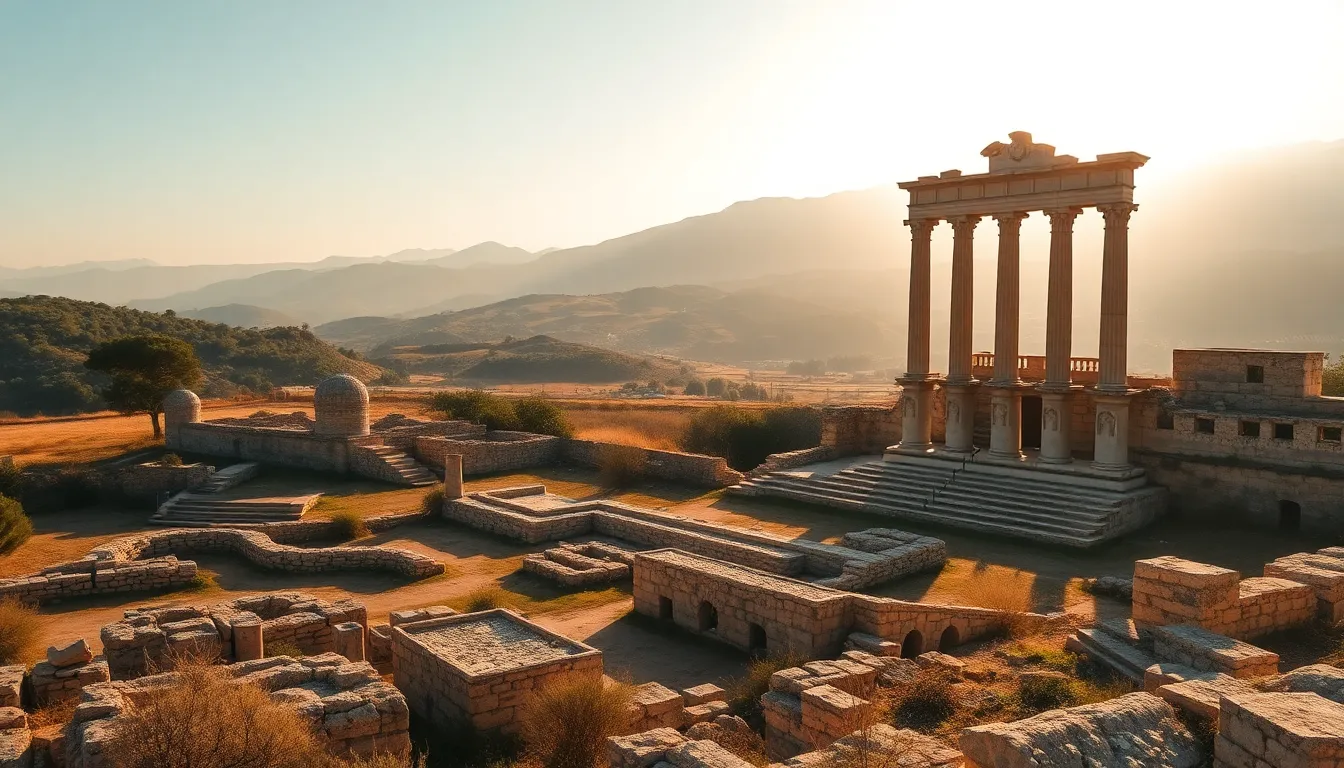
Pisidian Antioch sits on a hillside above Yalvac in the lake district of central Turkey, with the Anatolian highlands stretching out around it. The setting alone is worth the climb. The ruins are extensive and well excavated, and because few crowds come here, your group often has the place largely to itself, which is a gift for reflection.
The remains of the city
You will walk the line of a grand colonnaded street, see the foundations of the Temple of Augustus that crowned the city, and trace the propylon, the monumental gateway. There are remains of Roman baths, a theater, and an aqueduct. This was a substantial Roman colony, populated in part by retired soldiers, and the scale of the ruins shows it.
The Church of St. Paul
One of the most meaningful features for a faith group is the foundation of a large early Byzantine basilica, known as the Church of St. Paul, built to honor the apostle’s preaching here. Standing among its foundations, you are in a place the early church itself marked as holy because of what happened on this hill.
The synagogue site
The synagogue where Paul preached has not been definitively identified on the ground, and I am always straight with groups about that. But you are walking the city where it stood, and the basilica was built precisely to commemorate the sermon. The Acts 13 speech belongs to this place even where a single foundation cannot be pointed to.
How Pisidian Antioch Fits Into a First Journey Itinerary
This is where the planning gets satisfying, because Pisidian Antioch sits in the middle of a route you can actually follow. From here Paul traveled on to Iconium, Lystra, and Derbe, the Lycaonian cities of Acts 14. A group that wants to trace the first missionary journey can move from Pisidian Antioch through Iconium, Lystra, and Derbe along Paul’s Galatian trail, following the apostle’s own footsteps across the Anatolian plateau.
The story has a clear starting point too. The first journey was launched from Antioch on the Orontes, where the believers were first called Christians. For a group that wants the full arc, beginning in the south at Antakya and Tarsus and then moving inland through Pisidian Antioch makes the geography of Acts come alive in order.
Most groups fold this central leg into a wider Turkey itinerary alongside the western highlights covered in our guide to spiritual sites in Turkey. For the practical side of planning, remember that with Heritage Tours the group leader travels free with fifteen or more participants, which matters when a pastor is building a trip for the congregation.
Leading the Site Well
Here is my one strong piece of advice for Pisidian Antioch: read the whole sermon on site. Do not paraphrase it. The power of this place is that the words in Acts 13 were spoken here, and there is nothing like hearing them where they were first preached. Then talk with your group about the turn to the Gentiles, because that decision is the reason most of your congregation, who are not Jewish by birth, are in the family of faith at all. It is a deeply personal thing to realize while standing in the very city where that door was opened.
You can see how we shape these journeys on our Turkey heritage page, or read about the group experience on our group heritage tours page.
FAQ: Visiting Pisidian Antioch
What happened at Pisidian Antioch in the Bible?
In Acts 13, on his first missionary journey, Paul preached his first recorded sermon in the synagogue here on the Sabbath. He traced the history of Israel and declared Jesus the promised Savior. When some of the leaders opposed him, Paul and Barnabas turned to the Gentiles, a turning point that opened the gospel formally to the non-Jewish world.
Is Pisidian Antioch the same as the Antioch where they were first called Christians?
No, and this trips people up. There were two important Antiochs. Pisidian Antioch is the inland city in central Turkey where Paul preached the Acts 13 sermon. Antioch on the Orontes, modern Antakya in the south, is the great church city where believers were first called Christians and from which Paul’s journeys were launched. They are different places, several days apart.
Can you see the synagogue where Paul preached?
The exact synagogue has not been identified on the ground, but the early church built a large basilica here, the Church of St. Paul, to commemorate his preaching. You walk the city where the sermon was given, and the foundations of that memorial church are among the most moving features of the site.
Where is Pisidian Antioch and is it hard to reach?
It sits on a hillside above the modern town of Yalvac in the lake district of central Turkey. It is off the main tourist circuit, which means smaller crowds, but a heritage tour with a good driver and guide reaches it comfortably as part of a central Anatolian leg.
How does Pisidian Antioch connect to the rest of Paul’s first journey?
From Pisidian Antioch, Paul traveled on to Iconium, Lystra, and Derbe, the cities of Acts 14. Following that route lets a group trace the first missionary journey in sequence across the Anatolian plateau, which is one of the most coherent heritage circuits in Turkey.
If you want your group to stand where Paul’s voice first reaches us in full, I would be glad to help you build Pisidian Antioch into a journey. The crowds are thin, the ruins are real, and the sermon reads differently on the ground. Start on our Turkey destination page or contact us when you are ready to plan.