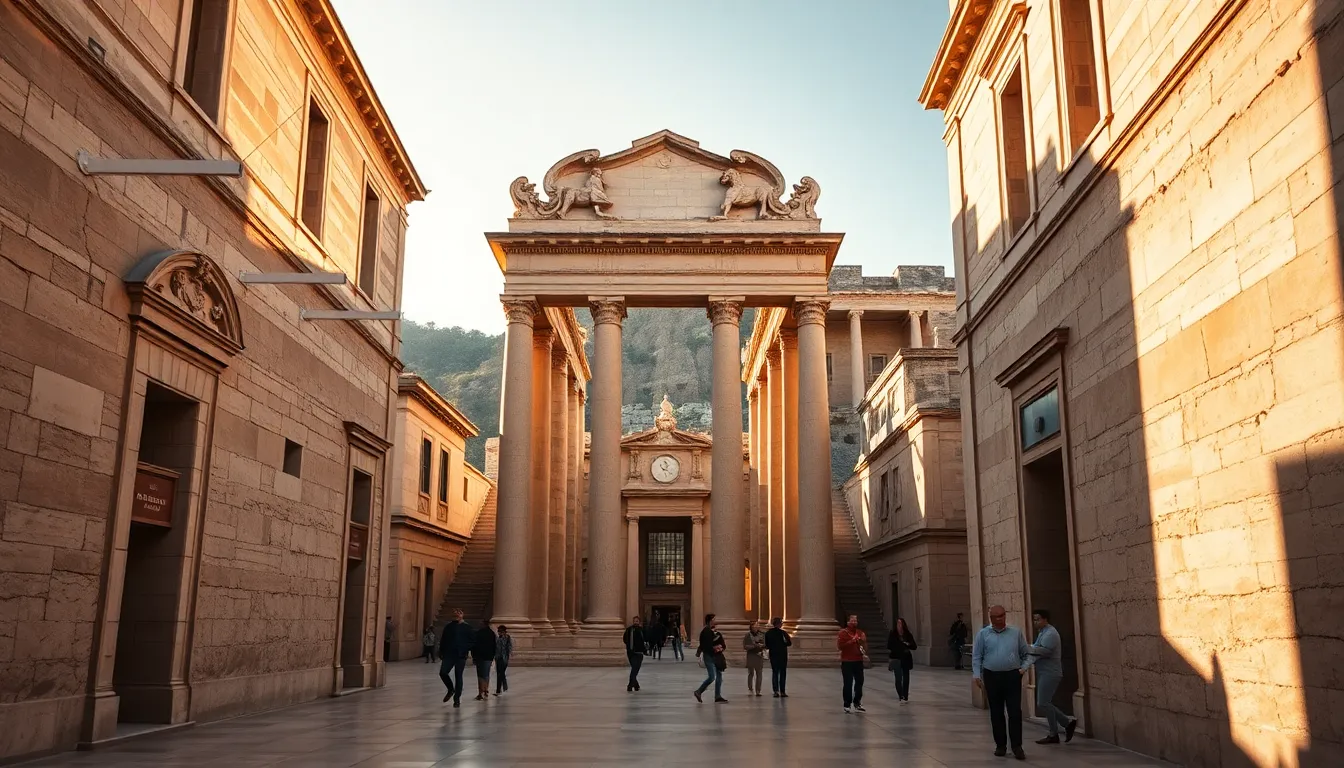
People come to me wanting to “walk where Paul walked,” and they usually picture Israel. I tell them gently that if they want the ground Paul actually covered on foot, by ship, and over mountain passes for years of his life, they are looking at Turkey. More of Paul’s recorded ministry happened here than anywhere else. He was born here. He was converted on the road to a city just over the eastern edge of it. He launched his journeys from here, planted churches across it, and wrote letters back to congregations whose ruins you can still stand in. Asia Minor, the land we now call Turkey, is the heartland of Paul’s missionary life.
This guide is an orientation, not an itinerary. Before a group commits to a route, it helps to see the whole map laid out, so you understand how the pieces connect and which cities carry which part of the story. Once you have that, the trip plans itself around the people and the time you have. Let me give you the lay of the land.
Where Paul Began: Tarsus
Everything starts in the southeast, at Tarsus. Paul tells the crowd in Acts 21, “I am a Jew, from Tarsus in Cilicia, a citizen of no ordinary city.” It was a center of learning and trade, and his Roman citizenship, the thing that later sends him to Rome, traces back to this city.
There is not a great deal to see at Tarsus today, but for groups going deep on Paul, standing in his hometown matters. A Roman-era road section and an old well traditionally tied to his family give you a place to read the early verses of his story. Most western-Turkey itineraries do not reach Tarsus, since it sits far to the east, so I am honest about the trade-off. Including it means real driving. For some groups it is worth it.
The Launch Point: Antioch on the Orontes
Antioch, in the far south near modern Antakya, is where the story turns outward. Acts 11 records that it was here “the disciples were first called Christians.” This was the base church that commissioned Paul and Barnabas and sent them out: “Set apart for me Barnabas and Saul for the work to which I have called them.” Every one of the missionary journeys launches from Antioch and reports back to it.
Antioch was struck by a severe earthquake in recent years, and access and conditions vary, so I always check the current situation before building it into a plan. The nearby Church of St. Peter, a cave church cut into the hillside and one of the oldest Christian sites of worship anywhere, has long been part of pilgrimages here.
The First Journey: Across the Southern Highlands
Paul’s first journey, with Barnabas, runs through the southern interior of Asia Minor, and the city names will be familiar to anyone who has read Acts 13 and 14.
Pisidian Antioch is where Paul gives the long synagogue sermon of Acts 13 and where, after opposition, he turns to the Gentiles. There are substantial ruins here, including the remains of the very synagogue district and a later church. Iconium, modern Konya, Lystra, and Derbe complete this circuit. Lystra is where the crowd, after a healing, tries to worship Paul and Barnabas as gods, and later where Paul is stoned and left for dead. It is also the hometown of Timothy, whom Paul picks up on a return visit.
This southern route is less traveled by groups than the western coast, but for a congregation that wants the first journey specifically, it is rich, and the ruins of Pisidian Antioch in particular reward the trip.
The Heart of the Story: Ephesus and the West
For most groups, the center of gravity is the western coast, and rightly so. This is where Paul spent the most time and where the most survives.
Ephesus is the anchor. Paul stayed here close to three years, longer than almost anywhere else, teaching daily in the hall of Tyrannus until, as Acts 19 puts it, “all the Jews and Greeks who lived in the province of Asia heard the word of the Lord.” This is where the silversmiths, whose trade in idols of Artemis was threatened, started the riot that filled the great theater with the chant “Great is Artemis of the Ephesians.” That theater still stands, and your group can sit in it. The Letter to the Ephesians went to this church. John is believed to have lived and died nearby, and the House of the Virgin Mary sits on the hillside above.
I cover Ephesus in depth elsewhere, and the western coast is also where the Seven Churches of Revelation cluster, so the geography of Paul’s ministry and the geography of John’s letters overlap on the same roads. That overlap is one of the reasons a western-Turkey trip is so dense with meaning.
The Seven Churches Overlap
It is worth saying plainly to a group: the Asia Minor Paul evangelized is the same Asia Minor John addresses in Revelation. Ephesus is both Paul’s long-term base and the first of the seven churches. The roads that connected these cities, the same roads Paul traveled, are what made it possible for a single circular letter to reach all seven communities in order.
When you build a western-Turkey heritage trip, you are usually weaving these two threads together. We treat them as one journey. For the detail on each church, see our companion guides to Sardis, Philadelphia, and Laodicea, and the full picture in our guide to the spiritual sites of Turkey.
The Voyage to Rome: The Southern Coast
There is one more thread worth knowing. Paul’s final recorded journey, the voyage to Rome as a prisoner in Acts 27, hugs the southern coast of Asia Minor before turning out into the open Mediterranean. The ship calls at Myra, on the southern coast near modern Demre, where the centurion finds an Alexandrian grain ship bound for Italy. Myra is also strongly associated with St. Nicholas, the fourth-century bishop whose church there is a major pilgrimage site in its own right.
Few groups follow the whole voyage, but for those drawn to the end of Paul’s story, Myra ties the southern coast into the larger arc and pairs naturally with the beach resorts of the region for a more restful stretch of an itinerary.
How I Help Groups Choose a Route
Here is the honest planning conversation I have with every group leader.
Turkey is large, and you cannot do all of Paul in one trip without spending most of it on a bus. So we pick a thread. A western-coast trip centered on Ephesus and the Seven Churches is the most popular and the most efficient, with the richest ruins and the easiest logistics. A first-journey trip through the southern highlands suits a congregation that has studied Acts 13 and 14 closely. A combined route is possible with more time and more driving.
I will tell you frankly which sites reward the travel and which do not, given your group’s interests, ages, and schedule. A group leader traveling with fifteen or more usually goes free on our group itineraries, and we pace the route around the people you bring rather than trying to cram every city into the days.
FAQ: Following Paul’s Footsteps in Turkey
Why is Turkey so important to the Apostle Paul’s story?
More of Paul’s recorded ministry took place in Asia Minor, modern Turkey, than anywhere else. He was born in Tarsus, was commissioned from Antioch, planted churches across the southern highlands and western coast on his missionary journeys, spent nearly three years in Ephesus, and sailed along the southern coast on his voyage to Rome. Several of his letters were written to churches whose ruins still stand here.
What is the most important Pauline site in Turkey?
Ephesus, on the western coast, is the anchor. Paul stayed there close to three years, the riot of Acts 19 took place in its great theater, and the Letter to the Ephesians was addressed to its church. It is also the first of the Seven Churches of Revelation, which makes the western coast the densest region for faith heritage travel in Turkey.
Can a group follow all of Paul’s journeys in one trip?
Not comfortably. Turkey is large, and covering every journey means long stretches of driving. Most groups choose one thread, usually the western coast centered on Ephesus and the Seven Churches, which offers the richest ruins and the easiest logistics. A first-journey route through the southern highlands is the other common choice.
Where was Paul born, and can groups visit it?
Paul was born in Tarsus in southeastern Turkey, in the region of Cilicia. The city can be visited, though there is limited to see beyond a Roman road section and a well traditionally linked to his family. Because it sits far east of the main western sites, most itineraries include it only for groups specifically focused on Paul’s origins.
How does Paul’s geography connect to the Seven Churches of Revelation?
The Asia Minor Paul evangelized is the same region John addresses in Revelation. Ephesus is both Paul’s long-term base and the first of the seven churches, and the Roman roads Paul traveled are what connected the seven communities. A western-Turkey heritage trip naturally weaves the two stories into one journey.
Paul’s Turkey is broad and rich, and the right route depends entirely on your group. If you are planning a footsteps-of-Paul journey for your congregation, I would be glad to help you choose a thread and build it well. See how we structure these trips on our Turkey heritage page or explore our group heritage tours.
Contact us whenever you are ready to start the conversation.