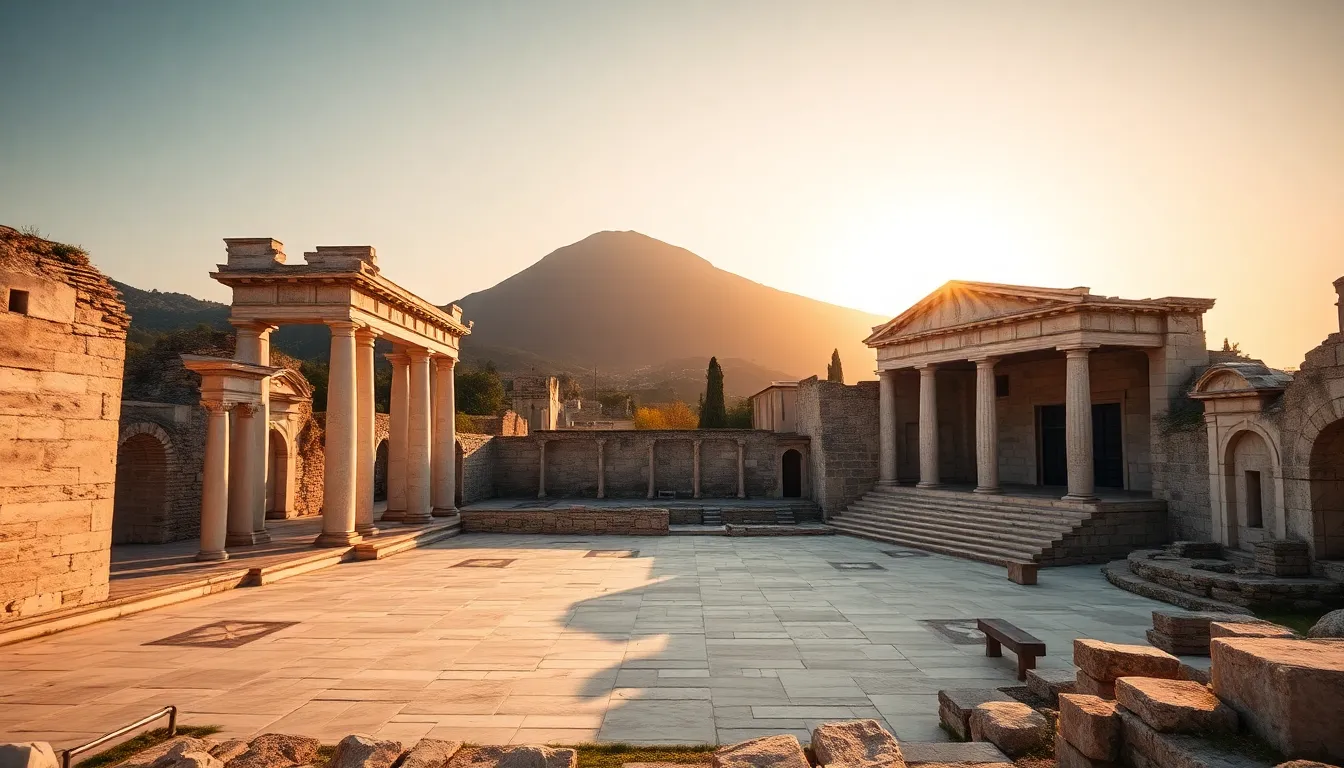
The first time I brought a group to Sardis, I asked them to read the letter before we walked in. Five short verses, Revelation 3:1 to 6. I watched the line land. “You have a reputation of being alive, but you are dead.” Then we turned the corner and stood in front of the great marble court, the columns of the gymnasium catching the morning sun, the whole site looking grand and confident and very much alive. That contrast is the whole point of Sardis, and the ground delivers it better than any sermon I could write.
Sardis was a city that had everything and lost the habit of staying watchful. The letter John recorded speaks straight into that. For a faith group working through the Seven Churches, this is one of the stops where the warning and the place fit together so cleanly that nobody needs it explained twice.
Let me walk you through what you are seeing and how to lead your people through it.
A Capital That Fell Twice Because It Stopped Watching
To understand the letter, you need to know the city’s history, because the words John recorded are built on it.
Sardis was the capital of the ancient kingdom of Lydia, and under King Croesus in the sixth century BC it was one of the wealthiest cities in the world. The Lydians are credited with minting the first coins from the gold that washed down the Pactolus stream running through the city. The acropolis sat on a steep spur of Mount Tmolus, so well defended that the people believed it could never be taken.
It was taken anyway. Twice. Cyrus the Persian captured the citadel in 547 BC when a soldier found an unguarded path up the cliff. The defenders had grown so sure of their walls that they left the back route unwatched. Centuries later, under Antiochus, the same thing happened again. A small force climbed the cliff while the city slept.
So when the letter says “be watchful,” and “if you do not wake up, I will come like a thief,” every person in Sardis would have heard their own history in those words. The church had inherited the city’s fatal confidence. It looked secure. It had a name. And it had stopped paying attention.
What Survives at Sardis Today
Sardis is one of the more rewarding of the Seven Churches to visit, because there is real scale here, not just a marker and a field.
The Gymnasium and Marble Court
The bath-gymnasium complex is the centerpiece. The restored Marble Court, with its two tiers of columns and carved facade, gives you an honest sense of the wealth and ambition of Roman Sardis. American archaeologists reassembled it from the original fallen stones, so what you see is largely the city’s own material put back in place. Groups always slow down here. It is the kind of structure that makes the warning in the letter land harder, because it shows exactly the kind of confidence the church was being told not to trust.
The Great Synagogue
Right beside the gymnasium is the largest ancient synagogue ever found in the diaspora, and it changes how groups understand the city. This was a wealthy, established Jewish community woven into the civic center of Sardis, with mosaic floors and inscriptions still in place. For a Jewish group leader, this is a remarkable witness to Jewish life in Asia Minor for centuries before and after the New Testament. For a Christian group, it fills in the world the early church grew up inside. I have stood here with pastors and rabbis in the same group, and this is the spot where the conversation gets rich.
The Temple of Artemis
A short drive away sits the Temple of Artemis, one of the largest Greek temples ever built. Only a couple of its columns still stand to full height, but the footprint is enormous, and a small Byzantine church was later tucked into one corner of it. That little church set against the giant pagan temple tells the long story of the faith in this region in a single frame.
How I Lead a Group Through Sardis
Here is the rhythm that works.
Start at the Marble Court and read Revelation 3:1 to 6 aloud while the group is standing in front of all that restored grandeur. Let the gap between what they see and what they just heard do its work. Do not rush to explain it. Most people get there on their own.
Walk the synagogue next, slowly, and take time with the scale of it. This is where you connect the church to the living Jewish world around it.
Then close, if you have time, at the Temple of Artemis. The small Byzantine church in the corner is a good place for a final word about the line in the letter that gives hope: “Yet you have a few people who have not soiled their clothes.” Sardis is not only a warning. It names a faithful remnant. That is worth ending on.
There is a detail worth raising with your group here. The letter promises that the one who overcomes will be “dressed in white” and that Christ “will never blot out the name of that person from the book of life.” White garments were a point of civic pride in Sardis, a city built on its wool and dye trade, so the promise speaks the city’s own language back to it. The same God who warns the church also offers it the very thing it valued most, made permanent and clean. I find it lands well to read that promise standing where the trade once made men rich.
For where Sardis fits in the full circuit, see our guide to the spiritual sites of Turkey, our companion on Philadelphia, the church of the open door, and our overview of Paul’s footsteps across Asia Minor.
Practical Notes for Group Leaders
Sardis sits inland from Izmir, near the modern town of Sart, and most groups reach it as part of a Seven Churches loop rather than a single day trip. The site is spread out and largely open, so plan for sun. There is little shade at the gymnasium and almost none at the temple.
The walking is mostly flat and manageable for a mixed-age group, which is not true of every site on this circuit. A group leader traveling with fifteen or more travelers usually goes free on our group itineraries, and we build the pacing around the people you bring rather than a fixed clock. We can also pair a guide who knows both the biblical text and the archaeology, which matters more at Sardis than at almost any other church, because the history is the sermon.
FAQ: Visiting Sardis, the Church of Revelation 3
What was wrong with the church at Sardis in Revelation?
The church had a reputation for being alive but was spiritually dead. Revelation 3:1 to 6 calls it to wake up, strengthen what remains, and remember what it had received. The warning echoes the city’s own history, twice conquered because confident defenders left the citadel unwatched. The letter also notes a faithful few who had kept their garments clean.
Where is Sardis and can groups visit it?
Sardis is in western Turkey near the town of Sart, inland from Izmir. It is an open archaeological site that faith groups visit regularly as part of a Seven Churches of Revelation circuit. Heritage Tours builds it into Turkey itineraries with a guide who covers both the text and the archaeology.
What is the synagogue at Sardis?
It is the largest ancient synagogue ever found outside the land of Israel, located in the civic heart of the city beside the gymnasium. Its mosaic floors and inscriptions testify to a wealthy, well-established Jewish community in Asia Minor. It is a meaningful site for both Christian and Jewish heritage groups.
How much time should a group spend at Sardis?
Plan for about ninety minutes to two hours. That covers the gymnasium and Marble Court, the synagogue, and a short reading of the letter, with the Temple of Artemis adding another thirty to forty minutes if your schedule allows.
Is Sardis easy for older travelers?
Yes, relative to other sites on the circuit. The main complex is largely flat with manageable footing. The chief concern is sun and open ground, so bring water, hats, and sun protection, and plan visits for the cooler parts of the day.
Sardis is a stop that stays with people, because the warning is so plainly written into the stones. If you are planning a Seven Churches journey for your congregation, I would be glad to help you build it well. You can see how we structure these trips on our Turkey heritage page or explore our group heritage tours.
Contact us whenever you are ready to start the conversation.