When I bring a group to Laodicea, I take them to the spot where you can see two things at once. Look one way and you can make out the white travertine terraces of Hierapolis, where hot mineral springs steam out of the hillside. Look the other way toward the mountains and you know that somewhere up there, cold fresh water runs in springs near Colossae. Laodicea sat in the middle, with no good water of its own. It piped water in over a distance, and by the time it arrived it was tepid. Lukewarm. Useless for healing and useless for refreshment. Once a group sees that geography, the most famous line in the letter stops being a vague insult and becomes a precise diagnosis.
Laodicea is the seventh and last of the churches John addresses, and it receives the hardest words of all. No praise. Only a warning, and then an astonishing invitation. For a faith group, it is a fitting and sobering place to end the circuit. Let me show you how the city itself preaches the sermon.
The Lukewarm Water and What It Actually Meant
The line everyone knows is Revelation 3:15 to 16: “I know your deeds, that you are neither cold nor hot. I wish you were either one or the other. So, because you are lukewarm, neither hot nor cold, I am about to spit you out of my mouth.”
People often read this as cold meaning bad and hot meaning good, with lukewarm as the middle. That is not what the geography says. Both hot and cold water were useful. Hot springs healed. Cold water refreshed. Lukewarm water did neither. The neighboring cities each had one. Hierapolis had its famous hot springs. The region around Colossae had cold mountain water. Laodicea had to import its water, and it arrived warm and full of mineral deposits, the kind that would make you want to spit it out.
So the charge against the church is not that it was halfway committed on some scale. It is that it had become good for nothing. A church that does neither the healing work nor the refreshing work. When you read the letter standing in the city that lived this every day, your group hears the rebuke the way the original readers did.
A Rich City Told It Was Poor and Blind and Naked
The letter goes further, and again the city explains it.
Laodicea was wealthy. It sat at a major crossroads of trade routes, it was a banking center, and it was famous for two industries: a glossy black wool that made fine garments, and a medical school that produced an eye salve known across the ancient world. The city was so self-sufficient that when an earthquake leveled it in AD 60, Laodicea refused imperial aid and rebuilt itself out of its own pocket. The Roman historian Tacitus records it. They needed no one’s help.
Now read what the letter says: “You say, I am rich, I have acquired wealth and do not need a thing. But you do not realize that you are wretched, pitiful, poor, blind and naked.” Then the counsel: buy gold refined in fire, white clothes to cover your nakedness, and salve to put on your eyes so you can see.
Every one of those images is aimed straight at the city’s pride. The banking center is told it is poor. The wool city is told it is naked. The eye-salve city is told it is blind. I have watched that click land on a group standing in the middle of those ruins, and it is one of the most powerful moments on the whole Turkey circuit.
What Survives at Laodicea Today
Laodicea is one of the most actively excavated sites among the Seven Churches, and what has come out of the ground in recent years makes it well worth a substantial stop.
The Colonnaded Streets and City Center
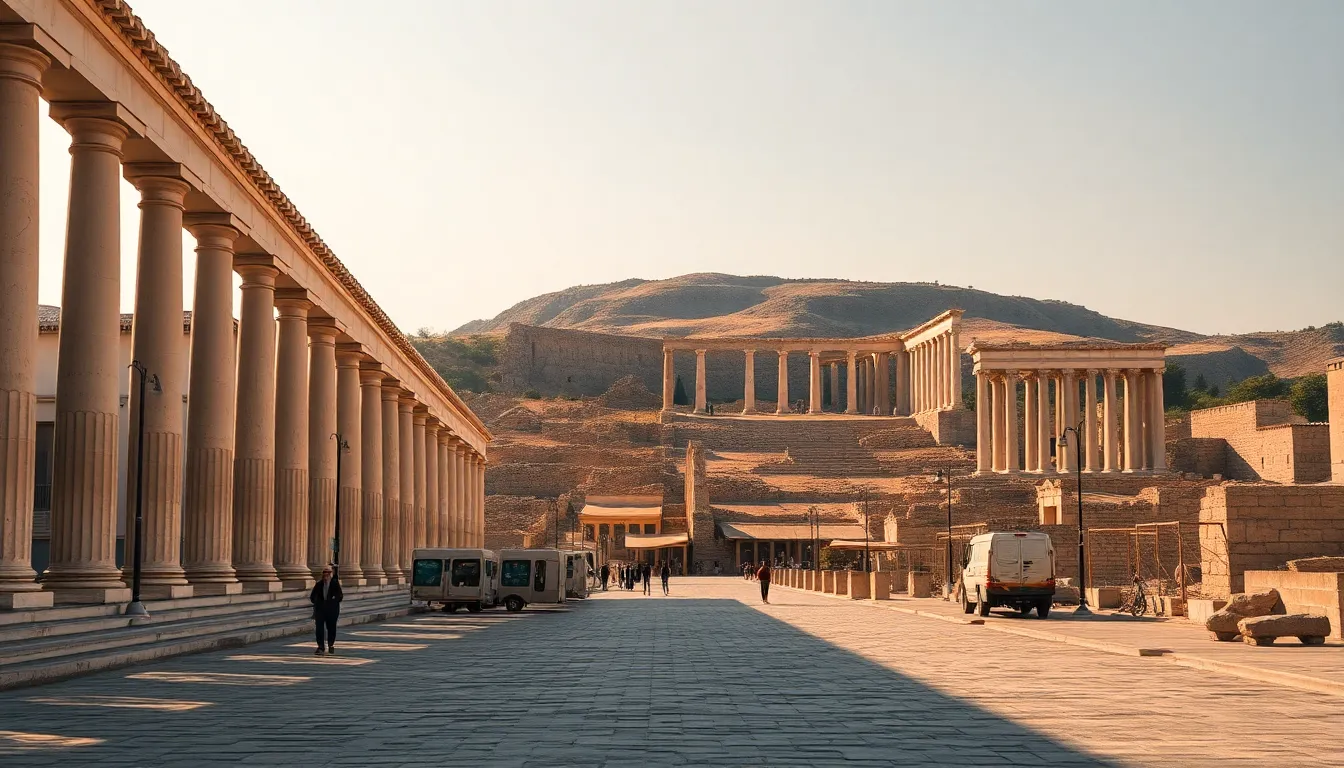
The main street has been excavated and partly re-erected, with columns lining a broad avenue across the wide plateau the city occupied. You get a real sense of scale here. This was a major city, not a village, and walking the street drives home the wealth the letter is confronting.
The Water System
You can still see elements of the system that carried water into the city, including stone pipe sections heavily encrusted with the mineral deposits that built up from the warm, hard water. Showing a group those deposits is the single most effective teaching moment at Laodicea. The evidence of the lukewarm water is right there in the stone.
The Early Church Building
One of the most significant recent finds is an early Christian church, dated to around the fourth century, with its layout and some flooring preserved. To read the letter to the Laodicean church and then stand in an actual church building from this city ties the text to the ground in a way that few sites on the circuit can match.
The View to Hierapolis
From Laodicea you can see across to Hierapolis and its white travertine terraces. If your itinerary allows, pairing the two is ideal, because the hot springs you can see in the distance are half of the lukewarm-water lesson.
How I Lead a Group at Laodicea
Here is the sequence that works.
Start at a point where the group can see toward Hierapolis, and explain the water geography before reading anything. Then read Revelation 3:14 to 22 aloud. Let the lukewarm line land with the springs in view.
Walk to the water pipes with the mineral encrustation and let people see and touch the evidence. Then walk the colonnaded street and talk through the rich-but-poor, blind, naked images against the backdrop of the city that lived them.
End at the early church building. This is the right place to read the letter’s closing invitation, which is one of the gentlest lines in all of Revelation despite all the rebuke that comes before it: “Here I am. I stand at the door and knock. If anyone hears my voice and opens the door, I will come in.” After the harshest letter to the last of the seven churches, ending the entire circuit on that open door is a moment your group will carry home.
For the wider picture, see our guide to the spiritual sites of Turkey, our piece on Philadelphia, the church of the open door, and our companion on Sardis.
Practical Notes for Group Leaders
Laodicea sits on a broad, exposed plateau near modern Denizli, very close to Pamukkale and Hierapolis, which is why the two are so often combined. The site is open and walkable with mostly level paths, though the plateau is windy and offers little shade, so plan for sun and weather. The walking distance across the city is more than at smaller sites like Philadelphia, so build in time and pace it for the group you bring.
A group leader traveling with fifteen or more usually goes free on our group itineraries. Because Laodicea pairs naturally with Hierapolis and Pamukkale, many groups make this their richest day on the circuit, and it is a strong place to close the Seven Churches.
FAQ: Visiting Laodicea, the Lukewarm Church
Why was the church at Laodicea called lukewarm?
In Revelation 3:15 to 16, Jesus calls the church neither hot nor cold but lukewarm. The image draws on the city’s water, which was piped in from a distance and arrived tepid and mineral-laden, unlike the useful hot springs of nearby Hierapolis or the cold mountain water near Colossae. Lukewarm water did neither healing nor refreshing work, which is the charge against the church.
Why does the letter call a rich city poor, blind, and naked?
Laodicea was a banking center known for fine black wool and a famous eye salve, and it was proud of its self-sufficiency. The letter turns each of those points around: the wealthy city is told it is poor, the wool city naked, the eye-salve city blind, and it is counseled to seek true gold, white garments, and sight from Christ.
Where is Laodicea and can groups visit it?
Laodicea is in western Turkey near Denizli, very close to Pamukkale and Hierapolis. It is an actively excavated archaeological site that faith groups visit as part of a Seven Churches of Revelation circuit, often combined with Hierapolis on the same day.
What is the most striking thing to see at Laodicea?
Many group leaders point to the water pipes encrusted with mineral deposits, which make the lukewarm-water lesson tangible. The excavated colonnaded streets and an early fourth-century church building are also significant, the latter letting groups stand in an actual church from the city the letter addresses.
How much time should a group spend at Laodicea?
Plan for about two hours to walk the main street, see the water system and the early church, and read the letter. Pairing it with Hierapolis and Pamukkale typically fills a full and rewarding day.
Laodicea is a sobering, fitting place to close the Seven Churches, and the open-door invitation at the end of the letter sends groups home on the right note. If you are planning this circuit for your congregation, I would be glad to help you build it well. See how we structure these journeys on our Turkey heritage page or explore our group heritage tours.
Contact us whenever you are ready to start the conversation.