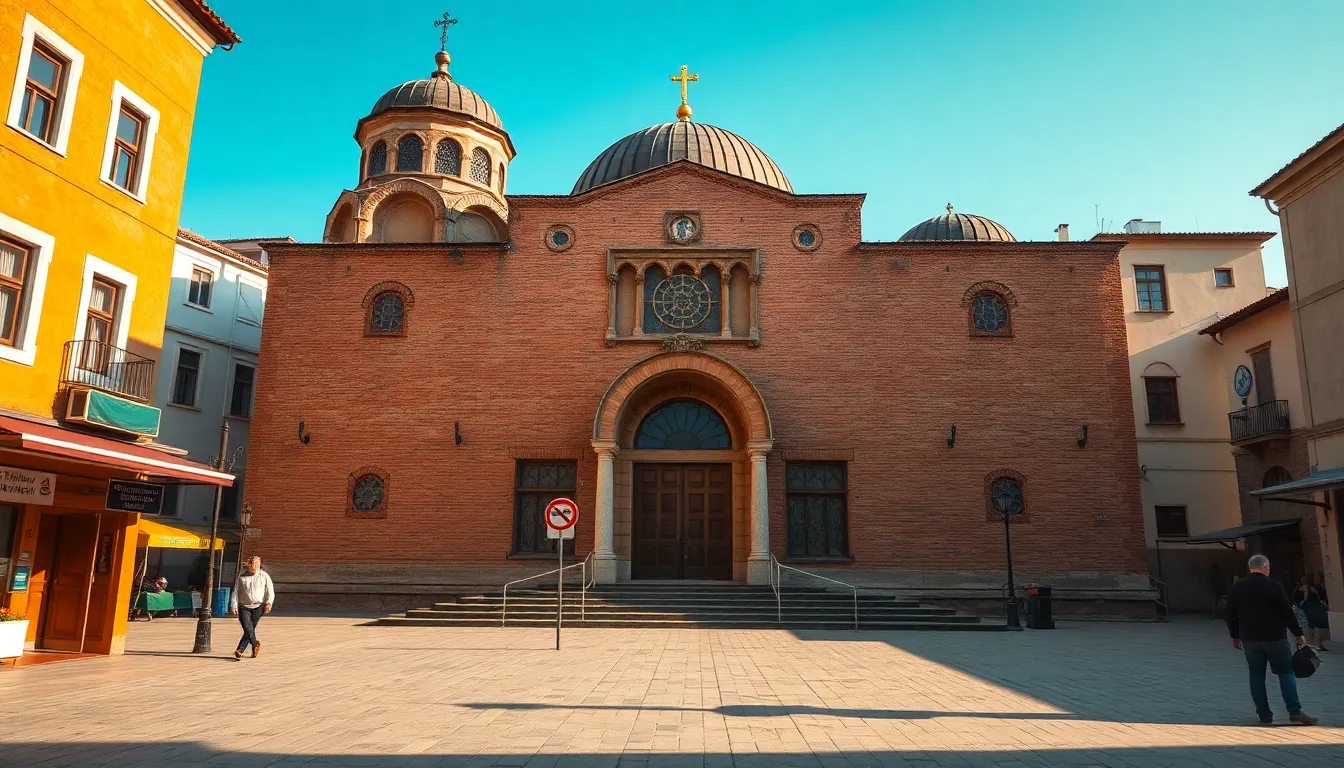
When a group asks me where the Ottoman Jewish story actually starts, I do not point them to Istanbul. I point them south of the Sea of Marmara, to Bursa. This was the first capital of the Ottoman Empire, the city the Ottomans built their state from before they ever took Constantinople, and there was a Jewish community living here through it all. Bursa rarely makes a standard tour itinerary, and I think that is a missed opportunity, because it is where you can stand at the actual beginning of the Ottoman Jewish world.
Let me tell you why I work to get groups there.
The First Ottoman Capital
To understand Bursa’s Jewish community, you have to understand Bursa itself. The Ottomans captured the city in 1326 and made it their capital. For decades, before Edirne and long before Constantinople, Bursa was the seat of the rising Ottoman state. The early sultans are buried here. The great early Ottoman mosques and tombs are here. This is the cradle of the empire, the place where the institutions that would later welcome the Sephardic exiles first took shape.
And Jews were part of the city from early on. A Jewish community existed in Bursa under Byzantine rule and continued under the Ottomans, making it one of the oldest continuous Jewish presences in the Ottoman world. These were Romaniote Jews at first, the Greek-speaking community that predated the Sephardim across the region, the same older layer we trace in our Romaniote Jews of Turkey guide. When you stand in Jewish Bursa, you are standing at the meeting point of the ancient Romaniote world and the early Ottoman state.
The Sephardic Wave Reaches Bursa
When Spain expelled its Jews in 1492 and Sultan Bayezid II welcomed them into Ottoman lands, Bursa received its share of the Sephardic exiles. As they did across the empire, the newcomers brought their language, their printing, their commerce, and their strong rabbinic tradition. Over the generations, the older Romaniote community in Bursa was largely absorbed into the larger Sephardic one, just as happened in Istanbul and elsewhere.
Bursa became a meaningful center of Jewish life in the early Ottoman centuries. Its position on trade routes, its silk industry, and its standing as a former capital gave the community a solid footing. For a group, Bursa offers something Istanbul cannot quite give on its own: the sense of the Ottoman Jewish story at its source, in the city where the empire that sheltered the Sephardim was born. The full arc of that welcome is laid out in our history of Turkey’s Jewish community guide.
Etz Ha-Hayim: The Tree of Life Synagogue
The heart of Jewish Bursa is the Etz Ha-Hayim synagogue, whose name means “Tree of Life.” This is one of the oldest synagogues in the region, with roots reaching back centuries, and it sits in the historic Jewish quarter of the city. For a group, it is the anchor of any visit.
The synagogue is modest from the outside, as so many Ottoman-era synagogues are, tucked into the old quarter rather than announcing itself on a grand boulevard. Inside, it carries the quiet dignity of a house of worship that has served its community across a very long span of time. Standing in Etz Ha-Hayim, you are in a space that connects the early Ottoman world, the Sephardic arrival, and the long centuries of community that followed.
There were historically other synagogues in Bursa’s Jewish quarter as well, reflecting a community large enough to need more than one house of worship. The clustering of these sites in the old quarter is part of what makes Bursa worth walking with a guide, who can read the neighborhood and show where Jewish life was concentrated for centuries.
Honoring What Has Faded
I want to be honest with a group about Bursa, because honesty is part of respect. The Jewish community here today is very small. The great centuries of communal life are behind it, thinned by the same forces that emptied Jewish communities across Turkey through the twentieth century: emigration, economic change, and above all the pull of Israel after 1948. What was once a substantial community is now a remnant.
That does not make Bursa less worth visiting. It makes the visit a different kind of meaningful. When you stand in Etz Ha-Hayim, you are honoring a community that lived here for many centuries and has largely moved on. There is a dignity in coming to a place like this precisely because it is quiet, in giving attention to a community that the wider world has mostly forgotten. I ask groups to carry that awareness. We come not as sightseers ticking off a synagogue, but as people paying respect to a long chapter of Jewish life at its source.
Visiting Bursa With a Group
Bursa sits south of Istanbul, across the Sea of Marmara, and is reachable as a day trip or an overnight, often combined with a ferry crossing that is part of the experience. The drive and crossing take some time, so I plan Bursa with realistic pacing rather than squeezing it into an already full Istanbul day.
A Bursa visit pairs naturally with the early Ottoman sites, since the city’s Jewish heritage and its imperial history sit side by side in the same old streets. A group can take in the cradle of the Ottoman state and the cradle of its Jewish community in a single, coherent visit. Access to the synagogue should be arranged in advance, which we handle as part of the itinerary. You can see how Bursa fits a wider Turkey plan on our Turkey destination page, and it sits well alongside a Shabbat in Istanbul, covered in our Shabbat in Turkey guide.
For groups that want the deepest version of the Ottoman Jewish story, I sometimes pair Bursa with Edirne, the two early capitals that bracket the rise of the empire and its Jewish communities. The contrast between Bursa’s modest old synagogue and the grandeur of the restored Edirne synagogue tells the whole story of the community’s rise in a single journey.
One practical note as you plan: with Heritage Tours, the group leader travels free when you bring fifteen or more participants. For a congregation building a fuller Turkey itinerary, that helps the budget meaningfully.
FAQ: Jewish Heritage in Bursa
Why is Bursa important to Jewish history? Bursa was the first capital of the Ottoman Empire, captured in 1326, and it held a Jewish community from Byzantine times through the Ottoman centuries. That makes it one of the oldest continuous Jewish presences in the Ottoman world and the place where the Ottoman Jewish story effectively begins, in the city where the empire that later welcomed the Sephardic exiles first took shape.
What is the Etz Ha-Hayim synagogue? Etz Ha-Hayim, meaning “Tree of Life,” is the historic synagogue at the heart of Bursa’s old Jewish quarter and one of the oldest in the region, with roots reaching back centuries. Modest from the outside, it carries the quiet dignity of a house of worship that served its community across a very long span of time. It is the anchor of any Jewish heritage visit to Bursa.
Is there still a Jewish community in Bursa? Only a very small remnant. The once-substantial community was thinned through the twentieth century by emigration, economic change, and the pull of Israel after 1948. We treat a visit as an act of respect for a long chapter of Jewish life, honoring a community that lived here for many centuries and has largely moved on.
How do you get to Bursa from Istanbul? Bursa sits south of Istanbul across the Sea of Marmara, reachable as a day trip or overnight, often combined with a ferry crossing that is part of the experience. Because the drive and crossing take time, we plan it with realistic pacing rather than squeezing it into a full Istanbul day.
Can Bursa be combined with other Jewish sites? Yes. Bursa pairs naturally with the early Ottoman imperial sites in the same old quarter, and many groups pair it with Edirne, the other early Ottoman capital. The contrast between Bursa’s modest old synagogue and the grand restored synagogue of Edirne captures the whole arc of the community’s rise.
If you want your congregation to stand at the source of the Ottoman Jewish story, in the empire’s first capital, I would be glad to plan a visit that gives Bursa its due. You can learn how the group experience works on our group heritage tours page.
Contact us whenever you are ready to start planning.