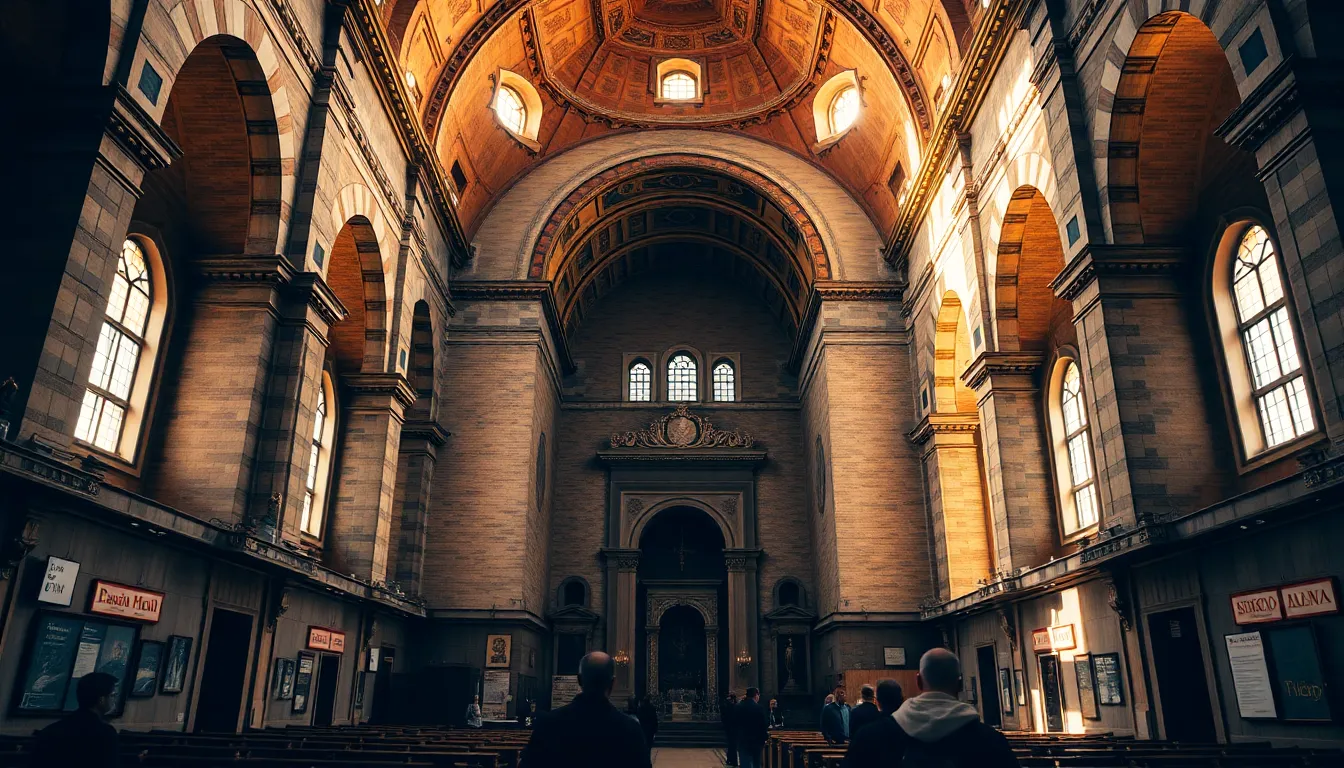
When I prepare a group for Turkey, I tell them the history first, before we see a single synagogue. The reason is simple. Turkey’s Jewish story is not one event. It is a chain of communities stacked on top of one another across two thousand years, and if you walk into the sites without the chain in your head, you miss most of what you are looking at. Once a group holds the full arc, every neighborhood and every synagogue snaps into place. So let me give you that arc, the way I give it to a group on their first morning.
Before the Sephardim: The Romaniote Foundation
Most people assume Jewish history in Turkey begins in 1492 with the Sephardic exiles. It does not. It begins more than a thousand years earlier, with the Romaniotes.
The Romaniotes were Greek-speaking Jews of the Roman and Byzantine worlds, present in Asia Minor and the region around Constantinople for some two thousand years. When Paul of Tarsus traveled through Asia Minor in the first century, the synagogues he visited were already established. By the time Constantine made Constantinople his capital in 330, Jews were a long-settled part of the city. These communities spoke a Jewish form of Greek, followed their own rite, and endured centuries of often harsh Byzantine rule without leaving. They were indigenous to the land in a way few Jewish communities anywhere can claim. Our full guide to the Romaniote Jews of Turkey traces that older layer in detail. For now, hold onto this: the foundation of Turkey’s Jewish story is ancient and Greek-speaking, not Spanish.
The Ottoman Welcome of 1492
The turning point everyone knows is 1492. Ferdinand and Isabella signed the Alhambra Decree, expelling every Jew from Spain. Families who had lived on the Iberian Peninsula for over a thousand years were given four months to leave with almost nothing.
What is not known nearly well enough is what happened next. Sultan Bayezid II of the Ottoman Empire did not merely permit the exiles to enter. He actively welcomed them. Ships were sent to Spanish ports. Communities were offered settlement in Istanbul, Thessaloniki, Izmir, Edirne, and across the empire. According to a widely cited account, Bayezid said of Ferdinand that he was impoverishing his own country and enriching the Ottoman one. Whether those were his exact words matters less than what actually happened. Tens of thousands of Sephardic Jews arrived in Ottoman lands and were given freedom to worship, to trade, to build synagogues, and to raise their children in safety. It was one of the great acts of refuge in recorded history, and it is the heart of why Turkey matters so much in the Jewish story.
Five Centuries of Sephardic Flourishing
The Sephardim did not merely survive in Ottoman lands. They became central to the empire’s economic and cultural life. They established the first printing presses in the Ottoman Empire. They traded across the Mediterranean. They served as physicians and diplomats at the highest levels of the Ottoman court. And they held onto a distinct identity rooted in the Spain they had lost.
The clearest marker of that identity was language. For five hundred years, Sephardic Jews continued speaking Ladino, a form of medieval Spanish blended with Hebrew, Turkish, and other influences. Ladino newspapers were published in Istanbul into the twentieth century. Songs, proverbs, and stories passed through generations in a language that still carried the sound of fifteenth-century Castile. Over time, the smaller, older Romaniote community was largely absorbed into this larger Sephardic world, until Ladino and the Sephardic rite became the mainstream of Turkish Jewish life.
This is the period that built the sites a group comes to see: the synagogues of Istanbul, the merchant world of Izmir, the grand synagogue of Edirne. Cities like Bursa, an early Ottoman capital, carried their own Jewish communities too, and our guide to Jewish Bursa covers that early chapter.
Into the Modern Era: Decline and Endurance
The twentieth century changed everything. The Ottoman Empire fell after the First World War, and the modern Turkish Republic was founded in 1923. The new secular republic was, in important ways, a safer home for Jews than much of Europe, and during the Second World War a number of Turkish diplomats acted to protect Jews from the Holocaust. Turkey was not occupied, and its Jewish community largely survived a period that devastated Jewish life across the continent. That is a fact worth honoring.
But the century still emptied the community, slowly and then steadily. Economic pressures, periods of discrimination, and above all the founding of Israel in 1948 drew large numbers away. Tens of thousands of Turkish Jews emigrated to Israel in the years after independence. A community that had numbered well over a hundred thousand at the start of the century shrank, decade by decade, through emigration. The grand synagogue of Edirne fell silent and into ruin. Whole communities thinned to a handful. This is a real loss, and I name it as one with a group, because the smallness of the present community is part of the story, not a detail to skip past.
The Community Today
Today, roughly 15,000 Jews live in Turkey, the great majority in Istanbul, with smaller numbers in Izmir and elsewhere. The community maintains active synagogues, schools, a chief rabbinate, and communal institutions. Neve Shalom in Istanbul’s Beyoglu district serves as its spiritual center. The community has also lived through real violence, including attacks on Neve Shalom in 1986 and 2003, and each time it rebuilt and continued. That persistence, the refusal to leave even through hard history, is the through-line that connects the present-day community all the way back to the Romaniotes who would not leave Byzantine lands two thousand years ago.
So when a group attends a service in Istanbul today, they are not visiting a museum. They are stepping into the living end of a two-thousand-year chain.
Why the Full Arc Matters for a Group
I give a group this whole arc because it transforms the trip. Without it, Turkey is a series of pretty synagogues. With it, every site becomes a chapter. Balat is where the 1492 exiles settled on top of an older Romaniote presence. Edirne is where the community grew confident enough to build one of Europe’s largest synagogues and then nearly lost it. Izmir is where Jewish merchants shaped a whole city. And Neve Shalom is where the chain still holds.
For a rabbi or educator, this is teaching ground that almost teaches itself, as long as your group arrives with the arc in their minds. That is why I front-load it. You can see how the sites fit together on our Turkey destination page, and a Shabbat in Istanbul, covered in our Shabbat in Turkey guide, becomes the emotional center of the whole story.
One practical note as you plan: with Heritage Tours, the group leader travels free when you bring fifteen or more participants. For a congregation building this kind of journey, that matters from the start.
FAQ: The History of Turkey’s Jewish Community
When did Jews first live in what is now Turkey? Far earlier than 1492. The Romaniote Jews, Greek-speaking communities of the Roman and Byzantine worlds, were present in Asia Minor and around Constantinople for some two thousand years. Synagogues existed there in the first century, and Jews were a long-settled part of Constantinople by the time it became the Byzantine capital in 330.
Why did so many Jews settle in Turkey in 1492? When Spain expelled its Jews in 1492, Sultan Bayezid II of the Ottoman Empire actively welcomed them, sending ships to Spanish ports and offering settlement across his lands. Ottoman religious tolerance made the empire one of the safest places in the world for Jewish life, and tens of thousands of Sephardim arrived and flourished there for five centuries.
What is Ladino and why does it matter? Ladino is Judeo-Spanish, a form of medieval Spanish blended with Hebrew, Turkish, and other influences. Sephardic Jews in Turkey spoke it for five hundred years, publishing newspapers and passing down songs and stories in it. It is the clearest surviving marker of how deeply the community carried its Spanish past across the Mediterranean. It is now critically endangered.
What happened to Turkey’s Jewish community in the twentieth century? The modern Turkish Republic, founded in 1923, was a relatively safe home, and Turkey was not occupied during the Second World War, so its community largely survived the Holocaust. But emigration, particularly to Israel after 1948, steadily reduced a community that once numbered well over a hundred thousand to roughly 15,000 today, most of them in Istanbul.
Is there still an active Jewish community in Turkey? Yes. About 15,000 Jews live in Turkey, mostly in Istanbul, maintaining active synagogues, schools, a chief rabbinate, and communal institutions, with Neve Shalom synagogue as the spiritual center. The community has endured real hardship, including attacks on its synagogues, and continued each time. It is the living end of a two-thousand-year chain.
If you want your congregation to walk Turkey with the full arc of this history in their minds, I would be glad to help you build it well. You can learn how the group experience works on our group heritage tours page.
Contact us whenever you are ready to start planning.