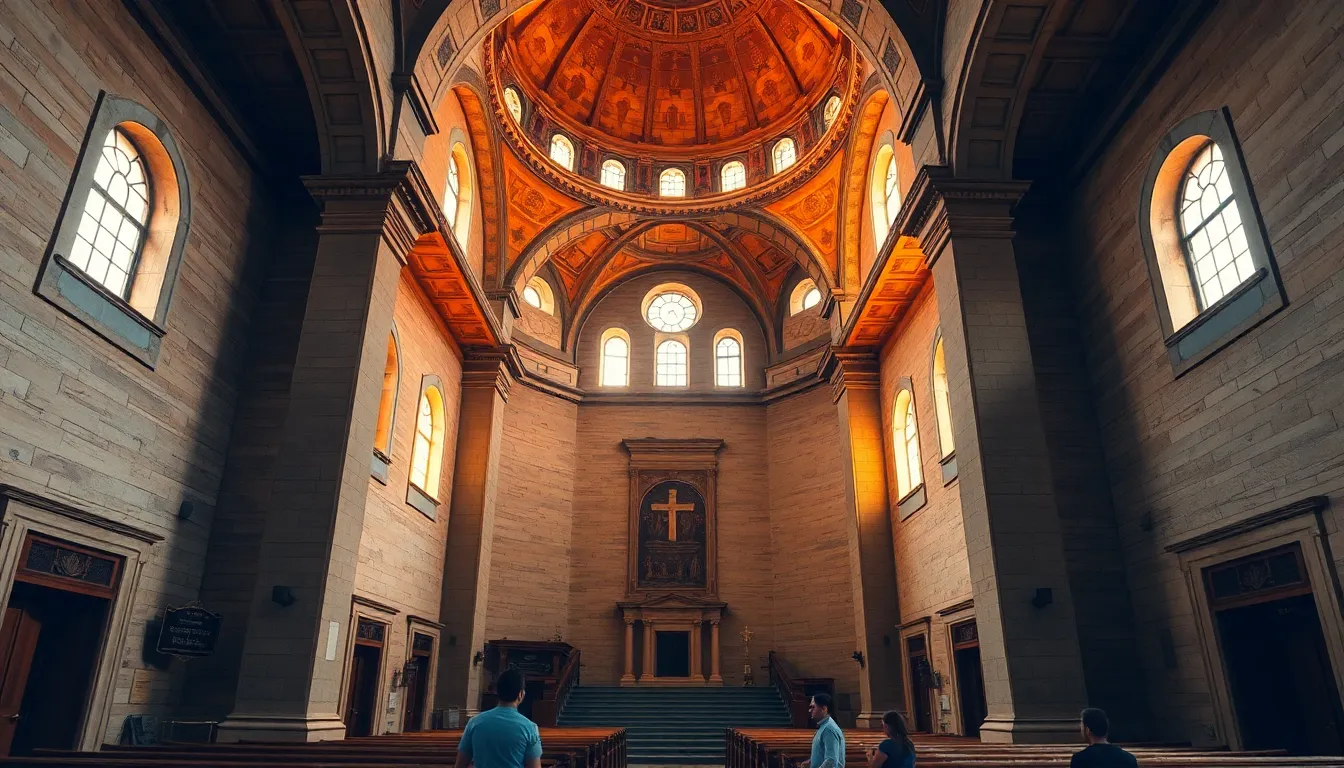
Here is a question I like to put to a group on their first morning in Istanbul. When did Jews first live in this region? Most people guess 1492, the year Spain expelled its Jews and the Sephardim arrived. That is a good guess, and it is wrong by more than a thousand years. Jews were living in the lands of modern Turkey when this city was still a Greek colony, long before it became Constantinople, long before the Sephardim ever set sail. Those Jews were the Romaniotes, and their story is one of the most overlooked in all of Jewish heritage.
I find that telling a group about the Romaniotes changes how they see everything else on the trip. So let me tell you.
Who the Romaniotes Were
The Romaniotes are the oldest Jewish community in Europe and the eastern Mediterranean, with roots that go back to the era of the Roman and then Byzantine empires, roughly two thousand years and possibly more. The name comes from “Romania,” the Greek term for the Byzantine realm, which the Romaniotes called home. They lived across what is now Greece and Turkey, in cities like Constantinople, Thebes, and others scattered through the Byzantine world.
What set them apart was their culture. Unlike the Sephardim, who spoke Ladino and carried the customs of medieval Spain, the Romaniotes spoke Greek. Their everyday language was a Jewish form of Greek, sometimes called Yevanic, written in Hebrew letters. Their liturgy, their melodies, their customs, and even their pronunciation of Hebrew followed a tradition all their own, distinct from both the Sephardic and the Ashkenazi worlds. They were, in the truest sense, an indigenous Jewish people of the region, shaped over two millennia by the Greek-speaking Christian empire around them.
For the longer arc of how all these communities came together in this land, our history of Turkey’s Jewish community guide lays out the full sequence. The Romaniotes are where it begins.
A Community Older Than Constantinople
It is worth sitting with how old this presence is. When Paul of Tarsus traveled through Asia Minor in the first century, he preached in synagogues that were already established. Those were Romaniote-world communities, Greek-speaking Jews who had been in the region for generations even then. By the time Constantine made Constantinople his capital in 330, Jews were already a long-settled part of the city’s life.
Through the Byzantine centuries the Romaniotes endured a great deal. Byzantine rule was often harsh toward Jews, with periods of forced conversion and heavy restriction. And yet the community held on, century after century, maintaining its Greek-Jewish identity through empires that rose and fell around it. That endurance is part of what makes the Romaniote story so moving. This was not a community passing through. This was a community that simply would not leave.
What Happened When the Sephardim Arrived
The arrival of the Sephardim after 1492 changed everything for the Romaniotes, and the change was not simple. The Sephardic newcomers came in large numbers, with wealth, with printing presses, with strong rabbinic leadership and a vibrant culture. Over the following generations, the smaller, older Romaniote community was largely absorbed into the larger Sephardic one. The Greek-speaking Jews increasingly adopted Ladino, the Sephardic rite, and Sephardic customs.
This is a subtle kind of loss, and I treat it carefully with groups. The Romaniotes were not expelled or destroyed in this period. They were, in a sense, gently overwritten. The older tradition faded into the newer one until, in most of Turkey, the distinct Romaniote way of being Jewish had quietly dissolved into the Sephardic mainstream. A two-thousand-year tradition did not end in a single catastrophe. It thinned out slowly, until it was hard to find. There is a particular sadness in that kind of disappearance, and I think it deserves to be named honestly.
Where to Find the Romaniote Trace Today
So what can a group actually see? This is the honest part: the Romaniote presence in Turkey is faint, and you have to know how to read for it. There is no grand Romaniote synagogue waiting to be toured the way the Sephardic sites are. What remains are traces, and tracing them is exactly what makes the search meaningful.
In Istanbul
Istanbul’s Jewish history carries the Romaniote layer underneath the Sephardic one. Some of the oldest congregational roots in the city predate 1492, and a guide who knows the community can show you where the older, Greek-speaking community lived and worshipped before the Sephardic wave. The traces are woven into neighborhoods like Balat, where the layers of Jewish Istanbul are stacked on top of one another.
The wider Romaniote world
To understand the Romaniotes fully, many groups extend the story into Greece, where the tradition survived longer and more visibly. Ioannina, in northwestern Greece, was the great heartland of Romaniote life, and its synagogue and community held onto the Greek-Jewish tradition into modern times. For a group serious about this thread, a combined Turkey and Greece journey traces the Romaniote world across both countries. The connection runs through cities like Thessaloniki and the broader Aegean, and it pairs naturally with the Sephardic story we cover in Jewish Bursa and beyond.
Why the Romaniote Story Matters for a Group
I push for the Romaniote thread because it does something important for a congregation. It corrects the common assumption that Jewish heritage in this region begins with the Sephardic exiles. It does not. It begins with a Greek-speaking community that was already ancient when the Sephardim arrived, a community that prayed in its own rite, sang its own melodies, and called the Byzantine world home for two thousand years.
When a group grasps that, the whole trip gains depth. The Sephardic story becomes the second chapter, not the first. And the present-day community in Istanbul becomes the inheritor of layer upon layer of Jewish presence, reaching back further than almost any community on earth. That perspective is hard to get anywhere else, and it is one of the reasons Turkey rewards a thoughtful group. You can see how these layers fit a wider plan on our Turkey destination page.
A practical note as you plan: with Heritage Tours, the group leader travels free when you bring fifteen or more participants. For a rabbi building a congregational journey, that is worth weighing early.
FAQ: The Romaniote Jews
Who are the Romaniote Jews? The Romaniotes are the oldest Jewish community in Europe and the eastern Mediterranean, with roots in the Roman and Byzantine eras going back two thousand years or more. They spoke a Jewish form of Greek called Yevanic, followed their own liturgy and customs, and lived across what is now Greece and Turkey, distinct from both the Sephardim and the Ashkenazim.
How are Romaniotes different from Sephardic Jews? Romaniotes predate the Sephardim by over a thousand years and were native to the Greek-speaking Byzantine world, while the Sephardim arrived from Spain after the 1492 expulsion carrying Ladino and Spanish customs. Romaniotes prayed in their own rite with their own melodies and Hebrew pronunciation. After 1492, most Romaniote communities in Turkey were gradually absorbed into the larger Sephardic one.
Can you still see Romaniote heritage in Turkey? The trace in Turkey is faint, since the community was largely absorbed into the Sephardic mainstream. There is no grand standing Romaniote synagogue to tour, but the older pre-1492 layer survives within Istanbul’s Jewish history, and a knowledgeable guide can show where the Greek-speaking community lived and worshipped. The fuller Romaniote world is more visible across the border in Greece.
Where did the Romaniotes survive longest? In Greece, particularly Ioannina in the northwest, the Romaniote tradition held on into modern times with its own synagogue and community life. A combined Turkey and Greece heritage journey traces the Romaniote world across both countries.
Why include the Romaniote story on a Turkey trip? Because it corrects the assumption that Jewish heritage here begins in 1492. It begins far earlier, with an indigenous Greek-speaking community that was already ancient when the Sephardim arrived. Understanding that layer gives a group real depth and reframes the entire arc of the journey.
If your congregation is drawn to the deep roots beneath the better-known Sephardic story, I would be glad to build a journey that traces the Romaniote world properly. You can learn how the group experience works on our group heritage tours page.
Contact us whenever you are ready to start planning.