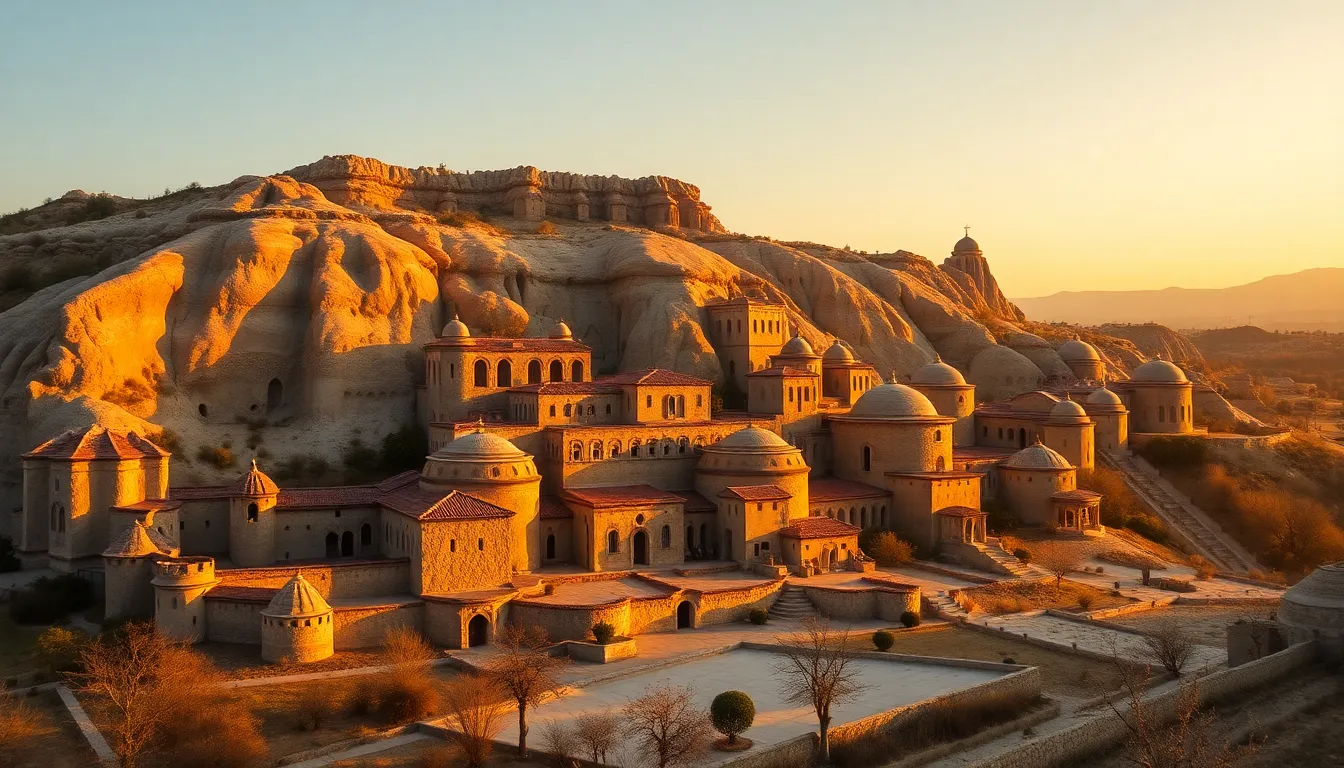
I tell every group the same thing before we walk into Goreme: this was not a museum. People lived here. They woke up here, ate here, buried their dead here, and prayed here every single day for hundreds of years. The word “museum” makes it sound like a display case, and it is anything but. It is a whole monastic town hollowed out of the rock, and once your people understand that, the place opens up for them. That shift, from looking at ruins to standing in someone’s home, is the heart of what a heritage trip should do.
The Goreme Open-Air Museum is the single most important Christian site in Cappadocia, and for many groups it is the high point of the whole Turkey trip. It sits a short walk from the modern town of Goreme, a compact cluster of rock-cut chapels, refectories, and living quarters spread across a hillside. You can see it properly in a couple of hours, but I never rush it. Let me show you why.
What the Museum Actually Is
For roughly a thousand years, from around the 4th century onward, this small valley was a thriving monastic settlement. Monks and nuns carved out cells to live in, communal dining halls with stone tables and benches cut straight from the rock, kitchens, storerooms, and more than a dozen churches and chapels. At its height this was one of the most important centers of monastic life in the entire Christian East.
The settlement grew out of the tradition shaped by the great Cappadocian teachers, the men who gave the Eastern church its model of communal monastic life. The monks here were living out a vision of faith built on shared work, shared meals, and constant prayer. When you walk past a refectory with its long stone table, you are looking at where that vision was eaten and prayed three times a day. I cover the men behind that tradition in our guide to the Cappadocian Fathers and early monasticism, and reading it before you go gives the museum its full weight.
The site was used as a place of Christian worship until the early 20th century. It became a protected museum in the 1980s and is now part of a UNESCO World Heritage listing. So when your group walks through, they are walking through a place that held living faith almost continuously for sixteen centuries.
The Churches and Their Frescoes
The reason Goreme draws people from around the world is the frescoes. Several of the chapels here hold some of the finest Byzantine wall painting that survives anywhere, and they are concentrated in one walkable spot. Here are the ones I plan around.
The Dark Church (Karanlik Kilise)
The Karanlik Kilise is the jewel of the museum. It earned its name from a single small window that let in almost no light, and that darkness is exactly why its frescoes are so astonishingly preserved. The colors are deep and clear: a Nativity, a Baptism, a Last Supper, the Betrayal, the Crucifixion, all painted across the ceiling and walls in rich blues and reds. There is a separate entrance fee, and I tell every leader to plan for it. It is the one church no one regrets paying extra to see.
Tokali Church (the Buckle Church)
Tokali sits just outside the main entrance, across the road, and groups in a hurry sometimes skip it. Do not. It is the largest church in the complex, and its walls carry a full sequence of scenes from the life of Christ painted in a striking band of deep blue. For walking the Gospel narrative panel by panel, it is the best room in Goreme.
The Apple Church and the Sandal Church
The Elmali Kilise, the Apple Church, has a compact domed interior with a well-balanced set of frescoes and tends to be calmer than the Dark Church. The Carikli Kilise, the Sandal Church, named for a footprint mark below one of its frescoes, holds a fine Ascension scene. Together these smaller chapels give your group quieter spaces to pause and pray.
The Nuns’ and Monks’ Convents
The museum also holds multi-story rock-cut convents, where you can climb through the living levels of a monastic community, the kitchens, the chapels, the cells. These give a vivid sense of daily life that the painted churches alone do not. Climbing through a convent, you start to picture the rhythm of the place: a bell, a shared meal at a stone table, hours of prayer, work in the fields outside, and the long silences in between. That rhythm is what these monks came here for.
I find it helps a group to pause in one of the refectories and just describe an ordinary day. The work, the prayers, the meals, the cold mornings. People connect to the painted ceilings more deeply once they have imagined the people who looked up at them.
How to Plan the Visit
Goreme works best as part of a two or three day Cappadocia stay. The museum itself takes two to three hours at a thoughtful pace, but the surrounding valleys hold many more cave churches, and the underground cities are a short drive away. We give the wider region its own guide in Cappadocia’s cave churches, and the refuges below ground in the underground cities of Cappadocia.
Within a full Turkey itinerary, Goreme pairs with Ephesus, the House of the Virgin Mary, and the Seven Churches of Revelation. Our overview of spiritual sites in Turkey shows how the country fits together, and the Turkey heritage page covers the practical planning.
One practical point for pastors building a congregation trip: with Heritage Tours, the group leader travels free when you bring fifteen or more participants. It is worth factoring into your budget from the start.
Practical Notes for Group Leaders
Go early. Goreme is one of the most visited sites in Cappadocia, and the tour buses arrive mid-morning. The first hour after opening is calmer, cooler, and far better for reflection. We schedule it early whenever we can.
Wear good shoes. The paths between chapels are uneven, with stone steps and the occasional short climb into a church entrance. The site is mostly manageable for an average group, but it is not flat, and a relaxed pace serves older travelers well.
Photography is restricted inside the Dark Church and a few other painted chapels, to protect the pigment. I let groups know in advance. Honestly, the no-photo rule is a gift. People stop documenting and start seeing.
Buy the separate Dark Church ticket. It is the one extra cost in the museum and the one absolutely worth it.
If the Goreme Open-Air Museum is calling to your group, we would be glad to help you plan the trip.
FAQ: The Goreme Open-Air Museum for Heritage Groups
What is the Goreme Open-Air Museum?
It is a former monastic settlement near the town of Goreme in Cappadocia, where monks and nuns carved homes, dining halls, and more than a dozen churches into the soft volcanic rock. It was a living center of Christian monastic life for roughly a thousand years and is now a protected museum and UNESCO World Heritage site. For faith groups it is the most important Christian site in Cappadocia.
Which church in Goreme has the best frescoes?
The Dark Church, or Karanlik Kilise, holds the best-preserved frescoes in the museum. Its near-total darkness over the centuries protected the colors, so its scenes from the life of Christ remain vivid. It requires a small separate entrance fee, which is worth including for any group.
How long should a group spend at the Goreme Open-Air Museum?
The museum itself takes two to three hours at a thoughtful pace. As part of a wider Cappadocia stay of two or three days, it pairs with the surrounding cave churches and the nearby underground cities. We recommend not rushing it, since the frescoes reward an unhurried visit.
Is the Goreme Open-Air Museum suitable for older travelers?
It is mostly manageable, but the paths between chapels are uneven and include stone steps and short climbs into some church entrances. With good shoes and a relaxed pace, most of an average group does fine. We plan the walking around the people you bring so no one misses the meaningful chapels.
Can we visit Goreme before the crowds arrive?
Yes. We schedule the museum early in the morning whenever the site allows, before the main tour buses arrive. The first hour after opening is calmer and cooler, which makes a real difference for reflection and prayer inside the chapels.