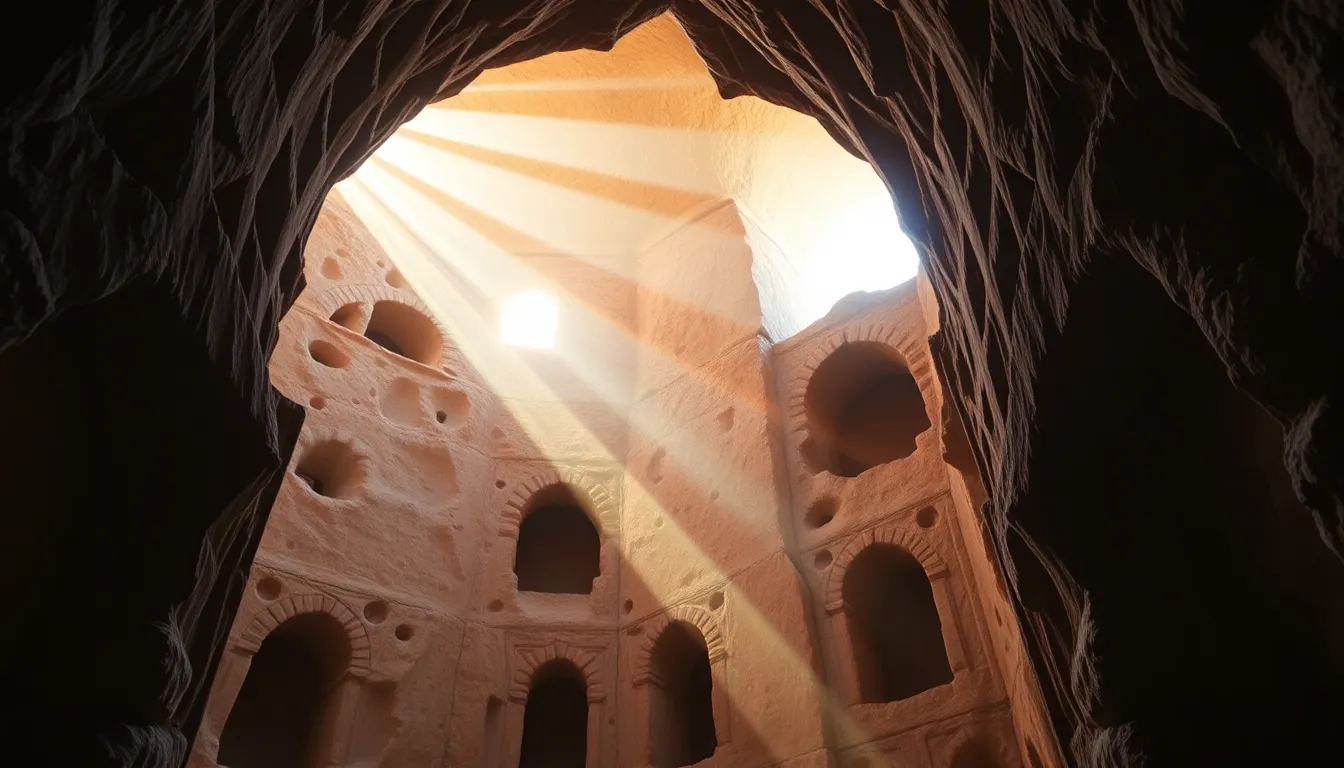
Most groups come to Cappadocia for the cave churches and the hot air balloons, and those are worth coming for. But every so often I get a leader, usually a teacher or a pastor with a theology degree, who asks me the better question: who were the people behind all this? And the answer is three men and a remarkable family, working in this exact landscape sixteen centuries ago, who shaped how the whole Eastern church understood God, the Trinity, and the life of prayer. When a group grasps that, the rock stops being scenery and becomes a classroom. Let me give you the story you can carry to your people.
The Cappadocian Fathers are three figures from the 4th century: Basil of Caesarea, his younger brother Gregory of Nyssa, and their close friend Gregory of Nazianzus. They worked in and around this region of central Turkey, and their influence runs through Christian theology and monastic life to this day. For a faith group standing in Cappadocia, knowing them turns the landscape into something you can teach from.
Who the Cappadocian Fathers Were
These were not isolated desert hermits. They were highly educated men, trained in the best schools of the ancient world, who chose to put that education in service of the church.
Basil of Caesarea
Basil, often called Basil the Great, was bishop of Caesarea, the regional capital, in the second half of the 4th century. He came from a wealthy and devout family and studied in Athens, where he met Gregory of Nazianzus. He could have had a comfortable public career. Instead he gave away much of his inheritance, organized care for the poor on a scale the region had never seen, and built a monastic rule that still shapes Eastern Christian life today. When people talk about the founder of communal monasticism in the East, they usually mean Basil.
Gregory of Nyssa
Gregory of Nyssa was Basil’s younger brother, and in many ways the deepest thinker of the three. He served as bishop of the small town of Nyssa and wrote works of theology and Christian mysticism that scholars still study closely. Where Basil was the organizer and administrator, Gregory of Nyssa was the contemplative, pushing into questions about the nature of God and the soul’s journey toward Him.
Gregory of Nazianzus
Gregory of Nazianzus, sometimes called Gregory the Theologian, was the great preacher and poet of the group. His sermons on the Trinity, delivered in Constantinople, were so influential that the church gave him a title shared by only a few figures in its whole history. He was the voice that put the doctrine into words people could carry home.
The family behind them
It is worth telling your group that this did not come from nowhere. Behind these men stood a family of saints, including their grandmother Macrina the Elder, their mother Emmelia, and especially their older sister Macrina the Younger, who led a monastic community of women and shaped Basil’s own path toward the ascetic life. The Cappadocian achievement was a family achievement as much as anything.
What They Actually Contributed
Two things, mainly, and both matter to a Christian group whether or not they have studied theology.
First, the Trinity. In the 4th century the church was tearing itself apart over the question of who Jesus is in relation to God the Father. The Arian controversy, which the Council of Nicaea had addressed decades earlier, was still raging. The Cappadocian Fathers gave the church the language it needed to hold the doctrine together: one divine essence, three persons. That formula, hammered out in part right here in Cappadocia, was confirmed at the Council of Constantinople in 381 and stands behind the creed Christians recite to this day. The story connects directly to where the creed began, which we cover in our guide to the Council of Nicaea at Iznik.
Second, monasticism. Basil’s great contribution was the idea that the monastic life should be communal rather than solitary. The Egyptian desert had produced extreme hermits living alone. Basil argued that Christians grow holy together, through shared work, shared prayer, shared meals, and obedience to a common rule, because you cannot love your neighbor in isolation. His rule became the foundation of Eastern monastic life, and its echo runs through Benedict’s rule in the West too.
Walking Their Landscape Today
Here is where it gets real for a group. The monastic settlements carved into the Cappadocian rock are the physical inheritance of what Basil taught. When your people walk through a rock-cut refectory with its long stone table and benches, they are looking at communal monasticism made of stone. Monks ate together there precisely because Basil insisted the holy life is a shared life.
The best place to see this is the Goreme Open-Air Museum, a whole monastic town hollowed from the hillside, with its communal halls, cells, and painted chapels. We cover it in detail in our guide to the Goreme Open-Air Museum. The wider valleys hold hundreds more chapels, which we walk through in Cappadocia’s cave churches.
I usually gather a group in one of these refectories and explain that the architecture itself is an argument. The long shared table is Basil’s theology in stone: you become holy together, not alone. People remember that.
How to Teach the Cappadocian Fathers on Site
For leaders who want to make this a teaching point, a few suggestions that have worked for me.
Pick one figure per setting. In a refectory, talk about Basil and communal life. In a quiet chapel, read a short passage from Gregory of Nyssa on the soul’s ascent to God. Looking out over the valley at sunset, recite a few lines of Gregory of Nazianzus on the Trinity. Tying each man to a place makes them stick.
Bring short readings. The Cappadocians can feel abstract on the page. Standing in the landscape they worked in, a single paragraph read aloud lands far harder than a lecture. I keep a small folder of excerpts and hand them to the leader in advance.
Connect it forward. Remind your group that the words they say in the Nicene Creed every week were sharpened here. The line about the Holy Spirit, “the Lord, the giver of life,” owes a direct debt to these men. That connection between the rock they are standing on and the words in their mouth on Sunday is the moment the trip becomes personal.
This fits naturally into a wider Turkey heritage journey alongside Ephesus, the House of the Virgin Mary, and the Seven Churches. See how it all connects in our overview of spiritual sites in Turkey and on our Turkey heritage page.
One practical note for pastors and educators: with Heritage Tours, the group leader travels free when you bring fifteen or more participants. For a congregation or a class trip, that is worth knowing as you plan.
If teaching the Cappadocian Fathers on the ground they walked appeals to you, we would be glad to help you build it into a trip.
FAQ: The Cappadocian Fathers for Heritage Groups
Who were the Cappadocian Fathers?
They were three 4th-century theologians from the region of Cappadocia in central Turkey: Basil of Caesarea, his brother Gregory of Nyssa, and their friend Gregory of Nazianzus. Together they shaped the church’s understanding of the Trinity and laid the foundation of communal monasticism in the Eastern church. Their influence runs through Christian theology and monastic life to this day.
What did the Cappadocian Fathers contribute to Christianity?
Two main things. They gave the church the language of the Trinity, one divine essence in three persons, which was confirmed at the Council of Constantinople in 381 and stands behind the Nicene Creed. And through Basil, they established the idea that the monastic life should be communal rather than solitary, built on shared work, prayer, and meals under a common rule.
Can you actually see anything related to the Cappadocian Fathers in Cappadocia?
Yes. The rock-cut monastic settlements throughout Cappadocia are the physical inheritance of Basil’s teaching on communal monasticism. The Goreme Open-Air Museum, with its communal dining halls and chapels, is the clearest place to see this. Standing in a stone refectory, your group sees Basil’s vision of shared holy life built into the architecture.
How are the Cappadocian Fathers connected to the Nicene Creed?
The Cappadocian Fathers sharpened the theological language that completed the creed, especially the section on the Holy Spirit. The Council of Constantinople in 381, which gave us the fuller form of the Nicene Creed used today, drew directly on their work. The creed itself began at the Council of Nicaea in nearby Iznik in 325.
Is this material too academic for a general congregation?
Not when it is taught on site. The Cappadocian Fathers can feel abstract on the page, but standing in the landscape they worked in, a short reading and a clear story bring them to life. We help leaders pace this so it engages both theology-minded travelers and those who simply want to understand where their faith was shaped.