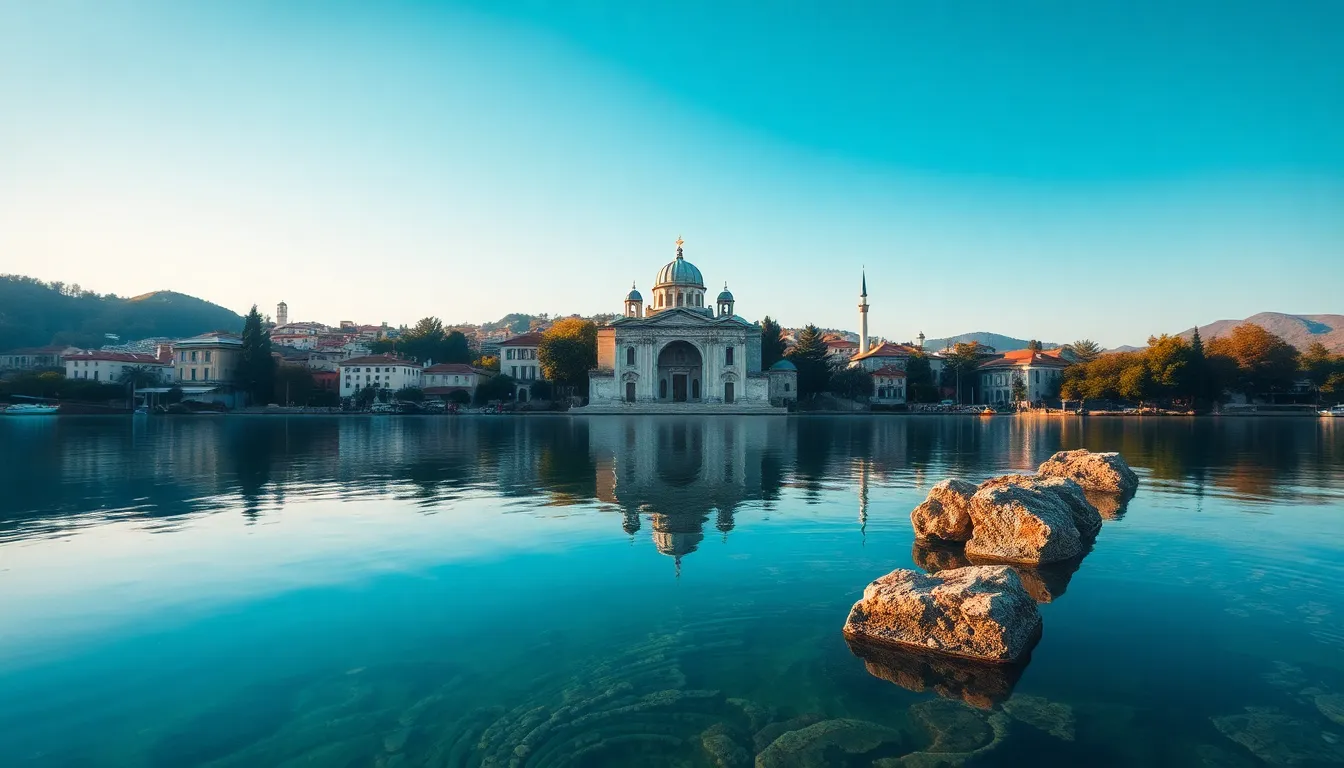
There is a moment I plan for on every trip to Iznik. I gather the group near the lake, and instead of giving a lecture, I just ask them to recite the Nicene Creed together. Most of them know it by heart from Sunday worship. And as the last line fades, I tell them: those words were written here, in this town, seventeen hundred years ago, by bishops who had survived prison and torture for refusing to deny the faith you just confessed. The silence after that always says more than I could. If your congregation says the creed, this is the most personal stop in all of Turkey. Let me show you how to make it count.
Iznik is a quiet lakeside town today, easy to reach from Istanbul, ringed by ancient walls and famous in Turkey for its pottery. But under the older name of Nicaea, this was the site of the first ecumenical council of the Christian church, held in 325 AD, and the birthplace of the creed that Christians around the world still recite. For a faith group, few places carry this much weight in so small a footprint.
What Happened at Nicaea in 325
To stand here with understanding, your group needs the story, and it is a dramatic one.
In the early 4th century the church faced a crisis that threatened to tear it apart. A priest named Arius taught that Jesus, the Son, was a created being, not fully and eternally God, not of the same divine substance as the Father. The teaching spread fast and split congregations across the empire. This was not a quarrel over fine print. It was a fight over the heart of the question: who is Jesus?
The emperor Constantine, who had recently legalized Christianity after generations of persecution, saw the dispute threatening the unity of his empire and called the bishops together to settle it. They gathered at Nicaea. Tradition counts around three hundred bishops, many of whom had been imprisoned, tortured, or maimed in the persecutions only a decade or two earlier. Some came with the scars still on their bodies. These were not comfortable churchmen. They were survivors.
After fierce debate they rejected Arius’s teaching and affirmed that the Son is “of one substance with the Father,” fully and eternally God. They wrote this conviction into a creed. That original Creed of Nicaea was expanded and refined at the Council of Constantinople in 381 into the fuller form recited in churches today, the one most congregations simply call the Nicene Creed.
Why the Creed Still Matters to Your Group
This is the connection that makes Iznik land. The words your people say in worship were forged here, in response to a real crisis, by real people who had paid for their faith.
When a congregation recites “God from God, Light from Light, true God from true God, begotten not made, of one substance with the Father,” they are repeating the exact theological victory won at Nicaea. The phrase “of one substance,” in the original Greek, was the hinge of the whole debate. It is the line that says Jesus is not a lesser, created being but God Himself.
I tell groups that the creed is not a dry list of doctrines. It is a testimony hammered out in a room full of people who refused to let the church get the answer wrong. Standing where that happened, the familiar words come alive. That is the gift of bringing a congregation here.
The theology did not stop at Nicaea, either. The language of the Trinity was completed in the decades that followed by the great teachers of central Turkey, a story we tell in our guide to the Cappadocian Fathers and early monasticism. Iznik is where the creed began, and Cappadocia is where it was finished.
What You Can Actually See at Iznik
Let me be honest with you as a leader, because managing expectations matters here. Iznik is not a vast ruin field like Ephesus. Its power is in what happened here, not in towering monuments. But there is genuinely meaningful ground to walk.
The Roman and Byzantine walls
The town is still ringed by impressive ancient walls with monumental gates, dating largely from Roman and Byzantine times. Walking through these gates, your group enters the same town the bishops entered in 325.
The Hagia Sophia of Iznik (the Council church)
In the center of town stands a church now known as the Iznik Hagia Sophia. The building you see is later than 325, but it sits at the heart of the town and is traditionally tied to the council heritage. It was also the site of the Second Council of Nicaea in 787, the seventh ecumenical council, which addressed the use of icons. So this single building connects to two of the great councils of the early church. It has served as church and mosque across the centuries and is a powerful place to gather and read.
The submerged basilica in the lake
One of the most striking sights is the Basilica of Saint Neophytos, an early church whose remains lie just beneath the surface of Lake Iznik, rediscovered in recent years and visible from the shore. The outline of a sunken church beneath clear water is a haunting image, and a fitting one for a town where so much early Christian history lies just below the surface of ordinary life.
The lake and the town itself
Sometimes the best thing to do here is simply stand by the lake where the council gathered and let the place speak. I plan time for exactly that.
Planning a Visit to Iznik
Iznik works beautifully as a stop between Istanbul and the rest of a Turkey itinerary. It is reachable from Istanbul in a half-day each way, and the town itself deserves a half to full day depending on how much you want to linger and teach.
Within a wider Turkey heritage trip, Iznik joins Istanbul’s Hagia Sophia, Ephesus, the House of the Virgin Mary, Cappadocia, and the Seven Churches of Revelation. Our overview of spiritual sites in Turkey shows how the whole country fits together, and the Turkey heritage page covers the practical planning. For groups making Cappadocia a centerpiece, our guides to Cappadocia’s cave churches and the Goreme Open-Air Museum round out the early-church story.
For pastors and educators building a trip: with Heritage Tours, the group leader travels free when you bring fifteen or more participants. For a congregation or a study group, that is worth knowing as you plan.
A Few Notes for Leaders
Prepare your group for the scale. Iznik rewards travelers who come for meaning rather than monuments. If your people know in advance that the power here is in the story and the creed, not in vast ruins, they arrive in the right frame of mind and leave deeply moved.
Plan a creed reading. The single most effective thing I do at Iznik is have the group recite the Nicene Creed together, then explain that they just spoke words written in this town. Do this near the Council church or by the lake. It is the heart of the visit.
Tie it to a meal by the water. Iznik is a calm, pretty town, and a quiet lunch by the lake gives your group time to absorb what they have seen. The pace here should be unhurried.
If standing where the creed was written speaks to you, we would be glad to help you build Iznik into a trip.
FAQ: The Council of Nicaea at Iznik for Heritage Groups
What was the Council of Nicaea?
It was the first ecumenical council of the Christian church, held in 325 AD in the town of Nicaea, modern Iznik, in Turkey. Around three hundred bishops gathered to resolve the Arian controversy over whether Jesus was fully and eternally God. They affirmed that the Son is “of one substance with the Father” and wrote that conviction into the creed that became the Nicene Creed.
Is Iznik the same place as Nicaea?
Yes. Iznik is the modern Turkish name for the ancient city of Nicaea. The town sits on the shore of Lake Iznik, a half-day’s reach from Istanbul, and is still ringed by its ancient Roman and Byzantine walls. For faith groups it is the birthplace of the Nicene Creed and the site of two of the great councils of the early church.
What can a group actually see at Iznik today?
Iznik is more about meaning than monuments. You can walk the ancient walls and gates, visit the Iznik Hagia Sophia, the church tied to the council heritage and to the Second Council of Nicaea in 787, and see the submerged early basilica visible beneath the clear water of the lake. The town itself, by the lake where the bishops gathered, is part of the experience.
How is the Council of Nicaea connected to the creed we recite in church?
The creed most congregations call the Nicene Creed began at Nicaea in 325 and was expanded at the Council of Constantinople in 381. Lines like “of one substance with the Father” come directly from the Nicene debate. When your congregation recites the creed, they are repeating the theological conviction settled in this town seventeen hundred years ago.
How does Iznik fit into a wider Turkey itinerary?
Iznik works well as a stop between Istanbul and the rest of a Turkey trip, reachable from Istanbul in a half-day each way and worth a half to full day on site. It joins Istanbul’s Hagia Sophia, Ephesus, the House of the Virgin Mary, Cappadocia, and the Seven Churches of Revelation. We build these combined routes regularly and can advise on pacing.