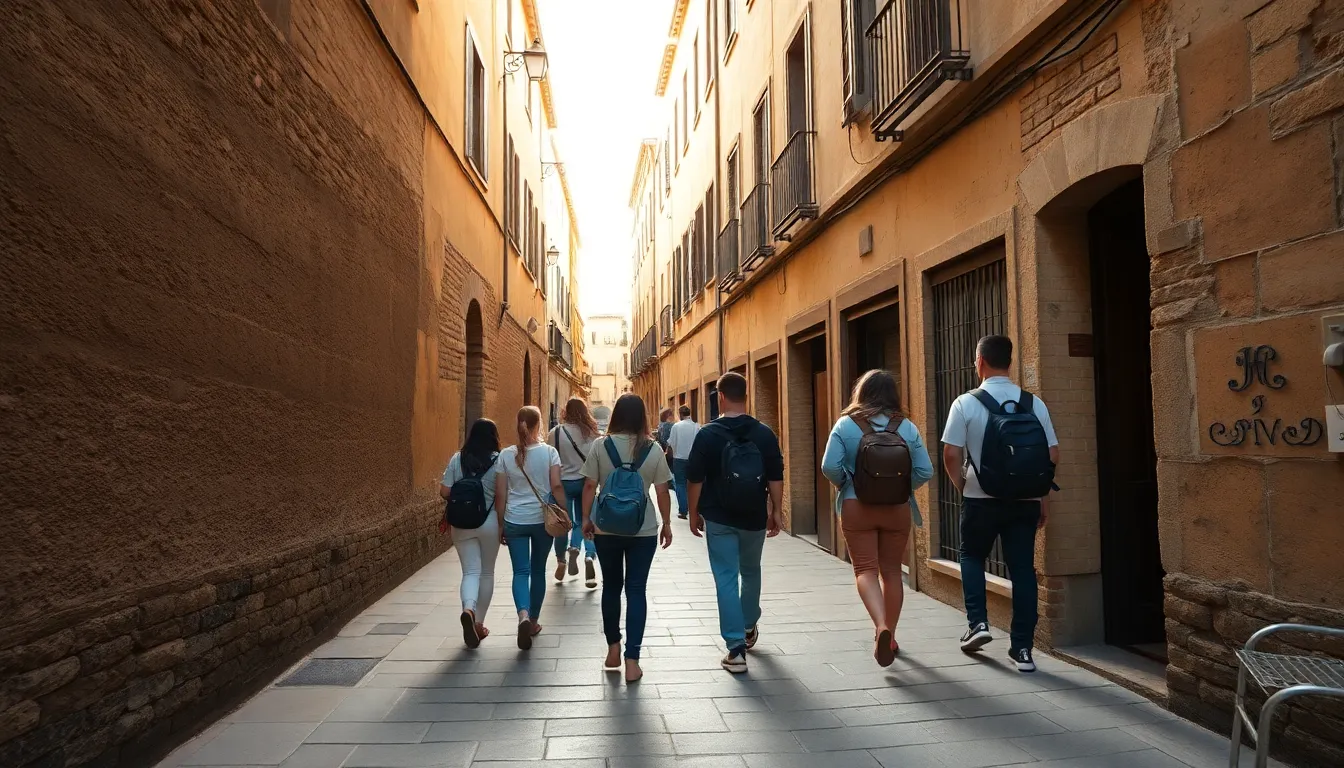
I’ve led plenty of adult groups through Spain. Leading a youth group is a different job entirely. Teenagers and young adults don’t want a museum-by-museum march, and they don’t connect with a site because you tell them it’s important. They connect when something surprises them, when they’re standing somewhere their phone can’t fully capture, when a story lands sideways and catches them off guard.
So a youth group trip to Spain has to be built differently. The history is the same. The synagogues, the cathedrals, the old quarters are all there. But the pacing, the framing, and the energy have to fit a group of fifteen-year-olds, or college students, or a confirmation class. That’s what this itinerary is for. I’ve run versions of it for church youth groups, synagogue teen trips, and Christian college fellowships, and the bones hold up across all of them.
A note before we start. This is built as an 8-day trip. Youth groups travel shorter than adult groups, partly for budget and partly because eight days is about the limit before a teenager’s enthusiasm starts to fray. Eight days, done right, is plenty.
Day 1: Madrid Arrival and a Soft Landing
Your group flies into Madrid. Most youth trips arrive jet-lagged and over-caffeinated, so day one is not the day to schedule anything heavy. We handle transfers and check-in. Your only job is to get everyone fed and keep them awake until a reasonable local bedtime so the jet lag breaks fast.
If the group has energy after dinner, a slow walk through Plaza Mayor and the streets around it works well. No agenda. Let them feel the city.
Group leader note: Set phone and curfew expectations on the first night, not the third. Youth groups run smoother when the rules land before anyone tests them. Be specific about rooming, lights-out, and the buddy system in crowded areas.
Day 2: Madrid, the Prado, and Making History Visible
The Prado is where I start the actual content. Not because teenagers love art museums, but because the right paintings make medieval Spain real in a way a lecture never will. I pick a focused route through works that show Jewish and Christian life before 1492. Forty-five minutes of the right rooms beats three hours of wandering.
Keep it short and give them a task. A scavenger-style prompt, a few questions to answer in pairs, anything that turns looking into doing. Teenagers tune out when they’re talked at and tune in when they’re given something to find.
Group leader note: Build in real free time in the afternoon. Retiro Park is close, open, and lets the group burn energy. A trip that’s all sites and no breathing room produces tired, irritable travelers by day four.
Day 3: Toledo, Where the Story Gets Real
Toledo is where this trip turns from a vacation into something they’ll remember. We take the short ride down and spend a full day in the old city.
El Transito synagogue does something to young people. It was built in 1357, it survived the expulsion of 1492, and it’s still standing. I’ve watched loud teenage groups go quiet inside it without being told to. The Hebrew inscriptions, the age of the room, the fact that it’s real and not a replica, it reaches them. Santa Maria la Blanca, the other surviving synagogue, with its white horseshoe arches, has the same effect.
For Christian youth groups, the Toledo Cathedral is the anchor. It’s one of the great Gothic cathedrals of Europe, and standing inside it gives young people a sense of scale that screens flatten out.
Group leader note: Toledo is built on a steep hill with cobblestone streets. That’s fine for a young group, but the heat from May through September is the real challenge. Go in the morning, keep water on everyone, and plan the afternoon somewhere shaded or indoors.
Day 4: Cordoba, Three Faiths in One Walk
Cordoba is a strong day for youth groups because the history is dense and the distances are short. The medieval synagogue is one of only three left in all of Spain, small and detailed, with Hebrew inscriptions and stucco work that connects directly to what they’ll see later in Granada.
The Mezquita is the showstopper. A mosque that became a cathedral, with Roman columns, Moorish arches, and a Renaissance nave built inside it. For young people, it’s a physical lesson in how Spain’s faiths layered on top of each other over centuries. Walk them through it with a guide who can explain each layer, and watch it click.
Group leader note: Cordoba gets brutally hot in summer, regularly past 40 degrees Celsius in the old city. If your trip runs June through September, do the Mezquita first thing and get the group indoors for lunch before the afternoon peak.
Day 5: Granada and the Alhambra
Granada is the day the group has been waiting for, even if they don’t know it yet. The Alhambra delivers on every level. The palaces, the gardens, the views over the city. For a youth group, it’s the kind of place that makes them put the phone down for a minute, which is the highest compliment a teenager pays anything.
The story underneath matters too. Jewish viziers, scholars, and physicians served the Nasrid court here. Samuel ibn Naghrillah became the first Jewish grand vizier of a Muslim kingdom. The palace they’re walking through was shaped, in part, by Jewish intellectual life. That’s a story young people find genuinely surprising, and surprise is what makes it stick.
Group leader note: The Alhambra runs on timed entry that has to be booked in advance. We handle the booking, but it means the Granada day is structured around your assigned slot. Plan everything else around that time, not the reverse.
Day 6: Travel to Barcelona and the Gothic Quarter
We move the group up to Barcelona. It’s a long travel leg, so the first part of the day is transit, and the second part is a gentler walk through the Gothic Quarter.
El Call, the medieval Jewish quarter, hides in these narrow streets. There’s a small synagogue here that some believe dates to the 3rd century, which would make it one of the oldest in Europe. The dating is debated, but the site is real, and the experience of finding it tucked into a maze of stone alleys appeals to young people in a way a grand monument sometimes doesn’t.
Group leader note: Barcelona is where you tighten the buddy system. Pickpocketing near the Ramblas and the Gothic Quarter is a real and constant issue, and youth groups are easy targets when they cluster and gawk. Brief them clearly: bags closed and in front, no stopping for street performers, stay together in crowds.
Day 7: Barcelona, Sagrada Familia, and Free Time
The Sagrada Familia is the right anchor for the last full day. There’s nothing else like it, and even teenagers who claim they don’t care about architecture tend to go silent when they walk inside. The light through the windows does the work for you.
Then give them the afternoon. After six days of dense history, a young group needs unstructured time. Whether that’s the beach, the shops, or just wandering in supervised small groups, the free afternoon is what they’ll talk about on the bus, and it’s what makes them willing to engage the next time you ask them to.
Group leader note: Free time for minors needs structure even when it feels loose. Small groups, clear boundaries, set check-in times, and a meeting point everyone knows. Freedom inside a frame.
Day 8: Closing Reflection and Departure
The last morning is for reflection before the airport. With youth groups, I keep this simple. A short gathering, a few questions, space for them to say what landed. Don’t over-program it. The trip did the work. Your job is just to give them a moment to notice what changed in them over eight days.
Then transfers to the airport, and home.
FAQ: Youth Group Trip to Spain
What age range does this Spain youth itinerary work for?
It works well for groups from about middle-school age through college. The pacing, the free time, and the framing flex to fit. For younger teens, you lean harder on structure and supervision. For college-age groups, you can loosen the reins and add depth to the historical conversations. The sites themselves work for every age. What changes is how you run the days around them.
How is a youth itinerary different from a regular Spain heritage tour?
The biggest difference is pacing and free time. Adult groups can absorb dense, back-to-back site days. Young groups can’t, and they shouldn’t have to. This itinerary builds in shorter site visits, more breathing room, and unstructured afternoons that adult trips often skip. The history is the same. The rhythm is built for younger energy. You can see the fuller adult version in our 10-day Spain heritage itinerary.
Is Spain safe for a youth group trip?
Spain is a safe destination for youth travel. The main practical concern is petty theft, especially pickpocketing in Barcelona’s tourist areas. That’s managed with clear briefings and the buddy system, not avoidance. We also build supervision structure into every free-time block, so young travelers always have boundaries and check-in points.
How many chaperones do we need for a youth group?
That depends on your group size and your organization’s own policy, which usually sets the ratio. As a general rule, plan for enough adults that no single chaperone is responsible for more than a handful of young travelers, and that you have both daytime site coverage and overnight rooming supervision. We help you think through the staffing as part of building the trip.
Can the trip include both Jewish and Christian youth groups?
Yes, and the shared geography of Spain makes it natural. The same cities hold meaning for both traditions, often within a short walk. We’ve run this itinerary for Jewish teen trips, church youth groups, and mixed groups, adjusting the emphasis at each site to fit who’s traveling. For groups wanting a deeper single-faith focus, our Sephardic 1492 itinerary and Andalusia three-faith itinerary go further in their respective directions.
If you’re a youth pastor, a teen trip coordinator, or an educator thinking about bringing young people to Spain, I’d love to help you shape a trip that actually fits them. You can learn more on our Spain destination page and our group heritage tours page, where group leaders travel free with fifteen or more participants.
Contact us when you’re ready to start planning.