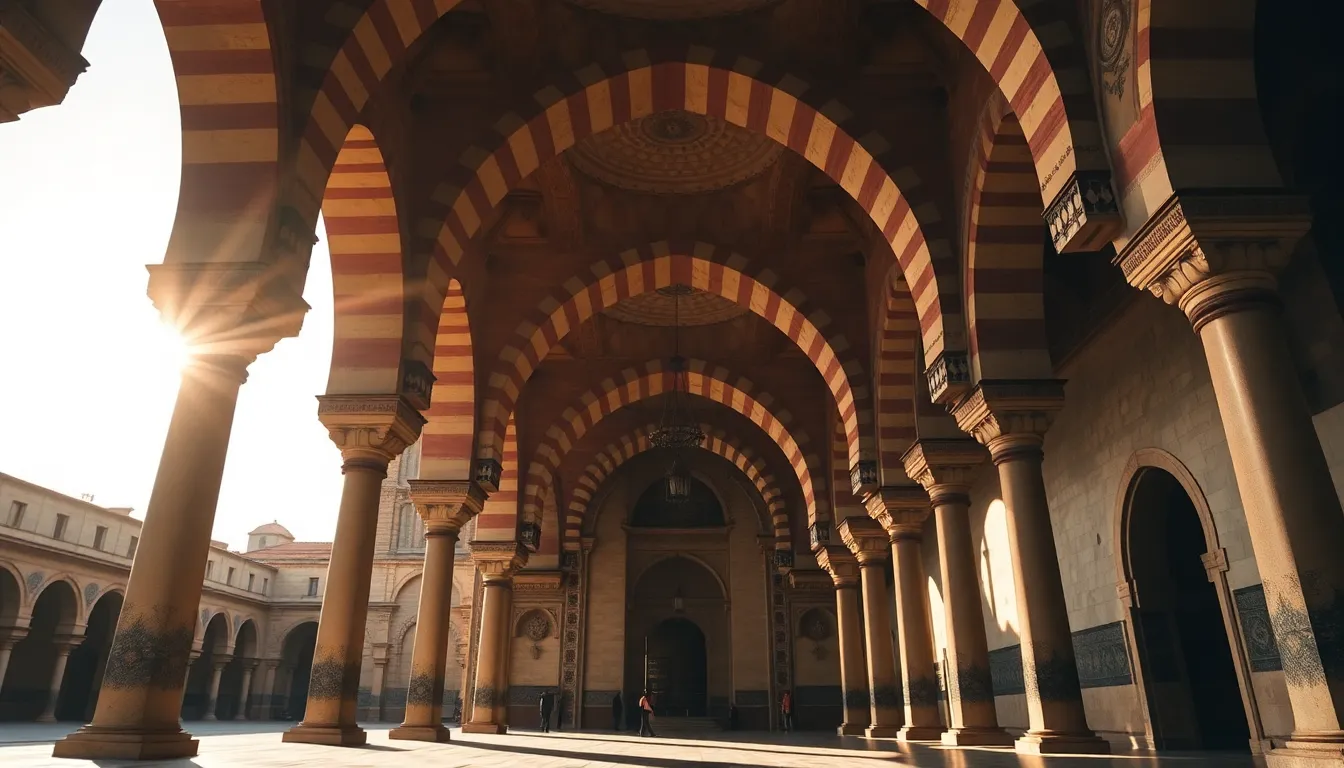
There’s a word that gets thrown around when people talk about medieval Spain: convivencia. Coexistence. It’s a contested word among historians, and I won’t pretend the three faiths lived in uninterrupted harmony, because they didn’t. But for several centuries in Andalusia, Jews, Christians, and Muslims lived, traded, argued, built, and shaped one another in close quarters in a way that produced one of the richest cultural periods Europe has known. I’ve spent years bringing groups into that story, and Andalusia is where you can stand inside it.
This itinerary is built for groups who want all three threads, not just one. Interfaith groups, seminary trips, educators, and congregations curious about how the faiths intersected rather than only how they collided. It’s an 8-day journey through the heart of Andalusia, and it treats each tradition with seriousness rather than turning any of them into background.
I’ll say up front that this is a trip about complexity, not a tidy story. The same cities that produced golden ages also produced expulsions and inquisitions. Holding both is the work. Groups that come willing to sit with the tension get the most out of it.
Day 1: Madrid Arrival and Orientation
The group lands in Madrid. We handle transfers and check-in, and the first day stays light to let jet lag settle.
When the group has rested, I open with a frame for the week. Andalusia is not three separate stories that happen to share geography. It’s one entangled story told from three directions. Naming that on the first night shapes how the group reads everything that follows.
Group leader note: For interfaith groups, the first evening is worth using to set a tone of mutual curiosity. The trip works best when participants come to learn each other’s traditions, not just defend their own. A short conversation about that intention pays off all week.
Day 2: Madrid, the Prado, and the World That Made Andalusia
The Prado holds works that document the medieval world of all three faiths in Spain. Starting here gives the group a visual foundation before we travel south. The paintings show the cultural landscape that Andalusia produced and that 1492 began to dismantle.
This is also where I lay out the historical timeline clearly: the period of Muslim rule, the long Christian reconquest, the Jewish communities woven through both, and the rupture at the end. Everything in Andalusia makes more sense once the group holds that arc.
Group leader note: Keep the museum visit focused. A targeted route through the relevant rooms serves the group better than an exhaustive walk-through. Save the energy for the south.
Days 3-4: Cordoba, the City of Three Faiths
Cordoba gets two days because it is the clearest expression of three-faith Andalusia anywhere in Spain. At its height, Cordoba was one of the great cities of the world, a center of learning where Muslim, Jewish, and Christian scholars worked in the same intellectual world.
The Mezquita is the centerpiece. A mosque that became a cathedral, with Roman columns, Moorish arches, and a Renaissance nave built inside it. It is, in one building, the physical history of Spain’s religious transformations. No single site I know tells the three-faith story more directly. Walk it with a guide who can explain each layer, and the whole trip’s theme becomes visible in stone.
The medieval synagogue, one of only three left in Spain, sits in the old Juderia, small and detailed, with Hebrew inscriptions and stucco work echoing the same artistic traditions as the Mezquita and the Alhambra. The shared visual language is itself the lesson: the same craftsmen, the same artistic vocabulary, serving a synagogue, a mosque, and a cathedral within a few streets of each other.
This is Maimonides’ city too. The great Jewish philosopher, who shaped not only Judaism but Christian and Muslim thought after him, was born here, and his statue in the Juderia is a natural gathering point. Cordoba also gave the Muslim world the philosopher Averroes and gave Christianity, through both men’s writings, tools that reshaped medieval theology. Three faiths, one city, ideas crossing freely between them. That’s the second day in Cordoba: not just the buildings, but the minds the city produced.
Group leader note: Cordoba’s summer heat is severe, often past 40 degrees Celsius in the old city. Schedule the Mezquita for first thing in the morning, June through September, and plan an indoor lunch before the afternoon peak. The Juderia is walkable and shaded in parts, better for the cooler hours.
Day 5: Seville, Power and Its Layers
Seville is a city of layers, and it shows the three faiths through the lens of power changing hands. The Alcazar is a royal palace built in Mudejar style, Christian rulers using Muslim craftsmen and Muslim artistic forms, a living example of how the traditions bled into one another even in conflict. The Cathedral, one of the largest in the world, was built on the site of a former mosque, its bell tower the converted minaret.
The old Jewish quarter of Santa Cruz carries the third thread, and a painful one. This was the heart of a major Jewish community until the pogroms of 1391 tore through it. Walking from the Alcazar to Santa Cruz in a single afternoon, you trace all three faiths and the violence that ran between them.
Group leader note: Seville holds the trip’s hardest tension, the beauty of the shared artistic world alongside the reality of persecution. For interfaith groups, this is a good day to make space for honest conversation rather than rushing to the next site.
Days 6-7: Granada and the Alhambra
Granada gets two days, and the Alhambra is the reason. It was the last Muslim kingdom in Spain, the final Nasrid stronghold, and its palaces and gardens are among the most beautiful human creations anywhere. But the three-faith story runs through it too. Jewish viziers, scholars, and physicians served the Nasrid court. Samuel ibn Naghrillah rose to become the first Jewish grand vizier of a Muslim kingdom. The complex the group walks through was shaped, in part, by Jewish political and intellectual life inside a Muslim state.
Granada is also where the medieval world ended. In 1492, the Catholic Monarchs took the city, and in the same year, the same place, they signed the Edict of Expulsion against the Jews. The three-faith story and its rupture converge here. Standing in the Alhambra, you’re standing at both the height and the closing of the age.
The Albaicin, the old Moorish quarter across from the Alhambra, is worth the second day. Its winding streets and viewpoints give the group time to absorb Granada slowly.
Group leader note: The Alhambra runs on timed entry booked in advance. We handle the booking, but it means the Granada schedule is built around your assigned slot. Plan everything else around that time. Evening visits are available in some seasons and are genuinely beautiful for groups that can manage the later hour.
Day 8: Closing Reflection and Departure
The final morning is for reflection before the airport. After a week inside the three-faith story, I like to gather the group and let people name what shifted. For interfaith groups especially, this is often the most valuable half hour of the trip. People who arrived inside one tradition leave with a richer sense of the others, and of how entangled the histories always were.
Then transfers and departure.
FAQ: Andalusia Three-Faith Heritage Tour
What does “three-faith Andalusia” actually mean?
For several centuries, the region of Andalusia in southern Spain was home to Jewish, Christian, and Muslim communities living in close and complicated proximity. They shaped each other’s art, scholarship, architecture, and daily life. The period produced extraordinary cultural achievement alongside real conflict and eventual expulsion. This itinerary explores that entangled history through sites where all three traditions left their mark, often in the same building.
Is this trip suitable for an interfaith group?
It’s built for one. The whole premise is that the three traditions are best understood together, not in isolation. We’ve run this itinerary for interfaith dialogue groups, seminary programs, and mixed congregations. The key is coming with curiosity about the other traditions, and we help set that tone from the first evening. For groups wanting to go deeper into the Jewish thread specifically, our Sephardic 1492 itinerary follows that story alone.
Which single site best captures the three-faith story?
The Mezquita in Cordoba. It’s a mosque that became a cathedral, built on Roman foundations, with each era’s architecture visible at once. Standing inside it, you can see Spain’s religious transformations layered in stone. It’s the site I point to when someone asks what convivencia means in physical form.
How does this itinerary handle the conflicts, not just the harmony?
Honestly. The same cities that produced golden ages also produced the 1391 pogroms and the 1492 expulsion. We don’t soften that. Seville’s Santa Cruz quarter and the convergence at Granada are where the group sits with the harder truths. The richness and the rupture are both part of the real history, and a serious trip holds both.
Can we combine this with sites in northern Spain?
You can. This itinerary focuses on Andalusia in the south, which is the core of the three-faith story. If your group wants to add Barcelona, Girona, or Toledo in the north, we can extend the journey. Our 10-day Spain heritage itinerary shows how the northern and southern routes combine into a fuller trip.
If you lead an interfaith group, a seminary, or a congregation curious about how the three faiths shaped one another in Spain, I’d be glad to help you build this journey. You can learn more on our Spain destination page and our group heritage tours page, where group leaders travel free with fifteen or more participants.
Contact us when you’re ready to start the conversation.