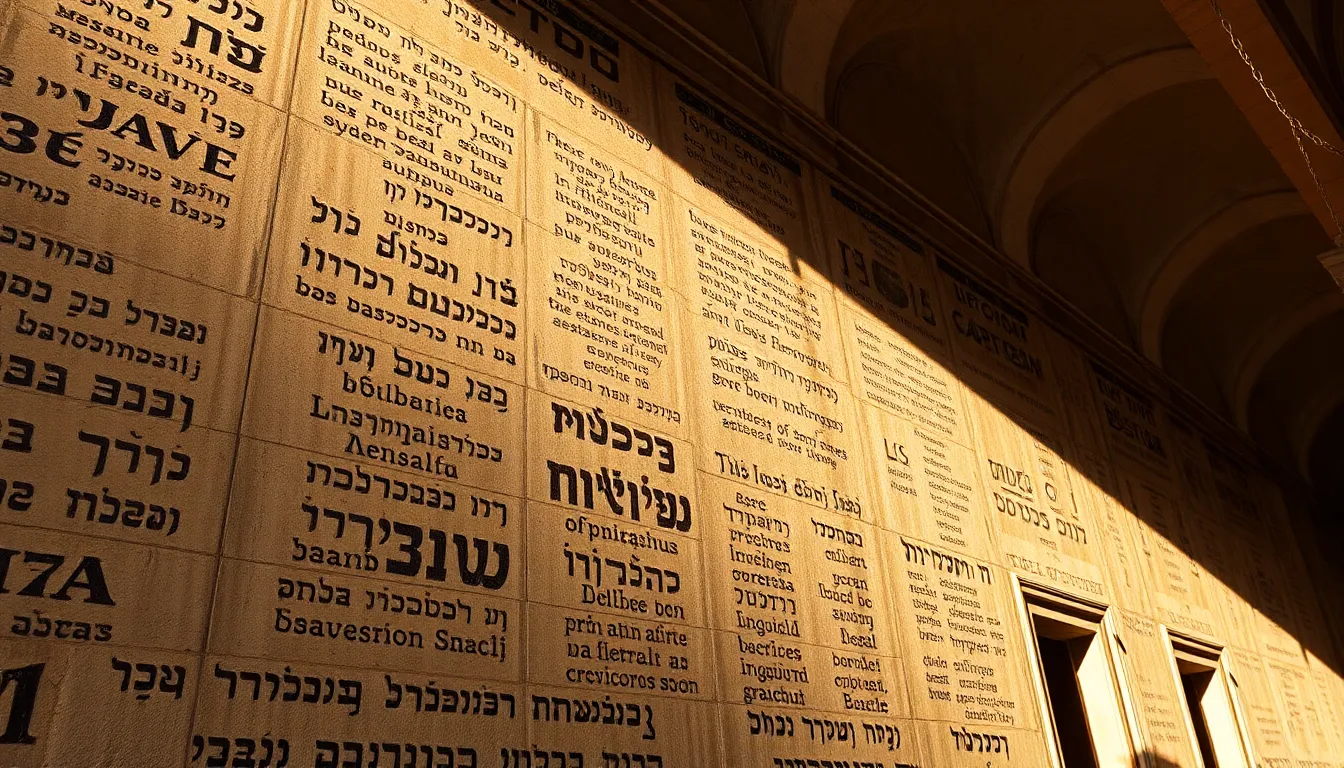
When a synagogue group comes to me wanting to trace Sephardic roots, the trip is never really about sightseeing. It’s about return. Sefarad is the Hebrew name for Spain, and for the families whose ancestors were expelled in 1492, walking these streets is a homecoming to a place they were forced out of more than five centuries ago. I’ve led these trips for years, and they carry a weight that a general heritage tour does not.
This itinerary is built around that weight. It follows the arc of Sephardic life in Spain and the rupture of 1492, the year the Edict of Expulsion gave the Jews of Spain a few months to convert, leave, or die. We trace the communities at their height and the route many of them took out. It’s a 9-day journey, and it’s designed for groups who want the history told honestly, not softened.
A word on tone before the days. This is a heavy trip in places. Standing in a synagogue that survived while its community did not is not a light experience. I tell group leaders to expect emotion and to leave room for it. That’s not a flaw in the itinerary. It’s the point.
Day 1: Madrid Arrival and Setting the Frame
The group arrives in Madrid. We handle transfers and check-in, and the first day is for rest and orientation.
When the group is ready, I like to open with a short gathering that frames the journey. Not a lecture. Just a setting of intention. We’re not tourists this week. We’re tracing a story that belongs to these travelers’ own ancestors. Naming that on the first night changes how people walk for the rest of the trip.
Group leader note: Encourage participants to bring any family history they have, surnames, oral traditions, regions their ancestors came from. Sephardic surnames often map to specific Spanish towns. That personal thread turns an itinerary into a genealogy.
Day 2: Madrid and the World Before 1492
Day two grounds the group in the world that existed before the expulsion. The Prado holds works that document Jewish and Christian life in medieval Spain, the cultural landscape of convivencia, the centuries when the three faiths lived in close and complicated proximity.
This matters for the trip’s emotional logic. You can’t feel the loss of 1492 without first seeing what was lost. The medieval world was not a footnote. It was a flourishing, and the Prado lets the group see it before we walk into the places where it ended.
Group leader note: This is the day to establish the historical timeline clearly. Many participants know 1492 as a date but not as a lived rupture. A clear framing here, the centuries of presence, the rising persecution from 1391 onward, the final edict, makes every site that follows land harder.
Days 3-4: Toledo, the Heart of Sefarad
Toledo gets two days, and it earns them. This was the intellectual and spiritual capital of Sephardic life for centuries, the city of poets, philosophers, translators, and rabbis whose work shaped Judaism far beyond Spain.
El Transito synagogue is the center of it. Built in 1357 by Samuel ha-Levi, treasurer to the king, its Hebrew inscriptions along the upper walls call it “a crown of beauty.” It survived 1492 by being converted to a church, which is its own bitter irony, and it still stands. The Sephardic Museum housed within it tells the fuller story of the community.
Santa Maria la Blanca is older, with white horseshoe arches that show how deeply Jewish and Moorish artistic worlds intertwined. It too was taken from the community and converted. Walking both in one trip, you feel the scope of what Toledo’s Jews built and what was taken.
Spend time in the Juderia, the old Jewish quarter. The streets, the layout, the surviving traces. This is where families lived, prayed, and were finally forced to choose between conversion and exile.
Group leader note: Toledo’s old city is steep and cobblestoned, and the emotional density of two synagogue visits in one area is significant. Build in seated breaks, both for the legs and for the heart. Morning visits beat afternoon heat from May through September.
Day 5: Cordoba and the Golden Age
Cordoba carries the memory of the Sephardic golden age. This was Maimonides’ city, the birthplace of the greatest Jewish philosopher of the medieval world, and his presence still anchors the old Juderia.
Cordoba’s synagogue is one of only three medieval synagogues left standing in all of Spain. It’s small, and the stucco work inside, with its Hebrew inscriptions and geometric patterns, connects directly to the artistic traditions of the Alhambra. Most visitors give it fifteen minutes. A Sephardic group should give it far more, with time to sit and absorb.
The statue of Maimonides in the Juderia is a natural gathering point. For groups tracing intellectual lineage, standing where the Rambam walked is a powerful moment.
Group leader note: Cordoba’s summer heat is extreme, often past 40 degrees Celsius in the old city. Schedule the synagogue and Juderia for early morning, June through September, and keep the group hydrated and indoors through the afternoon peak.
Day 6: Seville and the Memory of 1391
Seville carries a darker chapter. The old Jewish quarter of Santa Cruz was the heart of a major community until the pogroms of 1391, a wave of violence that swept across Spain and marked the beginning of the end. A century before the expulsion, Seville’s Jews were already being destroyed.
Walking Santa Cruz today, you find narrow lanes, hidden squares, and old buildings, beautiful and quiet. The beauty and the history sit uneasily together, which is exactly the truth of the place. This is where you tell the group that 1492 was not a single event but the culmination of a century of mounting persecution.
Group leader note: Santa Cruz is now a popular tourist quarter, and the contrast between its current charm and its history can be jarring for a Sephardic group. Prepare participants for that gap. A short reflection before entering helps people hold both realities at once.
Day 7: Girona and a Quarter Preserved
Girona, north of Barcelona, holds one of the best-preserved Jewish quarters in all of Europe. The Call here is intact in a way few others are, and walking it feels like walking through a medieval neighborhood that was once entirely Jewish.
The Museum of Jewish History sits inside the Call and tells the story of the community with real depth. For groups tracing Sephardic memory, Girona offers something the larger cities can’t: a sense of intactness, of streets and stones that still hold the shape of the community that lived there.
Group leader note: Girona is quieter and more contemplative than Barcelona. It’s a good place to slow the pace deliberately. After a week of emotionally dense sites, the preserved Call lets people walk slowly and reflect rather than rush.
Day 8: Barcelona, the Call, and the Routes Out
Barcelona’s Gothic Quarter holds El Call, the medieval Jewish quarter, with a small synagogue some date to the 3rd century. The streets are narrow and easy to miss, which is itself part of the story of a community pushed to the margins and then erased from the map.
Barcelona is also where we close the historical arc. From the ports of the Mediterranean coast, many Sephardic Jews sailed into exile in 1492, scattering to North Africa, the Ottoman Empire, Italy, and beyond, carrying Ladino and the memory of Sefarad with them. Standing near the water, you can trace where the diaspora began.
Group leader note: Barcelona is a large city with real pickpocketing risk near the Ramblas and the Gothic Quarter. Brief the group clearly before entering: bags closed and close to the body, stay together, don’t stop for street performers in crowded areas.
Day 9: Closing Reflection and Departure
The final morning is for closing the circle. After nine days tracing the rise, flourishing, and expulsion of Sephardic Spain, the group needs space to name what they’ve carried. I keep this gathering open. Some participants share family connections they discovered. Some simply sit with what they’ve seen. The return to Sefarad deserves a moment of completion before the airport.
FAQ: Sephardic Heritage Itinerary in Spain
What does Sefarad mean, and why does it matter for this trip?
Sefarad is the Hebrew name for the Iberian Peninsula, and Sephardic Jews are the descendants of the communities that lived there before the 1492 expulsion. For travelers with Sephardic ancestry, this isn’t abstract history. It’s family. Surnames, traditions, and liturgical customs often trace directly back to specific Spanish towns, which is why this itinerary is built as a return rather than a tour.
Which cities are essential for a Sephardic heritage tour of Spain?
Toledo is non-negotiable. It holds two of Spain’s three surviving medieval synagogues and was the capital of Sephardic intellectual life. Cordoba, the city of Maimonides, is the second pillar. Girona and Barcelona’s Call round out the medieval picture, and Seville carries the memory of the 1391 pogroms that began the community’s destruction. Our 10-day Spain heritage itinerary covers the broader route if your group wants Christian context alongside.
Can you help us trace specific family origins during the trip?
We can build genealogical threads into the journey where the history supports it. Many Sephardic surnames map to particular regions and towns. If participants bring their family history, we can often connect the itinerary to the specific places their ancestors came from, which deepens the experience considerably.
Is this itinerary emotionally heavy?
Yes, in places, and I tell every group leader that directly. Standing in a synagogue that survived while its community was expelled is not a light experience. The Seville chapter and the closing reflection in Barcelona carry real weight. We build in time and space for that emotion deliberately. It’s not a downside of the trip. It’s the meaning of it.
How does this compare to a broader Andalusia or three-faith trip?
This itinerary stays focused on the Jewish story and the 1492 rupture specifically. If your group wants to see how Jewish, Christian, and Muslim Andalusia interacted, our Andalusia three-faith itinerary takes a wider lens. The two trips share cities but tell different stories.
If you lead a synagogue, a Sephardic heritage group, or an educational program and you want to trace the path of 1492 with your community, I’d be honored to help you build it. You can learn more on our Spain destination page and our group heritage tours page, where group leaders travel free with fifteen or more participants.
Contact us when you’re ready to begin.