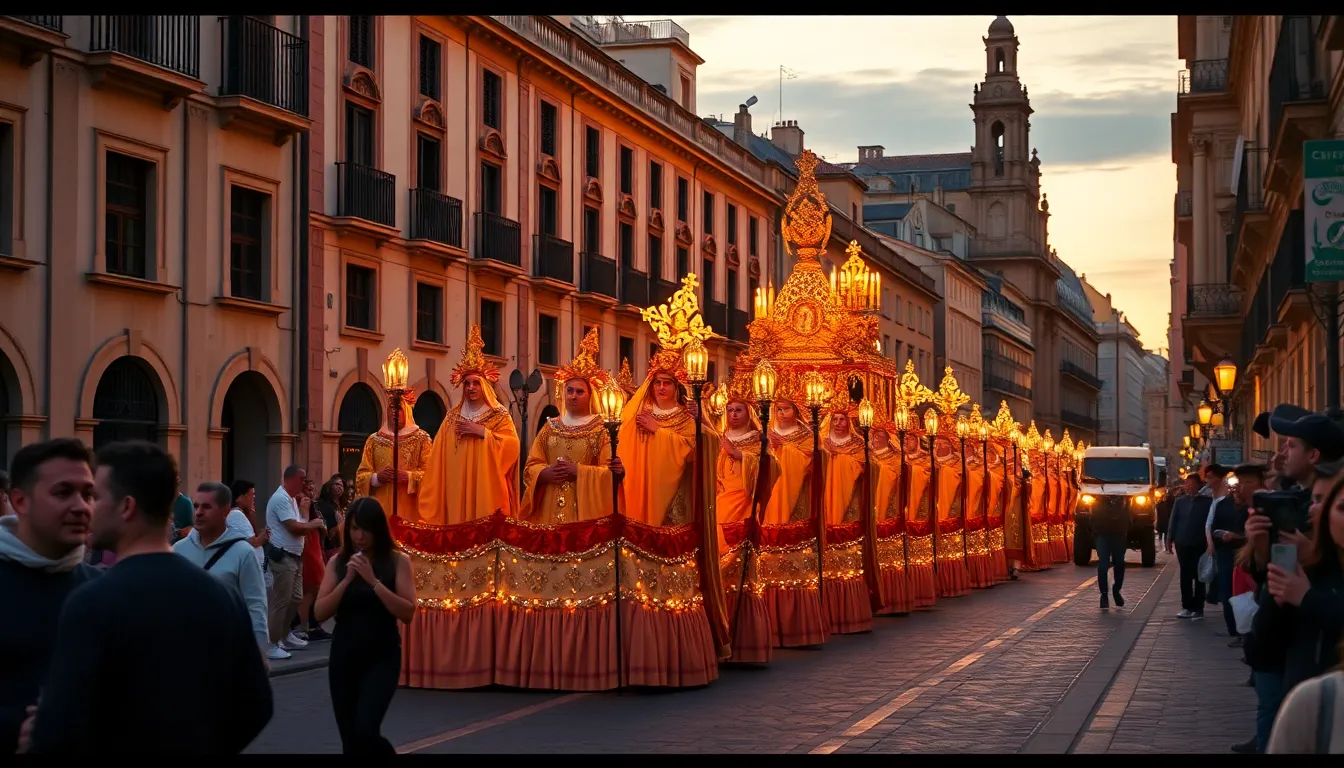
The first time I brought a church group to Seville during Semana Santa, I watched a retired deacon stand silent on a curb for twenty minutes as a paso, a massive float carrying a centuries-old image of Christ, inched past on the shoulders of men hidden beneath it. He did not say a word the whole time. Afterward he told me he had read about the Passion his entire life and had never felt it move through a street like that. That is what Semana Santa can do. It is also one of the hardest weeks of the year to plan a group trip around, and I am not going to pretend otherwise.
So this article is two things at once. It is an honest description of what Holy Week in Spain actually is, and it is a practical guide to deciding whether to plan into it or around it. If you want the broader spring picture, our best time to visit Spain guide sets the season in context. This one stays focused on the week itself.
What Semana Santa Actually Is
Semana Santa is the week leading up to Easter, from Palm Sunday through Easter Sunday. Across Spain, but most intensely in Andalusia, it is marked by processions organized by religious brotherhoods, the cofradias, some of which have existed for four or five hundred years. Each brotherhood carries its pasos, elaborate floats bearing images of Christ and the Virgin Mary, through the streets along a set route, accompanied by penitents in tall pointed hoods, by bands, and at times by total silence broken only by a single mournful saeta sung from a balcony.
This is not a performance staged for tourists. It is living devotion. The same families have walked the same routes for generations. For a Christian group, witnessing it is a way of standing inside a tradition that has carried the Passion narrative through the streets of Spain for centuries, in places like Seville, Malaga, Toledo, and Granada.
A note for Jewish group leaders reading this: Semana Santa overlaps with the period around Passover most years, and the imagery and crowds are intensely Christian. It is worth understanding as a planning factor even if your group is not there for the processions, because it shapes prices, crowds, and hotel availability across much of Spain in those weeks.
When Semana Santa Falls
Holy Week moves with the Easter date, so it lands in late March or April depending on the year. This is the single most important thing to check early in your planning, because it determines whether your spring dates collide with it or clear it.
If your group wants Semana Santa, you build the trip around that fixed week. If your group wants a calmer spring experience, you check the year’s Easter date and schedule the weeks before or after. There is no general rule that works across years. You look it up for your specific travel year, and you plan from there. Our spring travel guide walks through how the rest of March, April, and May behave once you have placed Holy Week on the calendar.
Planning Into Semana Santa: What It Takes
If you decide to bring your group for Holy Week, go in clear-eyed about what it requires.
Book very early. This is the busiest week of the year in the procession cities. Hotels in central Seville, Malaga, and Toledo fill twelve months out, sometimes more, and prices climb well above the normal spring rate. For a group needing a block of rooms near the routes, I tell leaders to start a full year ahead, not the usual six to nine months.
Expect crowds, and plan for them. The streets of Seville during a major procession are packed shoulder to shoulder. For a group with older members, standing for hours in a dense crowd is not realistic. The fix is to reserve seating. Cities sell numbered seats, the sillas, along the official routes, and some brotherhoods and venues offer balcony viewing. Securing seats in advance turns an exhausting crush into a comfortable, dignified experience. This is one of the most important things we arrange for Semana Santa groups.
Build the itinerary around the processions, not the other way around. Routes and timings are published in advance, but they dominate the city. Streets close. Traffic stops. A coach cannot simply pull up where you want it. The schedule has to flex around the processions, with walking distances and meeting points planned carefully. This is where local knowledge earns its keep.
Mind the meals and the pace. Restaurants are slammed all week and many require reservations far ahead. Evenings run late, because the most powerful processions, including the Madrugada in the early hours of Good Friday morning, happen overnight. A good group itinerary builds in rest so people can choose which night processions to attend without burning out.
Planning Around Semana Santa: The Quieter Alternative
Plenty of groups decide Holy Week is not the right fit, and that is a perfectly good call. A congregation with many older travelers, a group on a tighter budget, or one that simply wants unhurried access to the heritage sites is often better served by the calmer weeks on either side.
The good news is that the rest of spring is excellent, and stepping just outside Holy Week brings prices back down and crowds back to normal almost immediately. You still get the mild weather, the open sites, and the long days. You can visit the same cathedrals and Jewish quarters at a reflective pace, the way a heritage tour is meant to feel. The week before Palm Sunday or the week after Easter both work well for this, depending on which side of the Easter date suits your group’s home calendar.
How to Decide
Here is the question I ask group leaders. Is the procession the point of the trip, or is it one element among many?
If your congregation has a specific pull toward witnessing the Passion enacted in the streets, and you can book a year out and budget for the premium, plan into Semana Santa and let us handle the seats and the logistics. If your group’s heart is in the broader heritage, the synagogues, cathedrals, and old quarters, and you want a comfortable pace and a fair price, plan around it.
Either way, the planning rhythm is the same once the dates are set. Lock the week, secure your bookings early, and build your group. Group leaders travel free with fifteen or more participants. You can see how we structure these journeys on our Spain destination page and our group heritage tours page.
FAQ: Visiting Spain During Semana Santa
When does Semana Santa happen in Spain?
Semana Santa is Holy Week, running from Palm Sunday through Easter Sunday, so it falls in late March or April depending on the year’s Easter date. Check the specific date for your travel year early, because it determines whether your spring dates land on Holy Week or clear it.
Which Spanish cities have the best Semana Santa processions?
Seville is the most famous and the most intense. Malaga, Granada, Toledo, and Zaragoza all have major, centuries-old processions as well. Seville’s draw the largest crowds, which means the most planning and the highest prices, while a city like Toledo offers a powerful experience with somewhat easier logistics.
How far in advance should we book for Semana Santa?
A full year ahead, sometimes more. Holy Week is the busiest week of the year in the procession cities, hotels near the routes fill twelve months out, and prices climb above the normal spring rate. If your group needs a block of rooms and reserved procession seating, start early.
Can older travelers manage Semana Santa crowds?
Yes, with the right setup. Standing for hours in a dense street crowd is not realistic for many older travelers, but cities sell numbered seats along the routes and some venues offer balcony viewing. Reserving seats in advance turns the experience from an exhausting crush into a comfortable one. We arrange this for Semana Santa groups.
Should we avoid Spain during Semana Santa if we are not there for the processions?
If your group’s focus is the broader heritage and you want a calmer pace and fair prices, yes, plan the weeks before or after. Holy Week drives up prices and crowds across much of Spain. Stepping just outside it brings both back to normal almost immediately while keeping the mild spring weather and open sites.
Semana Santa is one of those decisions that is much easier once you have looked at your travel year’s Easter date and talked it through with someone who has run groups through it. That is a conversation I genuinely enjoy. Contact us and we will help you decide whether to plan into Holy Week or around it.