Why Timing Matters More for Heritage Groups Than Regular Tourists
If you search “best time to visit Spain,” every travel site will give you roughly the same answer: spring and fall are pleasant, summer is hot, winter is quiet. That advice is fine for an individual traveler booking a hotel in Barcelona. It is almost useless for a rabbi or pastor planning a heritage tour for thirty people.
Your calendar is different. You are working around Jewish holidays, church schedules, school breaks, and the availability of twenty or more people who all need to agree on the same two weeks. On top of that, heritage sites in Spain have their own rhythms. Some are unbearable in summer heat. Others are transformed by religious festivals that only happen at specific times of year. And group reservations at popular sites like the Alhambra need to be secured months in advance, which means the season you choose has real consequences for what your group can actually see.
Let me walk you through the year the way I would if we were on a planning call together. The short answer is spring. But the full answer depends on your community.
Spring (March through May): The Best Overall Window
Spring is when I recommend most group leaders plan their Spain heritage tour, and it is not close. The weather is mild, typically between 15 and 25 degrees Celsius across most of the country. Heritage sites are open but not yet overwhelmed by summer tourism. The light is beautiful, which matters more than you might think when your group is walking through medieval Jewish quarters and standing in centuries-old cathedrals.
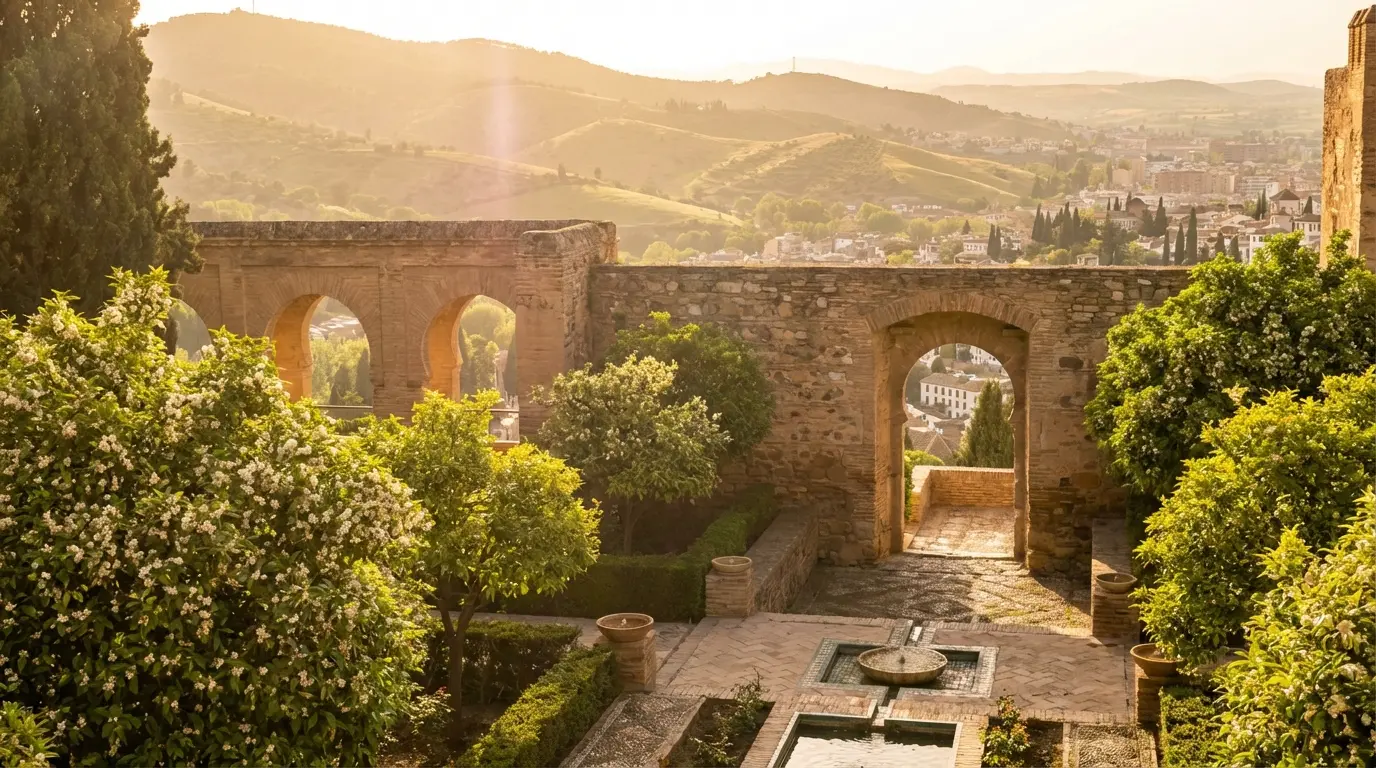
March can still be cool, especially in northern Spain and the mountains. April and May are the sweet spot. Toledo is comfortable enough for walking tours. Cordoba’s patios are in bloom. Granada’s Alhambra has good availability for group bookings. And the crowds that make these sites difficult in July and August have not yet arrived.
One important note: Easter week, Semana Santa, falls in March or April depending on the year. In cities like Seville, Toledo, and Malaga, Semana Santa is an extraordinary experience, massive religious processions that have taken place for centuries. But it also means higher hotel prices and heavier crowds. If your group wants to witness Semana Santa, plan early and expect to pay more. If you want to avoid it, check the dates and schedule around them.
For most heritage groups, the last two weeks of April or the first two weeks of May represent the ideal window.
Summer (June through August): What You Need to Know Before You Book
I will be honest with you. Summer is not my first recommendation for group heritage tours in Spain, and I tell every group leader exactly why.
Central and southern Spain get genuinely hot. Toledo, Cordoba, and Seville regularly exceed 38 degrees Celsius in July and August. Walking through a medieval Jewish quarter in that heat, especially with older congregants, is not just uncomfortable. It is a health concern. Heritage sites that feel deeply moving in April can feel punishing in August.
Beyond the heat, summer is peak tourist season. The Alhambra sells out its daily allocation weeks in advance. Toledo’s narrow streets become crowded in ways that make group discussion difficult. The pace of everything slows down because it has to.
That said, summer is not impossible. Northern Spain, including the Camino de Santiago route, Girona, and the Basque Country, stays cooler. Barcelona is warm but manageable. If your community can only travel in summer due to school schedules or other commitments, a northern Spain itinerary focused on Girona’s Jewish quarter, Montserrat, and the Catalan heritage sites can work well.
But if you have flexibility, choose spring or autumn.
Autumn (September through November): The Underrated Season
Autumn is the season I wish more group leaders would consider. The summer heat breaks in late September, prices drop, and the tourist crowds thin out considerably. October in particular offers many of the same benefits as spring, comfortable temperatures, good site availability, beautiful light, with fewer visitors at the major heritage sites.
However, autumn has one significant constraint for Jewish groups: the High Holidays. Rosh Hashanah and Yom Kippur fall in September or early October, depending on the year. Sukkot follows immediately after. For a synagogue group, this effectively removes a three to four week window from the calendar. A rabbi is not leading a heritage tour during the Days of Awe.
If your group observes the High Holidays, late October through mid-November is the window to consider. The weather is still pleasant in southern Spain, though northern regions can turn cool and rainy. Toledo and Cordoba are comfortable, and group reservations at the Alhambra are much easier to secure.
For church groups, autumn has no comparable calendar constraints. September through November is an excellent time for a Christian heritage tour focused on the Camino, the cathedrals, or the monasteries. The feast of St. James (July 25) will have passed, and Santiago de Compostela settles into a quieter pace that is more conducive to reflection.
Winter (December through February): Quiet Sites and Honest Prices
Winter is the least popular season for group heritage tours, and that is exactly what some group leaders want. If your community values quiet, unhurried access to heritage sites over perfect weather, winter has real advantages.
Hotel prices are at their lowest. Heritage sites that draw hundreds of visitors per hour in summer may have only a handful in January. Your group can spend time in El Transito or Cordoba’s synagogue without feeling rushed. Local guides have more availability. And the slower pace allows for deeper conversation.
The tradeoffs are real. Days are shorter, and some smaller heritage sites reduce their hours or close for maintenance. Rain is common in northern Spain. Temperatures in central Spain hover around 5 to 10 degrees Celsius, which is manageable but requires warm layers, especially in the mornings and evenings.
For the right group, particularly a smaller one of 15 to 20 people who prioritize depth over breadth, a winter heritage tour can be remarkably moving. The sites feel different when it is just your community and the history. That intimacy is hard to replicate in other seasons.
The Jewish Holiday Calendar: Dates to Work Around
If you lead a Jewish community, the holiday calendar is the first thing to check when choosing dates. Here are the key periods to avoid.
Rosh Hashanah and Yom Kippur (September or early October) are non-negotiable. No rabbi is leading a tour during the High Holidays. Sukkot follows immediately and takes another week. In practice, this removes most of September and the first half of October from consideration.
Passover (March or April) is another significant block. An eight-day holiday with strict dietary requirements makes travel complicated even when it is technically possible. Most Jewish groups plan around Passover rather than during it.
Shabbat is a weekly consideration. Heritage Tours can build itineraries that respect Shabbat observance, with Friday and Saturday schedules adjusted accordingly. This is something to discuss early in the planning process so the itinerary reflects your community’s practice.
Christian Feast Days Worth Timing Your Trip Around
For church groups, certain feast days and liturgical seasons can transform a Spain heritage tour.
Semana Santa (Holy Week, March or April) is the most dramatic. The processions in Seville and Toledo are centuries-old traditions that bring the Passion narrative into the streets. If your congregation wants to experience this, it is worth the planning effort and the higher costs.
The Feast of St. James (July 25) draws pilgrims to Santiago de Compostela. If your group is walking part of the Camino, arriving on or near the feast day adds a layer of meaning, though it also means peak crowds at the cathedral.
The Feast of the Assumption (August 15) is celebrated across Spain with local observances and processions. It falls during the hottest part of summer, but for groups specifically interested in Marian heritage, it creates unique experiences in cities like Seville and Zaragoza.
Beyond specific feast days, Advent (late November through December) offers a quieter, more contemplative atmosphere at Spain’s cathedrals and monasteries. A December trip focused on sacred music and Advent observance at places like Montserrat is something I have seen move groups deeply.
FAQ: When to Visit Spain for a Heritage Tour
What is the best month to visit Spain for a heritage tour?
Late April through mid-May is the best overall window for most heritage groups. The weather is comfortable for walking tours, heritage sites are open with manageable crowds, and both spring flowers and longer daylight hours enhance the experience. Late October is a strong second choice, especially for groups working around the Jewish High Holiday calendar.
Is summer too crowded for a group heritage trip to Spain?
In central and southern Spain, yes. Toledo, Cordoba, and Granada are uncomfortably hot and heavily visited in July and August. However, northern Spain, including Girona, Barcelona, and the Camino route, stays more manageable. If summer is your only option, focus on the north and plan site visits for early morning.
What Jewish holidays should I factor into planning a Spain trip?
Rosh Hashanah, Yom Kippur, and Sukkot (September through early October) and Passover (March or April) are the main periods to avoid. Weekly Shabbat observance should also be discussed when building the itinerary. Heritage Tours plans around these dates as standard practice for Jewish groups.
When is Santiago de Compostela least crowded?
November through March sees the fewest visitors. The Feast of St. James (July 25) is the busiest period. For a group that wants to experience the cathedral and the final stretch of the Camino without heavy crowds, late October or early November is ideal. The weather is cooler but still manageable, and the atmosphere is more contemplative.
How far in advance should I book a group heritage tour to Spain?
Six to nine months for spring and autumn trips. The Alhambra in particular requires advance group booking. If you are planning around a specific feast day like Semana Santa, or if your group is larger than 25, start the conversation even earlier. See our Spain heritage tour options or get in touch to begin planning.