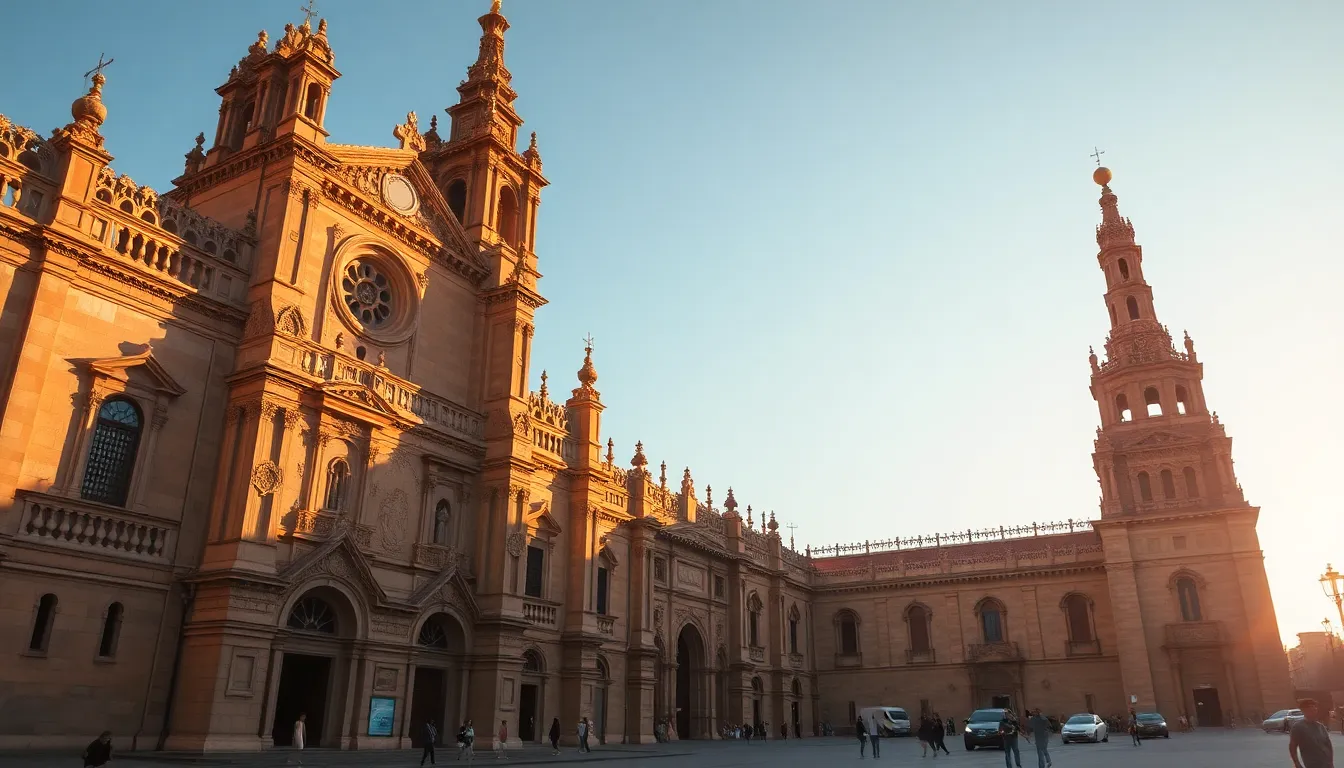
A Building You Cannot Take In at Once
I tell every group the same thing before we walk into Seville Cathedral. You will not be able to see all of it. The space is too big for the eye to hold. It is the largest Gothic cathedral in the world by volume, and the first time you stand under that ceiling, the scale stops feeling like architecture and starts feeling like a decision someone made on purpose. They wanted you to feel small. It works.
What makes Seville Cathedral worth real time for a heritage group is not just the size. It is the layering. This building sits on the footprint of a great mosque, its bell tower started life as a minaret, and the whole thing tells the story of how power and faith changed hands in this city over centuries. For a pastor, a rabbi, or an educator, that layering is the lesson. The Giralda alone is worth the visit, and I will get to why.
The Cathedral: Built to Make a Statement
Seville was the largest and richest city in Muslim Al-Andalus for long stretches of the medieval period. After Christian forces took the city in 1248, the great mosque was used as a cathedral for over a century. Then, around 1401, the city decided to replace it with something that would leave no doubt about who ruled now. The chronicle records the intention plainly: to build a church so great that those who saw it finished would think the builders had been mad.
They came close. The cathedral was largely completed by 1506. The interior covers a footprint so vast it holds dozens of chapels, a central nave that soars to around forty-two meters, and the largest altarpiece in the world, a wall of gilded scenes from the life of Christ that took craftsmen most of a lifetime to carve. The main retable is the kind of object a group can stand in front of for twenty minutes and keep finding new figures.
The cathedral also holds the monument that claims to contain the remains of Christopher Columbus, his tomb carried by four figures representing the kingdoms of Spain. Whether or not the remains are entirely his has been debated for years, but the monument itself, and the questions it raises about Spain’s age of exploration, gives a group plenty to discuss.
One thing I always point out before we go in: the cathedral was declared a UNESCO World Heritage Site, along with the Alcazar and the old archive of the Indies, back in 1987. That recognition is not about any single object inside. It is about the way this one building holds the whole arc of Seville’s history in its stones, from the mosque that stood here to the Christian conquest to the wealth that flowed back from the Americas and paid for much of what your group is looking at. The gold on that altarpiece did not come from nowhere.
The Giralda: A Minaret That Became a Bell Tower
For me, the Giralda is the heart of the visit. The tower rises about a hundred meters and dominates the Seville skyline, and most visitors photograph it without realizing what they are looking at.
The bottom two-thirds of the Giralda is a 12th-century minaret, built when the great mosque stood here under the Almohad dynasty. The brickwork patterns, the proportions, the decorative panels, all of it is Islamic, the work of a culture that ruled Seville at its height. When the Christians took the city and later replaced the mosque, they kept the minaret and built a Renaissance bell tower on top of it, crowned with a bronze weathervane figure of Faith that gives the tower its name, since “giralda” comes from the word for something that turns.
So the tower is two faiths stacked in stone. A Muslim minaret at the base, a Christian belfry above. Standing beneath it, I ask groups to read it from the bottom up and watch the moment one civilization handed off to the next. There is no clearer single object in Seville for explaining how this city changed hands and how the new rulers chose to keep, and crown, what the old ones built.
The other thing groups love about the Giralda is the climb. There are no stairs in the lower section. Instead, a series of 35 gently sloping ramps spirals up the inside, originally built so that a rider on horseback could ascend to call the prayer. Your group walks up, not climbs, and the view over Seville’s rooftops from the top is one of the best in Andalusia.
How Groups Visit the Cathedral and Giralda
This is one of Seville’s busiest sites, so timing is everything. I bring groups early, near opening, before the cruise and tour crowds build through the late morning. We book timed group entry in advance, which avoids the long general queue, and we plan the route so the group moves through the cathedral interior first, while energy is high, and ends with the Giralda climb.
The cathedral floor is flat and accessible, which makes it manageable for groups with mixed mobility. The Giralda ramps, though, are a real walk up, so I always have travelers who would rather not climb wait in the Patio de los Naranjos, the old courtyard of orange trees that was once the mosque’s ablutions court, which is a lovely and shaded place to gather.
Seville rewards a group that gives it more than a single morning. The cathedral and Giralda pair naturally with the Royal Alcazar a few minutes’ walk away, and a full day in the old city lets a group take both at a human pace rather than rushing. We arrange the guide, the timed entry, and a quiet moment inside the cathedral where the building allows it. For groups of 15 or more, the group leader travels free.
FAQ: Visiting Seville Cathedral and the Giralda
Why is Seville Cathedral considered the largest Gothic cathedral in the world?
By interior volume, it is the largest Gothic cathedral anywhere. It was built on the footprint of a great mosque after 1401, with the explicit aim of creating something overwhelming in scale, and it holds the world’s largest altarpiece along with dozens of chapels under a nave that rises about forty-two meters.
What is the Giralda and why does it matter?
The Giralda is the cathedral’s bell tower, about a hundred meters tall. Its lower two-thirds is a 12th-century Islamic minaret from the mosque that once stood here, and the Renaissance belfry on top was added after the Christian conquest. It is the clearest single object in Seville for showing how the city passed from Muslim to Christian rule.
Can groups climb the Giralda, and is it difficult?
Yes. Instead of stairs, the tower has 35 sloping ramps that spiral up the inside, built originally so a rider could ascend on horseback. It is a steady walk rather than a stair climb, and the view from the top over Seville is exceptional. Travelers who prefer not to climb can wait in the orange-tree courtyard below.
Is the tomb of Christopher Columbus really in the cathedral?
The cathedral holds a monument that claims to contain his remains, carried by four figures representing the Spanish kingdoms. Whether the remains are entirely his has been debated for years, but the tomb is a striking focal point and a good entry into a conversation about Spain’s age of exploration.
How should a group plan its timing for such a busy site?
Arrive near opening, before the late-morning crowds, and book timed group entry in advance to skip the general queue. Pairing the cathedral and Giralda with the nearby Royal Alcazar makes a strong full day in old Seville, taken at a pace that lets the group absorb each site.
If Seville belongs on your community’s Spain journey, we can build the cathedral, the Giralda, and the Alcazar into a smooth day in the old city. See our Spain heritage tour options, learn how we run group travel, and read more on the nearby Royal Alcazar of Seville or Spain’s wider spiritual sites. When you are ready, reach out and start the conversation.